
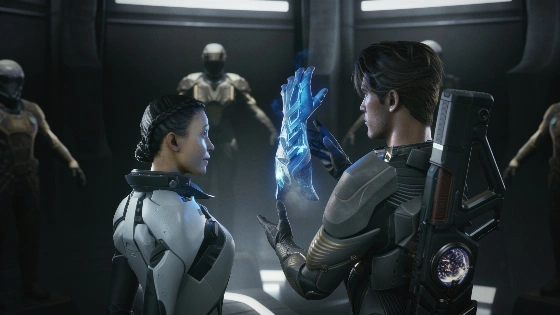
Archetype Entertainment's Exodus will launch in April 2027 for PlayStation 5, Xbox Series X|S and PC, with its ending and companion fates shaped by the choices you make throughout the game's branching narrative
Not every companion will survive your journey in Exodus. Archetype Entertainment's upcoming sci-fi RPG is set to make player decisions matter in ways that go beyond simple dialogue branches, with the fate of your crew and the shape of the ending directly tied to your actions and relationships throughout the campaign.
Branching Endings and Character Consequences
Exodus is being built around a narrative structure where your choices have tangible, lasting effects. According to the studio's narrative director, Drew Karpyshyn, the game's conclusion will reflect not just the broad strokes of your morality, but also the evolving dynamics between you and your companions. Some characters may draw closer as you progress, while others could become alienated or even leave the party entirely if pushed too far by your decisions.
This approach means that by the time the credits roll, your crew may look very different from the one you started with. The possibility of losing companions is not limited to life-or-death scenarios; disagreements, loyalty, and the outcomes of key missions can all influence who stands with you at the end. The game's structure appears to echo the high-stakes tension of Mass Effect 2's infamous suicide mission, but with a broader focus on relationship management and narrative consequence.
Gameplay Systems and Player Agency
Exodus will feature a Paladin/Immortal morality system, but the impact of your choices extends well beyond a simple good-versus-evil axis. Relationship systems are designed to feel authentic, with companions responding dynamically to your actions and dialogue. Optional content and side missions can lock or unlock future opportunities, alter the course of missions, and reshape the relationships between characters.
Players can expect that even seemingly minor decisions may have ripple effects, changing the availability of missions or the attitudes of key allies. The game's design philosophy is to ensure that player agency is not just cosmetic, but central to the unfolding story. This extends to the possibility that some companions may reach a breaking point and depart, or that their loyalty could determine their survival in critical moments.
Release Date and Platform Details
Exodus is scheduled for release on 7 April 2027, targeting PlayStation 5, Xbox Series X|S, and PC. The game is being developed by Archetype Entertainment, a studio with notable RPG pedigree, and is positioned as a narrative-driven space opera with a focus on player-driven outcomes. While the studio has not yet detailed every gameplay system, the emphasis on branching storylines and companion dynamics is clear from the available information.
For those tracking the evolution of narrative RPGs, Exodus is shaping up to be a significant entry. Its approach to consequence and character fate stands out in a genre where many games promise meaningful choice but deliver only superficial variation. As reported earlier, the debate over player agency and narrative consequence remains central to the RPG landscape, and Exodus is positioning itself firmly on the side of impactful decision-making.
What Remains Unconfirmed
While the broad outlines of Exodus' narrative ambition are now public, many specifics remain under wraps. The exact number of companions, the range of possible endings, and the depth of optional content have not been fully disclosed. It is also unclear how much of the branching will be visible to players during a first playthrough, or whether certain outcomes will require multiple runs to uncover.
Technical details such as performance targets, graphics modes, and accessibility features have yet to be announced. No information has been provided on pricing, edition structure, or pre-order incentives. As the release date approaches, further details on these aspects will be critical for players deciding when and where to invest their time and money.
Branching narratives in RPGs rely on a combination of player choice, companion loyalty, and mission outcomes to deliver a sense of consequence. In games like Exodus, these systems are designed to ensure that the story adapts to the player's actions, rather than forcing the player into a predetermined path. The effectiveness of such systems depends on how deeply they are integrated into both the narrative and gameplay, and whether the consequences are felt in moment-to-moment play as well as in the final outcome.