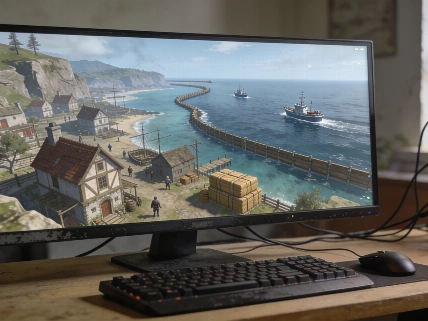


A new mod for The Blood of Dawnwalker triples the in-game time limit, stripping away the original tension and forcing a debate over player choice versus developer intent in this story-driven RPG from ex-CD Projekt Red staff
Within hours of release, The Blood of Dawnwalker's most downloaded mod has already dismantled the game's defining mechanic. The mod, which extends the in-game timer from 30 to 90 days, has been installed nearly 10,000 times, fundamentally altering the experience intended by the developers and igniting a sharp divide among early players.
Mod Alters Game Structure
The Blood of Dawnwalker, developed by a team including former CD Projekt Red staff, is built around a strict 30-day countdown. Every quest, skill-tree upgrade and narrative decision advances this clock, forcing players to weigh their actions and accept real consequences. The time pressure is not a background detail-it is the backbone of the game's design, shaping every choice and outcome.
The "Better Story Timer" mod, now the most popular on NexusMods for the title, triples the available days to 90. This change removes the need for careful planning, allowing players to pursue nearly every quest and upgrade without fear of running out of time. The friction and urgency that defined the original experience are effectively erased.
Player Reaction and Debate
Despite launching on the same day as the game itself, the mod's rapid adoption has already prompted backlash from some players who argue that it undermines the core challenge. Social media commentary has highlighted frustration with the tendency to bypass intended mechanics, with one widely shared post criticising the impulse to "not experience a game the way the developers intended."
Others defend the mod as a legitimate way to enjoy the story without the stress of a ticking clock, especially for those who dislike time-limited gameplay. The debate is not new, but the speed and scale of the mod's uptake-almost 10,000 downloads on day one-make it impossible to ignore. The Blood of Dawnwalker's design philosophy is now being tested in real time by its own community.
Critical Reception and Franchise Plans
Critical response to The Blood of Dawnwalker has been strong, with IGN awarding the game a 9/10 and specifically praising the time constraint as a source of meaningful tension. The review highlighted the day/night cycle and the pressure to balance human and vampiric forms as standout features, crediting the time limit for much of the game's narrative weight and replay value.
The developers have positioned The Blood of Dawnwalker as the start of a larger franchise, with future entries hinted to span multiple eras. Commercially, the game appears to be off to a robust start, with positive reviews and strong early sales. The modding scene's immediate impact, however, raises questions about how future instalments will balance player freedom with the integrity of core mechanics.
Modding and Player Agency
Modding has always been a double-edged sword for PC games, offering both creative freedom and the potential to undermine carefully constructed systems. The Blood of Dawnwalker's situation is a textbook example: a single mod, released on launch day, has already shifted the conversation from the game's narrative and mechanics to the boundaries of player agency. This is not the first time a major release has seen its intended challenge softened by community mods, as seen in reported earlier with other high-profile launches.
What's clear is that the tension between developer vision and player preference is not going away. The Blood of Dawnwalker's timer mod is not just a quality-of-life tweak-it is a fundamental rewrite of the game's stakes. For players who want the intended experience, the original 30-day clock remains the only way to feel the pressure that earned the game its critical acclaim. For everyone else, the mod offers a frictionless path through the story, but at the cost of the very challenge that set the game apart. The real test will be whether future entries can maintain their identity in a landscape where the most popular mods are those that erase the rules.
Time limits in games are a divisive design choice, often used to create urgency and force meaningful decisions. In The Blood of Dawnwalker, the 30-day clock is not just a narrative device but a mechanical constraint that shapes every playthrough. Removing or extending this limit transforms the experience from a tense, consequence-driven RPG into a more conventional adventure, illustrating how a single variable can redefine the entire structure of a game.