
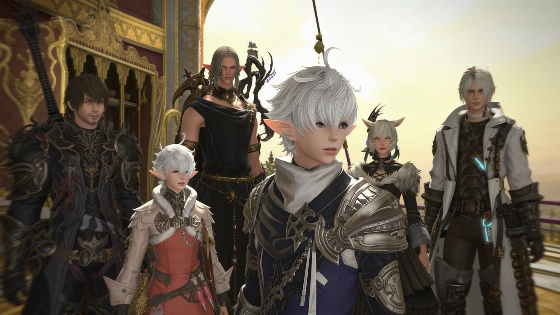
Square Enix has confirmed Final Fantasy 14 will launch on Nintendo Switch 2 in August, but the MMO's install size will occupy almost half of the console's 256GB internal memory, raising questions about storage management for new players
Square Enix's long-running MMO Final Fantasy 14 is officially set to arrive on Nintendo Switch 2 on 4 August, but the game's storage requirements are already drawing attention. According to the newly published Nintendo eShop listing, the Switch 2 version will require a 117.2GB install-an unusually large footprint for a console game, and one that will consume nearly half of the system's 256GB internal storage before any other downloads are considered.
Install Size and Platform Comparison
The 117.2GB download makes Final Fantasy 14 the largest single-game install on Switch 2 to date, overtaking previous Square Enix releases such as Final Fantasy 7 Rebirth (91.8GB). For context, the PlayStation 5 version of Final Fantasy 14 is significantly smaller, thanks to more advanced file compression, while the PC version's storage requirement is closer to what Switch 2 players will face. The Switch 2's internal storage is not expandable by default, so players looking to install additional games or future expansions will likely need to invest in a high-capacity microSD card.
Content Included and Future Expansions
The Switch 2 release will include all five major expansions-Heavensward, Stormblood, Shadowbringers, Endwalker and Dawntrail-bundled into the base install. This means players will have immediate access to the full breadth of content released so far, without needing to download additional expansion packs. However, with the sixth expansion, Evercold, already announced for January, the total storage requirement is expected to rise further, potentially pushing the limits of the console's memory for those who want to keep the entire game and its updates installed.
Launch Details and Subscription Model
Final Fantasy 14's Switch 2 launch was confirmed by game director Naoki Yoshida during the 2026 Fan Festival in Berlin. The first month after release will be offered without a subscription fee while server stability is monitored, after which a standard subscription will be required for continued play. This approach mirrors the game's rollout on other platforms and is intended to ease new players into the MMO's live-service environment. Square Enix's approach to large-scale Switch 2 releases is consistent with its previous record-setting bundles, such as the Kingdom Hearts Collection, which weighs in at 131GB for three games.
Storage Management and Player Impact
With such a substantial install size, storage management will be a practical concern for many Switch 2 owners. Players who plan to keep multiple major releases installed may find themselves juggling downloads or upgrading their storage sooner than expected. The situation highlights a broader trend towards larger game files as content-rich live-service titles arrive on consoles with limited internal memory. For those interested in how other major Switch 2 releases are shaping up, recent coverage of Nintendo's evolving platform strategy can be found in our article on Nintendo's approach to Splatoon and new exclusives.
Large install sizes are increasingly common for MMOs and live-service games, but the impact is especially pronounced on consoles with fixed internal storage. Unlike PCs, where drives can be swapped or expanded with relative ease, console players are often limited by the manufacturer's hardware choices. As more expansive games arrive on Switch 2, understanding how storage requirements affect access and ongoing play will be essential for anyone managing a growing digital library.