
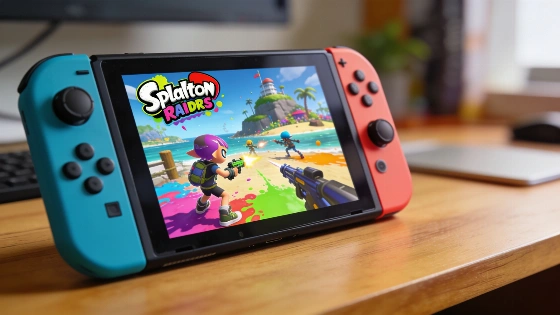
Nintendo has released Splatoon Raiders as a Switch 2 exclusive, but the mainline Splatoon 4 remains unannounced. Developers have clarified why the series is taking a different direction for now and what this means for future competitive entries
Nintendo's latest Switch 2 exclusive, Splatoon Raiders, has arrived to strong critical reception, but the absence of Splatoon 4 has prompted questions about the franchise's direction. The company has now addressed why it chose to develop a co-operative spin-off before returning to the main competitive series.
Why Splatoon Raiders Came First
Splatoon Raiders marks a notable shift for the franchise, focusing on single-player and co-operative action rather than the series' signature competitive multiplayer. According to Nintendo's development team, the decision was driven by a desire to broaden the series' appeal and provide a new entry point for players who may not be drawn to competitive play. The game emphasises shooter mechanics, boss encounters and narrative, distinguishing itself from previous entries that prioritised fast-paced online matches.
The developers highlighted that, after more than a decade of continuous development and updates across three mainline Splatoon titles, the team wanted to experiment with a different gameplay structure. By releasing a standalone spin-off centred on non-competitive elements, Nintendo aims to showcase the franchise's versatility while maintaining support for its established multiplayer modes in the future.
Current Status of Splatoon 4
Despite speculation, Nintendo has not announced Splatoon 4 or provided a timeline for its development. The company has confirmed that competitive gameplay remains a priority for the series, but has chosen to focus on Splatoon Raiders as a way to refresh the brand and attract new players. There is no official word on when or if Splatoon 4 will be revealed, and the direction of the next mainline entry remains unconfirmed.
Splatoon Raiders is positioned as a separate experience rather than a replacement for a numbered sequel. The game's release does not preclude future competitive titles, but Nintendo has indicated that it is taking time to explore new ideas before committing to the next mainline instalment.
Gameplay and Critical Response
Splatoon Raiders departs from the franchise's traditional formula by offering a primarily single-player action RPG structure. Players explore the Spirhalite Islands alongside familiar characters, facing off against Salmonids in a campaign that emphasises customisation, challenging battles and story progression. The game has been praised for its design, depth and variety, with some reviewers calling it the strongest Splatoon campaign to date.
According to published reviews, Splatoon Raiders delivers a compelling gameplay loop and robust customisation options, earning high scores from critics. The title is exclusive to Nintendo Switch 2 and is intended to serve both newcomers and long-time fans seeking a different take on the Splatoon universe.
What Remains Unclear
While Splatoon Raiders has been well received, Nintendo has not detailed its long-term plans for the Splatoon franchise. There is no confirmation of post-launch content, expansions or a development roadmap for Splatoon Raiders itself. The status of Splatoon 4 remains uncertain, with no official announcement or development update beyond assurances that competitive play will continue to be supported in the future.
For now, players interested in the series' competitive roots will need to look to previous entries, as Splatoon Raiders is designed as a distinct, non-competitive experience. The timing and nature of the next mainline Splatoon game will depend on Nintendo's ongoing evaluation of the franchise's direction and player feedback.
Standalone spin-offs like Splatoon Raiders illustrate how established franchises can experiment with new genres and gameplay structures without abandoning their core identity. In gaming, a spin-off is a title that explores different mechanics, stories or modes from the main series, often serving as a testing ground for new ideas or reaching audiences who might not engage with the original formula. This approach allows developers to innovate while keeping the mainline series flexible for future evolution.