
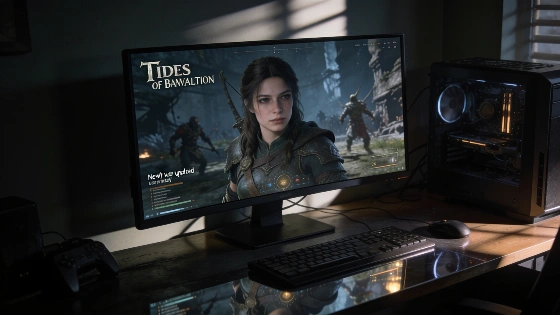
Eclipse Glow Games has responded to player concerns after new gameplay footage for Tides of Annihilation revealed a revised facial model for main character Gwendolyn, prompting discussion about the game's evolving art direction and technical choices
Recent gameplay footage for Eclipse Glow Games' upcoming action RPG Tides of Annihilation has sparked a wave of discussion among players, following the reveal of a noticeably altered facial model for protagonist Gwendolyn. The footage, released in mid-August, offered an uninterrupted 40-minute look at the game's combat, exploration and visual style, but it was the changes to Gwendolyn's appearance that drew the most immediate attention across social platforms.
Gameplay Footage and Player Reaction
While the new demonstration was generally well received for its dynamic combat and detailed environments, many viewers expressed confusion or disappointment at the updated character model. The revised face, which features softer lines and a different graphical treatment, led to speculation about a possible downgrade or shift in artistic direction. Some players questioned whether the change was the result of technical limitations, rushed development, or a deliberate stylistic choice. The debate quickly gained traction, with calls for the studio to revert to the earlier design seen in previous trailers.
Developer Response and Technical Clarification
Eclipse Glow Games addressed the concerns in a recent Q&A, with lead producer Fu Kun clarifying that both the earlier and current footage used real-time rendering rather than pre-rendered CG. According to Fu Kun, the differences in Gwendolyn's appearance stem from ongoing lighting optimisation and facial rendering adjustments, rather than a fundamental change to the character's model. He acknowledged that the latest build may have been shown before all visual refinements were complete, and stated that further improvements to facial rendering are planned before release.
Art Direction and Cultural Fusion
The studio also outlined its broader approach to character design, aiming to blend Eastern and Western aesthetics in a way that appeals to a global audience. This philosophy extends to other characters in the game, including the Martial Saint, who is intended as a tribute to traditional Chinese chivalry and will serve as Gwendolyn's mentor. The team's ambition is to create a cast that reflects both international tastes and elements of Chinese culture, setting Tides of Annihilation apart from more regionally focused RPGs.
Release Timing and Voice Cast Changes
Tides of Annihilation does not yet have a confirmed release date, but the studio continues to describe launch as coming "soon." The game has already undergone significant changes in recent months, including the departure of acclaimed voice actress Jennifer English from the role of Gwendolyn due to health reasons. There is ongoing speculation that Angela Sant'Albano, known for her work in Resident Evil Requiem, has taken over the lead role at English's recommendation. The evolving development process and shifting creative choices echo the kind of franchise-defining changes seen in other major releases, such as those discussed in our analysis of Batman: Arkham Asylum's impact on licensed games.
Lighting optimisation is a critical aspect of real-time rendering in modern games, directly affecting how character models appear under different conditions. Unlike pre-rendered cinematics, real-time rendering must balance visual fidelity with performance constraints, often leading to visible changes as development progresses. Adjustments to lighting, shaders and facial animation can significantly alter a character's look between builds, especially when a studio is targeting both technical polish and broad aesthetic appeal. These factors are particularly relevant in cross-cultural projects, where design choices must resonate with diverse player expectations while meeting the technical demands of current hardware.