
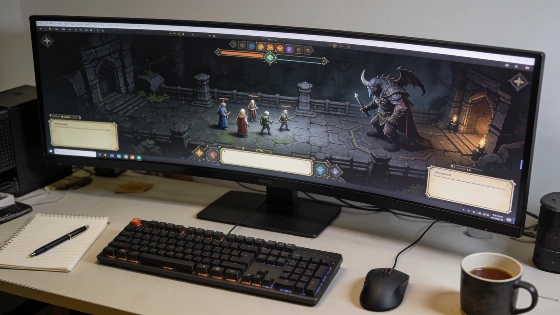
14Dimension Enterprise has launched The Return of Illunes on Steam for $19.99. Its local AI Game Master narrates expeditions and judges typed actions without an internet connection.
A player can type an action during combat that never appeared in the interface, then watch the local Game Master decide what happens. The Return of Illunes is available on Steam for $19.99, while its Nintendo Switch version remains under platform review.
The Model Runs Locally
The model ships with the game instead of connecting to a remote service. The core system therefore does not require a server connection, subscription or per-use fee. 14Dimension Enterprise has built it around The Return of Illunes rather than presenting it as a general-purpose chatbot.
Here's the rub: available research found no independent Tier-1 report, official platform document or developer technical page confirming the model's architecture. System requirements and the claimed lack of server dependency also remain unverified.
Across a run, the AI can write the expedition's story and set its objective. It generates adventure events and narrates battles. Companion conversations can change, while the closing epilogue is produced for that expedition.
The system can create subclasses and explain their skills. It can develop gear lore and relic lore. Boss introductions can receive custom battle gimmicks. Those responsibilities are substantial for a local model, yet they remain tied to the game's rules rather than replacing them.
The release figures are clear. The Steam version costs $19.99 and the game supports 13 interface languages. AI-generated text is available in English. Korean and Japanese are also supported. Nintendo Switch has no release date because the edition is still under platform review. No independent authoritative source in the available research confirms later price changes, patches or a firm Switch launch date.
Free Action
The defining system is called Free Action. During combat or an event, a player can type an action outside the menu choices, such as trying to cut a chandelier rope and drop it on an enemy. The AI Game Master judges whether the attempt succeeds, then narrates the result. That verdict affects the actual outcome instead of adding flavour text to a fixed result.
The distinction matters. The game is not merely describing an improvised action over a predetermined result. A judgement can change the fight itself.
The model does not control every rule. The game's systems govern damage. They also govern statistics, difficulty and progression. That division should reduce the risk of a generated response quietly rewriting the underlying balance.
Player input is filtered before it reaches the model, and generated lines are checked before they appear on screen. The safeguards point to a constrained design rather than an unrestricted text box. They do not amount to independent testing of consistency, so the release material cannot establish how reliably the system handles unusual or contradictory requests across a full campaign.
Available research found no independent official statement from 14Dimension Enterprise, Valve or Nintendo addressing AI-content moderation. It also found no such statement about how these safeguards operate.
Roguelike Structure
The procedural design works across several layers. A run can receive a newly written narrative and goal. Its events can then develop around that expedition, while conversations and battle descriptions respond to the same run. The ending is assembled for that session.
The system can add subclasses and skills. It can also create gear, relics and bosses, giving the game more possible combinations than a fixed menu of authored encounters.
That ambition puts the rules framework under pressure. In a conventional tabletop session, a Game Master can improvise while players negotiate the system's boundaries. Here, the local model has to improvise inside software that still needs predictable damage, progression and difficulty.
The stated separation between creative output and mechanical authority is the project's most consequential design choice. If generated prose falls short, the combat rules still need to hold their shape.
Other games use procedural systems to vary levels or loot. The Return of Illunes assigns a local language model the role of narrator and adjudicator. A recent release report covered a different player-led deduction game, but this project takes typed freedom further by accepting actions during play.
Available search results found no documented history of 14Dimension Enterprise or earlier company projects that could independently place the technology in context. They also found no directly comparable industry precedent.
Platform Status
For now, the confirmed release is the PC version through Steam. Nintendo Switch is still under platform review, and 14Dimension Enterprise says its release date will be announced later. The local AI implementation is therefore a PC launch feature, with no confirmed timetable for Switch players.
A Nintendo catalog result is the only relevant primary-source result identified in the available research. It does not confirm The Return of Illunes' Switch status, release date or subsequent updates.
14Dimension Enterprise describes The Return of Illunes as the world's first offline TRPG with a built-in AI Game Master trained specifically for the game. That statement is based on the company's research of publicly available information as of October 9, 2026. It remains a company position rather than an independently established industry record.
The concrete release fact is narrower: the PC version packages the model locally and connects it to a rules-based turn-based roguelike. Available research found no independent authoritative confirmation of the company's previous projects or of its superlative claim.
On-device AI means the model performs its work on the player's own computer instead of sending each request to a remote server. That can remove recurring service costs and make an internet connection unnecessary. It also makes local hardware and the game's safeguards central to the experience.
The system keeps its rules fixed while the story layer responds to player input. Whether that structure produces coherent encounters across a full campaign remains unverified. Independent authoritative sources did not confirm sales, user ratings, the installed model's size, required RAM or disk-space requirements.