
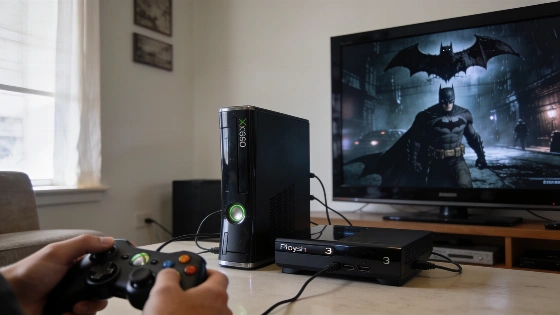
Batman: Arkham Asylum's 2009 release marked a turning point for licensed superhero games, setting new standards for gameplay, presentation and voice acting on Xbox 360 and PlayStation 3
When Batman: Arkham Asylum launched in 2009, it arrived at a time when licensed games were often dismissed as rushed tie-ins with little ambition. Developed by Rocksteady Studios, Arkham Asylum not only redefined expectations for superhero adaptations but also demonstrated that a licensed property could deliver both technical quality and inventive gameplay on console.
From Modest Beginnings to Genre Leader
Rocksteady Studios had not previously been known for major hits. Their earlier title, Urban Chaos: Riot Response, received a mixed critical response, with scores ranging from 5 out of 10 to 7.9 depending on the outlet. The leap from that modest first-person action game to Arkham Asylum's polished third-person experience was striking. The studio's transformation was led by director Sefton Hill, whose team would go on to produce a trilogy that remains influential in the superhero genre.
Arkham Asylum's release on Xbox 360 and PlayStation 3 was a technical showcase for Unreal Engine 3, combining sharp visuals with a dark, atmospheric art style. The game's presentation drew clear inspiration from Batman: The Animated Series, further enhanced by the return of Kevin Conroy and Mark Hamill as the voices of Batman and Joker. Their involvement gave the project a sense of authenticity that previous adaptations had often lacked.
Gameplay Innovation and Lasting Impact
What set Arkham Asylum apart was its approach to gameplay. Rather than relying on repetitive brawling or shallow stealth, the game introduced a fluid combat system built around parries, counters and chaining attacks. Detective Mode allowed players to investigate environments, scan for clues and plan their approach, making the player feel genuinely empowered as Batman. The level design encouraged both exploration and tactical thinking, with verticality and environmental interaction playing key roles.
Arkham Asylum's success was not a one-off. Its direct sequel, Batman: Arkham City, expanded the formula into a larger open world, sparking ongoing debate among players about which entry represents the series' high point. Both games remain widely respected for their narrative ambition and mechanical depth. The influence of Arkham Asylum can be seen in later superhero titles, including Insomniac's Spider-Man, which built on its foundations of traversal, combat and character-driven storytelling.
Technical Achievement and Platform Context
On a technical level, Arkham Asylum delivered impressive results for its generation. The game ran at a stable frame rate on both Xbox 360 and PlayStation 3, with detailed character models and atmospheric lighting that pushed the hardware. The use of Unreal Engine 3 enabled Rocksteady to achieve a level of polish that was rare for licensed games at the time. Even now, nearly two decades later, the original Arkham Asylum remains playable and visually coherent, though its graphics inevitably show their age compared to current standards.
For players interested in the broader context of milestone releases, it is worth noting that the impact of Arkham Asylum is often discussed alongside other influential titles. For example, the announcement of Thimbleweed Park 2 for PC, Mac and Linux has prompted similar conversations about how certain games can redefine expectations for their genres. Readers can find more on that topic in our coverage of the Thimbleweed Park sequel announcement.
What Remains Unmatched
Despite the evolution of superhero games since 2009, Arkham Asylum's blend of narrative, mechanics and presentation remains a reference point. Its ability to make players feel like Batman-through both investigative gameplay and satisfying combat-has rarely been matched. While later entries in the Arkham series introduced new features and larger worlds, many players still return to the original for its focused design and tightly woven story.
Arkham Asylum's legacy is not just in its critical acclaim or commercial success, but in how it shifted the perception of what a licensed game could achieve. It demonstrated that with the right creative direction and technical execution, adaptations need not settle for mediocrity. The game's continued relevance is a testament to the standards it set for both developers and players.
Understanding the difference between a remaster and a remake is important when discussing games like Arkham Asylum. A remaster typically updates visuals and performance for modern hardware while retaining the original game's core assets and mechanics. A remake, by contrast, rebuilds the game from the ground up, often introducing new technology, assets and sometimes even gameplay changes. Arkham Asylum has seen remastered releases, but its original design and systems remain central to its enduring reputation.