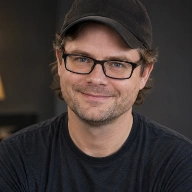
Richard Garriott says he notified Electronic Arts about reclaiming Ultima's copyright in 2027 under Section 203. The rights process remains unfinished, and any sequel or re-release is still only a possibility.
Electronic Arts received Richard Garriott's notice in April 2026, beginning a process that could return Ultima's copyright to its creator in 2027.
Garriott's 2027 claim
Garriott discussed the plan with Jesse Petrilla in an interview that has not yet been released in full. He said Section 203 of the US Copyright Act allows an original copyright holder to reclaim an assigned copyright after 35 years.
The provision generally covers transfers made on or after January 1, 1978. Termination usually becomes available during a five-year window that opens 35 years after the transfer. Section 203 does not cover works made for hire, and separate limits can apply to derivative works.
Garriott said he notified Electronic Arts in April 2026 and received a response acknowledging the law. The companies are discussing whether to work together on anything before the copyright formally returns in 2027. Industry reports say EA has not announced plans to challenge the initiative, while negotiations over possible cooperation continue.
The timeline is specific. Origin Systems changed hands in 1992, Garriott sent notice in April 2026, and the copyright is expected to return in 2027. That leaves most of a year for him to decide whether the recovered control should support archival releases or new development.
There is a legal wrinkle. The reported notice period differs from general guidance associated with Section 203. Explanations attributed to the U.S. Copyright Office say notice is usually sent between two and 10 years before the termination date. A copy must also be recorded with the Copyright Office before termination takes effect.
The public record therefore describes an intended termination, not a completed transfer of rights. No public EA press release or court decision confirming that the copyright has already returned has been identified in independent reports covering the matter.
Copyright is not trademark
The legal distinction sets a hard limit on the plan. Garriott's move concerns copyright in Ultima material, while the trademark attached to the series name remains a separate matter. Recovering one does not automatically recover the other.
Electronic Arts reportedly filed new ULTIMA trademark applications in June covering downloadable games, online games and other software. A future project could therefore face a separate trademark issue even if the underlying copyright returns to Garriott.
Garriott has suggested Lord British's Ultima as an alternative name. The title draws on his long-running Lord British persona in Ultima Online. It remains a proposed naming route, not a confirmed game announcement.
As of October 8, 2026, no new instalment or official project called Lord British's Ultima had been formally revealed.
Ownership of the underlying creative work could still make re-releases and sequels possible. It would not settle every issue involving branding or distribution. The copyright transfer creates an opening, not a finished product plan.
What could return
Garriott has identified two immediate possibilities: re-releasing earlier Ultima games and creating sequels. At Dragon Con in Atlanta last month, he also discussed reconnecting with developers who worked on the series.
Whether that project would become a single-player RPG or an MMO has not been decided.
Ultima has occupied both sides of that divide. Garriott directly supervised the nine main instalments through 1999's Ultima IX: Ascension. Ultima Online became one of the defining early MMORPGs after its release in 1997.
A revival built around the classic games would require a different design and production strategy from a new persistent online world.
Garriott's wider history explains the interest in the move. He released Akalabeth: World of Doom at 18 and sold over 30,000 copies before Ultima followed in 1981. He co-founded Origin Systems with his brother Robert in 1983.
Garriott later led Tabula Rasa at NCSoft. After leaving EA, he created the crowdfunded Shroud of the Avatar: Forsaken Virtues.
A legacy with unfinished business
Shroud of the Avatar: Forsaken Virtues launched in March 2018 to a lukewarm reception and a small player base. The game also drew criticism over its monetisation model, including expensive pledge tiers and virtual land.
Portalarium later sold the game's assets and development responsibilities to Catnip Games. The company remains involved with the title and recently delivered a major technical upgrade alongside numerous fixes.
Garriott's return to Ultima would put the creator in a position to decide whether the series should be preserved or rebuilt around the ideas that shaped it. The legal recovery would still leave separate questions over the name and the route to market.
No release date, developer line-up, platform plan or production announcement exists for a new Ultima project. The confirmed development is Garriott's notice seeking copyright recovery and the possibility of cooperation with EA.
As of October 8, 2026, no confirmed new Ultima game or official Lord British's Ultima project had been announced.