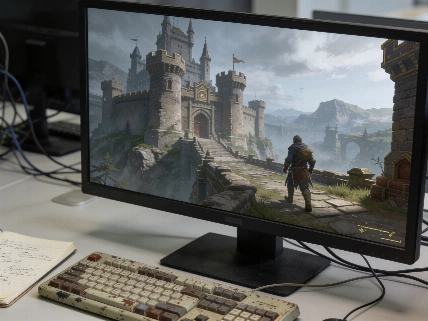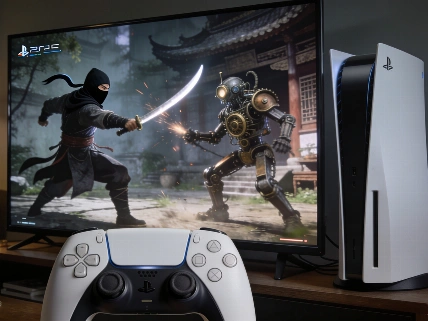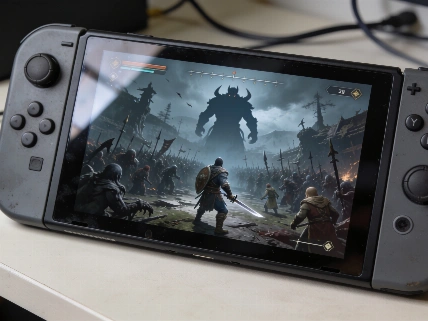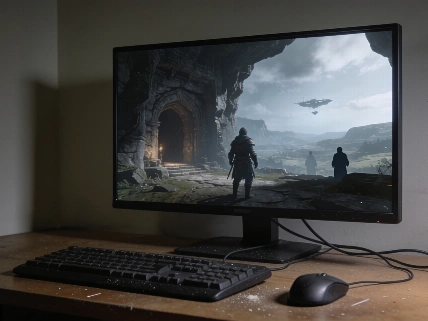

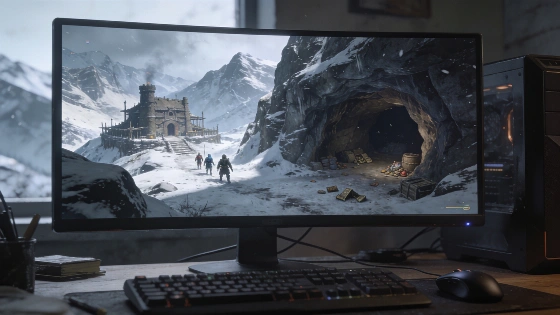
Dragon's Dogma 2: Dark Arisen brings a huge northern region and an appraisal-based loot loop for $29.99, but the sequel's chaotic combat remains largely unchanged.
CAPCOM has set the expansion's launch for October 9, 2026, on PlayStation 5, Xbox Series X|S, PC and Nintendo Switch 2. A free update for the base game will arrive on the same day. Dark Arisen adds roughly 30 hours of content, but its biggest change is not the size of Norgan. It is the way the region makes every unexplored corner worth checking.
The sequel needed that focus. Norgan is a dense northern region built around exploration, survival systems and a steady flow of unidentified Relics. The combat that held back the base game remains largely untouched. At $29.99, this is a substantial expansion with one clear weakness.
Norgan changes the formula
The expansion's strongest idea is its loot loop.
Norgan is a harsh land with one remaining settlement. A family there fights repeated attacks from Beorcans, Viking-like barbarians. The settlement becomes the player's base and unlocks Relics, abandoned items that Jiera must appraise before their properties appear. The setup recalls Diablo II: find unidentified equipment, return to safety, reveal its value and decide whether it belongs in the build.
Relics weigh almost nothing before appraisal. The Eternal Ferrystone also makes regular trips back to the settlement practical, so the return journey does not become a constant logistical chore. New weapons, skills, hairstyles and tattoo options broaden customization without replacing the core progression systems.
Discovery is tied directly to movement through Norgan. The region is large, vertically layered and packed with encounters. Its Climbing Hook turns vertical progress into a resource decision instead of a cosmetic traversal feature. Whiteouts can cut visibility and disable certain functions. Players must manage cold exposure with thermal gear, meals and Heatstones.
Those systems give Norgan a stronger identity than the more familiar regions of Vermund and Battahl. NVIDIA's official support information also places a new storyline in the northern setting, with a second Arisen at its center.
There is a cost to all that abundance.
Relics arrive too often, so inventory management becomes a regular interruption. Pawn companions draw from the same equipment pool as the player character. Every promising find then competes for limited space and attention. Some Relics are only potions or gold, and those drops weaken the system's focus. They would make more sense outside the main Relic loot table.
A better story with familiar combat
The narrative is a clear step up from the base game. The investigation into rumors of a new Arisen in Norgan gives the campaign a tighter direction. Side quests add more character detail and context. The player character remains silent, but the surrounding story is more coherent and more satisfying than the original campaign.
The existing regions do not get rebuilt around the expansion. Instead, they receive more than 12 Lost Rites Trials inside sections of already existing dungeons. Some trials are available immediately. Others require conditions such as carrying no more than an Average weight or choosing a specific Vocation.
The trials are short and easy, but they help players prepare for Norgan. They also reward Offering Flames. Players can spend those at Obelisks of Benediction for permanent bonuses, new Vocation skills or temporary increases to drop rates.
Those additions improve progression without changing the combat model underneath. Battles still have weight and spectacle, yet players often lack the control needed to turn that spectacle into deliberate tactics. Stamina management remains awkward, especially during boss encounters. Most Vocations do not offer a parry or dodge either.
Fights can be enjoyable, but they often turn into chaotic exchanges. Positioning and timing matter less than the game's visual intensity suggests.
Value against its limits
The numbers make the proposition easy to read: approximately 30 hours of expansion content for $29.99, with a review score of 8.5. Vermund and Battahl remain largely unchanged apart from the Lost Rites Trials, while most of the new material sits inside Norgan.
The review was conducted on PC with code supplied by the publisher. Technical performance had improved significantly with Update 3.2. That matters for a game built around a large, demanding region, although the assessment applies to the tested PC version rather than every possible configuration.
For the price, the expansion offers a lot. Norgan is not simply a larger map. Its Relic economy, cold management and vertical exploration give the game a more directed rhythm than the base version. PC players should also note that graphics enhancement mods are recommended.
The free update arriving with the expansion adds DLSS 4.5 Dynamic Multi Frame Generation and Super Resolution on PC, according to NVIDIA. Those features belong to the base-game update, not to the paid DLC alone.
Dark Arisen follows a long stretch in which sales and updates slowed and fans began to doubt that a similar expansion would appear. CAPCOM revealed it during June's Nintendo Direct alongside a Nintendo Switch 2 port. The release remains scheduled for October 9, 2026, across all announced platforms.
The developers told Video Games Chronicle that they first used player feedback to deliver free quality-of-life improvements to the base game. They then moved forward with the expansion. Those changes are available to everyone, whether or not they buy the DLC.
That broader expansion model is not unique to CAPCOM. Our earlier expansion coverage shows how different RPGs use new regions to extend an established foundation. Dark Arisen takes a narrower route. It puts most of its value in one region and one repeatable activity instead of trying to overhaul every part of the original game.
The missing tactical step
Dark Arisen understands where Dragon's Dogma 2 needed more focus, but not where it needed more control. Norgan is the best-designed part of the package. Its story is more disciplined, and the Relic loop makes exploration feel materially rewarding.
Boss fights still expose the old limits. Stamina restrictions and the lack of defensive options can leave players reacting to chaos instead of mastering it.
A loot loop works when identification creates a meaningful choice about equipment, build direction or future exploration. Dark Arisen gets the anticipation right, but it sends enough low-value drops into the inventory to make sorting feel like part of the challenge.
Even so, the expansion makes a convincing $29.99 purchase for players who wanted more Dragon's Dogma 2. A sizeable region and a better narrative outweigh the inventory friction. The unchanged combat keeps Dark Arisen from becoming the definitive version of the game.
The wider series had passed 14 million copies sold as of March 31, 2026, according to a pre-release GameDaily reference. Dragon's Dogma 2 first launched in March 2024.
Free Title Update 4.0 gives the launch more than a standard DLC release. It adds Hard Mode, the new Orienteer Pawn specialization, New Game Plus improvements and more image settings, including PSSR support on PS5 Pro and updated DLSS options on PC. RPG Site and Gamers Matters reported that the update is planned for the same day as Dark Arisen, so every player can receive those underlying improvements without buying the expansion.