The final preview reveals a 66-day challenge mode, flexible weapons and boss fights built around learning instead of grinding.
A second run begins with a choice that can quietly turn the campaign into a countdown.
One of Soul's possible hearts expires after 66 days. The mode is optional, unlocks only after the first clear and is not required for the PlayStation 5 platinum trophy. It tests execution rather than endurance, putting pressure on experienced players without burdening a new game.
A Standalone Beginning
The final preview opens with Soul's story instead of dropping straight into combat. A flashback to his youth introduces the fundamentals while establishing his lifelong friend and rival, Zuo Shang.
Zuo Shang appeared in earlier Phantom Blade titles, but S-Game presents Phantom Blade Zero as a standalone game. Prior knowledge of that world is not required. The project remains rooted in the Rainblood/Phantom Blade series and is being developed by Beijing-based studio S-Game, according to Polygon.
Soul's origin is grim. His sworn brother leaves him for dead before a mysterious deity offers rebirth through a replacement heart. Players choose between two hearts, though the one with the 66-day expiration stays locked until the first completion.
The preview was played on PC, and the developer provided travel and accommodation. The optional mode lasts 66 days, unlocks after one clear and does not block the PlayStation 5 platinum trophy.
Kung-Fu Punk In Motion
Before exploration opens up, Soul must survive a horseback pursuit across a dangerous mountain pass. He steers a horse-drawn cart while the camera shifts around him. Pseudo quick-time events force him to control the horses, parry incoming attacks and maintain a counterattack.
The sequence ends with Soul driving over a cliff. He uses the animals' momentum to launch himself across a gap.
That extravagant set piece gives "Kung-Fu Punk" more weight than a genre label. Phantom Blade Zero demands the careful reactions associated with a Soulslike, yet it also leans hard into wuxia choreography. Its identity comes from putting defensive precision beside deliberately excessive martial-arts spectacle.
Once the opening sequence ends, the structure becomes easier to read. Phantom Blade Zero uses self-contained chapters rather than one fully open world, with progression comparable to the first two Nioh games.
Each chapter hides collectibles and alternate routes. Shortcuts appear alongside new weapons, while optional bosses wait away from the critical path. Exploration can materially improve the next attempt after Soul dies.
Combat Without The Grind
Checkpoints restore health and consumables without reviving enemies that have already been defeated. Removing one opponent changes the next run through an area instead of resetting the encounter whenever the player rests.
Experience is finite, so players cannot simply grind levels until a difficult boss becomes manageable. Progress instead comes from reading attack patterns and selecting the right response. A dodge may work where a parry fails, while a counterattack can punish a different opening.
The burden falls on the player's knowledge rather than Soul's statistics. Repeated attempts are meant to teach timing, giving the bosses a purpose beyond forcing players to build a stronger character.
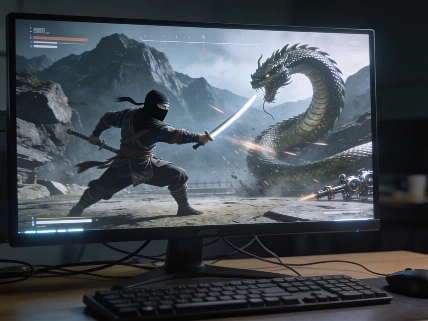
The weapon system reaches from familiar Chinese martial-arts designs to mechanical creations that sit well outside a strictly historical Ming dynasty interpretation. One drunken sword style turns a Jian into an autonomous flying blade as Soul stumbles and rolls around the battlefield.
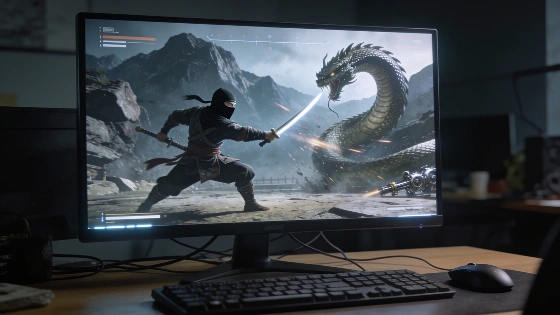
Against a fast-moving snake boss, however, that weapon dealt far less convincing damage than a large two-handed sword.
Most experimentation is reversible, but upgrades may carry a lasting cost. Raising a weapon beyond a certain threshold appears to require a consumable that locks it at that level. Resetting the weapon can recover part of the investment, yet the upgrade item or materials used to reach that point may remain permanently attached.
There is no confirmation that every weapon can be fully upgraded in one playthrough. Early investment could therefore punish players who later find that a weapon does not suit their style.
Bosses Carry The Experience
The bosses are the clearest reason to watch Phantom Blade Zero closely. Their encounters revolve around distinct patterns and identities, while the soundtrack changes with the fight.
A second phase can push the music into another genre and layer familiar themes over a larger arrangement. The shift lands as more than a new health bar.
The game is unusually generous after a failed phase attempt. Reaching a boss's second phase unlocks that stage for later challenges, so an immediate death after the transition does not force a repeat of the entire opening section. Soul returns with a refreshed arsenal and can practise the newly revealed phase directly.
That choice does not make the combat easy. It strips away repetition that teaches nothing and keeps attention on the attacks that caused the failure.
Finite experience and defeated enemies staying down after checkpoint rest reinforce the same design. Phantom Blade Zero wants players to adapt rather than farm resources until stronger numbers overwhelm the problem.
The preview still leaves important limits in place. The build ran on PC, and the session lasted only a few hours. It supports a strong assessment of the combat direction and encounter design, but it cannot settle the finished game's stability. Balance and overall value also remain untested.
Polygon reports that Phantom Blade Zero is scheduled to launch on October 29, 2026, for PlayStation 5 and Windows PC. The PC versions will be distributed through Steam and the Epic Games Store. The date may appear as October 28 in the United States because of time-zone differences.
The launch was originally planned for September 9, 2026. S-Game moved it back by 50 days to allow additional refinement.
iGameMag quoted S-Game director Soulframe Liang as saying the team had a "last opportunity" to make the game significantly better. Liang said improving the release version was preferable to relying on post-launch patches.
Sony devoted a separate August State of Play presentation to Phantom Blade Zero, showing almost 20 minutes of gameplay. That showcase widened the public view beyond preview sessions while keeping the focus on martial-arts spectacle and demanding action.
At the time of the available reports, digital pre-orders had been reported for PS5 and PC. A physical launch edition had not been officially confirmed.
Here, dynamic difficulty does not mean the game secretly changes its rules to help the player. It describes how a fight's demands shift when new phases and attacks appear, with musical arrangements changing alongside them.
A checkpoint that preserves a discovered boss phase reduces repetition, while finite experience stops conventional grinding from replacing learning. The full campaign's ability to sustain that pressure remains untested before the October 29 release date.