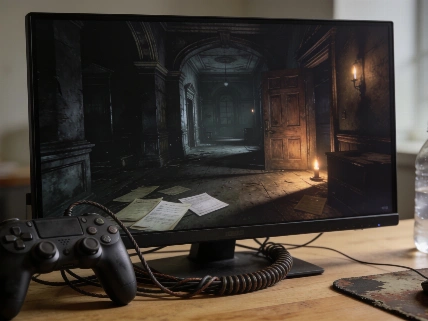

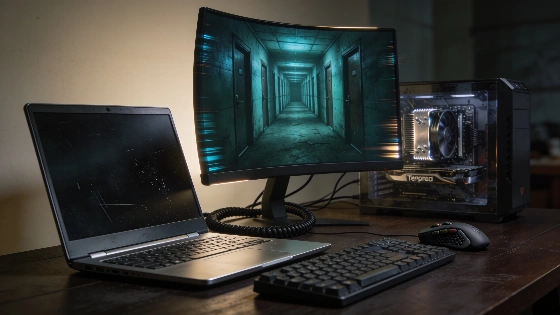
LoreanXavier's fan-made P.T. PC Port has reached version 1.0.1 with native PC rendering, DLSS 4.5, frame generation, ray tracing mods and experimental VR support.
Konami removed P.T. from the PlayStation Store on April 29, 2015, and later blocked redownloads even for users who had added the teaser to their libraries. LoreanXavier's fan-made project now offers PC owners a native way to run it, provided they supply their own game files.
A native PC preservation project
P.T. can run as a native Windows game instead of through an emulator or an Unreal Engine recreation. Version 1.0.1 uses a custom Vulkan renderer and a rebuilt C++ logic layer. It loads the original PS4 levels, models, textures, audio, scripts and cutscenes from files supplied by the user.
Numerama and Game Rant describe the project as a reconstruction of the original game's logic and rendering. It is not an emulator, a wrapper or a remake built on another engine. The project does not include Konami's game data, so anyone using it needs a dumped copy of P.T.
That setup matters. The port works with the original resources without putting them into the download. Game Rant says this separates the project from an unofficial remake and keeps copyrighted material out of the distribution.
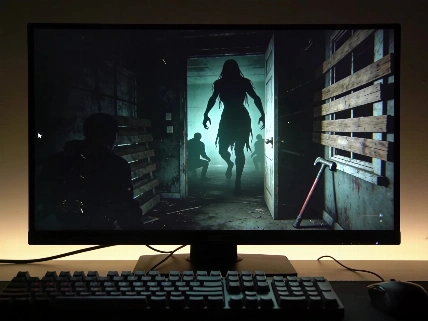
Released in 2014, P.T. built its reputation around a hallway that loops back on itself and changes through encounters with Lisa. The short horror experience leaned on atmosphere, sound design and repetition instead of conventional combat. Its structure remains easy to recognize as one of the most effective horror experiments of the PlayStation 4 era.
Konami canceled Silent Hills in April 2015. P.T. disappeared from the PlayStation Store later that month, and the official route to the teaser closed down. The PC project cannot bring back that storefront release, but it gives players who have the required files another way to access the game.
Before version 1.0.1, public descriptions put the project at about 97% complete. That figure marked an earlier point in development, not an official release or commercial distribution. The port remains a fan project with no announced support or approval from Konami. Softonic and Latest in Tech also describe it as unaffiliated with the rights holder.
Modern rendering options
Version 1.0.1 removes the original hardware limits on resolution and frame rate. It supports NVIDIA DLSS 4.5, AMD FSR 3.1 / 4.1 and Intel XeSS, along with native-resolution DLAA and FSR Native AA.
NVIDIA RTX 40 Series GPUs can use DLSS Frame Generation. AMD FSR 3 Frame Generation works on Radeon RX 5000 Series and newer hardware. That gives owners of newer cards a way to smooth out the display rate without changing the original game's core assets.
Graphics presets run from Low to Ultra, and the original PS4 setup remains available as a baseline. Optional upgrades include ray-traced shadows, ray-traced ambient occlusion, ray-traced floor reflections, higher-resolution shadow maps, enhanced textures and improved anisotropic filtering.
Players can stick close to the PS4 look or push the hallway well beyond what the original hardware delivered. The feature list also includes Photo Mode, Free Camera, an experimental third-person mode, a Loop Browser, Game+ mod support and experimental OpenXR VR support.
Those tools change how the compact horror game can be examined and replayed. They do not change where its levels, sounds, scripts and other assets come from: the user's original game files.
Performance and limits
A reported test used a gaming laptop with an Intel Core i7-12700H and an NVIDIA GeForce RTX 4060 Laptop GPU. At 1080p, DLSS Super Resolution in Quality mode, Preset L and the Ultra preset produced more than 100 frames per second. DLSS Frame Generation often pushed the displayed rate above 200 frames per second.
Those results belong to that laptop and those settings. They are not a promise of the same performance on every PC. The hardware was also relatively modest by current enthusiast standards, while the selected settings already went beyond the original PS4 configuration.
Frame generation adds displayed frames after the base image has been rendered. It does not remove the underlying rendering work, and a higher displayed rate should not be confused with native performance or lower input latency.
The port fits into a wider PC preservation scene where new rendering layers can give older games more room to run. Our earlier coverage focused on Xbox strategy, not preservation. The contrast is useful: LoreanXavier's project relies on a rebuilt technical foundation and access to original files rather than a commercial release plan from a platform holder.
Why the port matters
P.T. has been hard to access through official channels for more than a decade. This port pairs the original assets with a native Vulkan renderer, while mod support and experimental camera options add tools that the 2014 release never had.
The boundaries are clear. The port is not an official Konami release, and it does not distribute the copyrighted game data. Third-person mode and OpenXR VR are experimental additions to a preservation project, not proof of a newly authored version of P.T.
Numerama, Game Rant, Softonic and Latest in Tech all describe the project as separate from Konami. Konami has not announced support for or approval of the Windows port.
Version 1.0.1 keeps the work that made P.T. memorable while adding control over resolution, frame rate, reconstruction, ray tracing and mods. The project is more than a simple launcher for an abandoned download because it keeps the original files separate from the rebuilt engine.
Frame generation still needs a close look. A displayed rate above 200 frames per second does not mean the laptop rendered every frame conventionally. DLSS and FSR can reconstruct or generate extra frames after the base image is ready, while ray tracing adds work to shadows, ambient occlusion and reflections. The result may look smoother on suitable hardware, but the measured figures remain tied to the stated laptop configuration and settings.