
Xbox CEO Asha Sharma says first-party revenue has started growing again after a damaging Game Pass strategy. A wider restructuring now points to a new console plan built around a family of Gen-10 devices.
Xbox says it has made its first measurable recovery after a period of decline that included 3,200 job cuts and the removal or restructuring of several studios. CEO Asha Sharma told staff that first-party revenue had returned to growth after the previous Game Pass strategy sent the division's finances into a steep decline.
A claimed revenue recovery
According to Windows Central's report on Sharma's latest staff address, the executive said Xbox had reached an all-time low before starting to recover. She described the current position as a return to growth at more than two to three times the previous level. She also said the trend was expected to continue.
That is a substantial internal claim, but it is not a complete financial picture. The statement refers specifically to first-party revenue. It does not cover total Xbox revenue, hardware sales, Game Pass subscriptions or operating profit. Microsoft has not provided those wider figures in the supplied material, so the announcement does not establish that every part of the business has turned around.
The available financial context makes that distinction clear. A Trading News summary of Microsoft's reported fiscal 2026 results says gaming revenue fell 7% to $21.79 billion and hardware revenue declined 29%. Those figures do not appear in the Microsoft material supplied here and still need to be checked against the company's official annual report. The same summary says Xbox content and services revenue fell 10% year over year in the fourth quarter. It also reports lower operating profit and higher costs linked in part to restructuring and impairment charges.
Those reported figures do not directly disprove Sharma's first-party claim. They cover different parts of the business and use different measures. They do show why a recovery in selected first-party revenue cannot automatically be treated as a recovery across Xbox as a whole. Microsoft's own financial reporting remains the primary benchmark for separating game performance from hardware, subscriptions, costs and profitability.
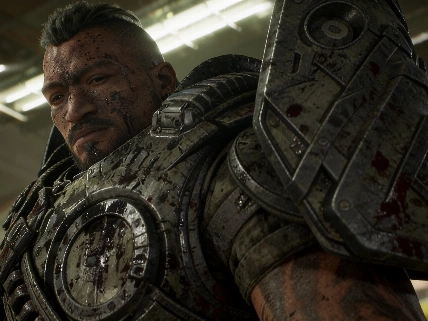
Sharma linked the improvement to stronger starts for Mojang's Minecraft Dungeons II, The Coalition's Gears of War: E-Day and Blizzard's World of Warcraft Forever. She also said Xbox sentiment had improved by 30% compared with last year. The source provides no method for measuring that figure or a breakdown of how it was calculated.
The console reset
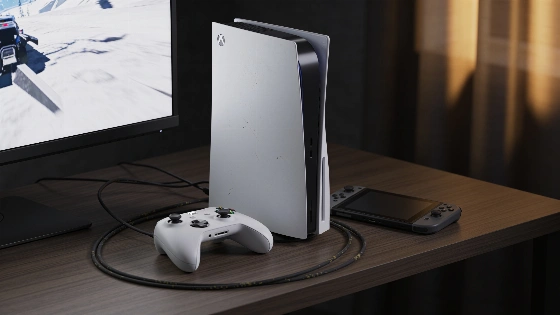
The clearest strategic detail is Sharma's renewed focus on the console business. She said Xbox was moving toward a family of Gen-10 devices instead of relying on one machine. A flagship console is planned, along with products for players who want to play on the go.
That points to a wider hardware strategy, not simply one replacement for current Xbox consoles. Sharma also said Xbox would make some devices itself and work with partners on others. She described the operating system for Xbox Helix as increasingly polished. The material does not confirm a launch date, specifications or a final product list for Xbox Helix.
Available accounts of Microsoft's next-generation plans describe Gen-10 as a family. Microsoft would develop its own console while creating some other devices with partners. The specific models, prices and commercial release dates remain undisclosed. Project Helix has also been described as using a purpose-built AMD chip and supporting Xbox and PC games. Alpha hardware for developers is reportedly planned for 2027, but that is not a confirmed consumer launch date.
The most likely reading is that Xbox is considering a console-led platform alongside a handheld partnership similar to the ROG Xbox Ally, which launched last year. Microsoft and ASUS announced the ROG Xbox Ally and Ally X handhelds for release in 2025. That partnership gives Xbox a real example of moving beyond the traditional console instead of leaving the idea as a proposal. It is still separate from a confirmed announcement of a new Xbox-made handheld. Players have no disclosed price, performance target or release schedule to assess.
What Sharma has changed
Sharma replaced retiring executive Phil Spencer on February 20 and has since pushed through a rapid series of changes. She pledged to focus on core Xbox players. She quietly ended the "This Is an Xbox" marketing campaign and wound down Copilot for gaming on Xbox consoles and the Xbox app after negative feedback from fans.
In April, Game Pass Ultimate fell from $29.99 to $22.99 per month. PC Game Pass dropped from $16.49 to $13.99. The price changes came with a decision to stop launching future Call of Duty games day one on Game Pass. Those releases are instead expected roughly a year later. On April 23, Microsoft Gaming was renamed Xbox, and Sharma's title became CEO of Xbox.
July brought the harshest reset. Xbox announced roughly 3,200 job cuts across fiscal year 2027. It also moved Compulsion Games, Double Fine and Undead Labs out of Xbox ownership so they could become independent. Ninja Theory was set to be sold, but that deal later fell through. The UK studio may now face closure. Arkane Lyon also entered a consultation process.
September brought another round of restructuring. Halo moved to Activision alongside World's Edge and Rare. Obsidian moved under Bethesda. Turn 10 was absorbed into Playground Games, and King took over Microsoft Casual Games. Xbox also stepped in to publish Hideo Kojima's PHYSINT after Sony walked away from the project in June. The shift is part of a wider industry story about platform access and hardware reach, as explored in our earlier hardware breakdown.
Growth still needs proof
The measurable facts in Sharma's update are limited but significant. She claims first-party revenue is growing at more than two to three times its previous level. She says Xbox sentiment is up 30% year on year. Game Pass Ultimate was cut by $7 per month, while PC Game Pass fell by $2.50 per month. These figures show a direction and a set of policy changes, not a verified company-wide turnaround.
The strategy now faces two demands. Xbox must restore the value of its first-party catalogue while making console hardware important enough to justify further investment. Lower subscription prices may widen access, but delaying future Call of Duty launches on Game Pass changes the service's central attraction. The planned device family could take Xbox beyond the living room. The hardware remains a plan, not a finished product.
The supplied material also offers no supported indication that Microsoft has put Xbox or its gaming business up for sale. Reports of a possible spin-off were rejected according to media coverage. No direct Microsoft statement is provided here, so that point should be treated as a reported status rather than primary confirmation.
Sharma's comments mark a credible change in direction, not a proven recovery. The revenue claim matters because it suggests that Xbox's first-party business may have stabilised after reaching its lowest point. The layoffs, studio divestments and structural transfers show the cost of getting there. Until Microsoft publishes broader financial evidence and Xbox Helix becomes a defined product, the clearest conclusion is that Sharma has imposed a decisive reset. Its success will depend on delivered games and hardware, not internal optimism.
First-party revenue measures money generated by games owned or controlled by the platform holder, but it does not show exactly how that money was made. The increase could come from game sales, downloadable content, subscriptions or other player spending. The figure says nothing by itself about profitability or hardware demand. That is why Sharma's statement is meaningful evidence of movement, but not proof that the entire Xbox business has recovered.