
Dirge of Cerberus - Lost Episode, a rare Final Fantasy 7 mobile spin-off, has been recovered and preserved after years of being unplayable, thanks to a dedicated effort involving significant technical and financial investment
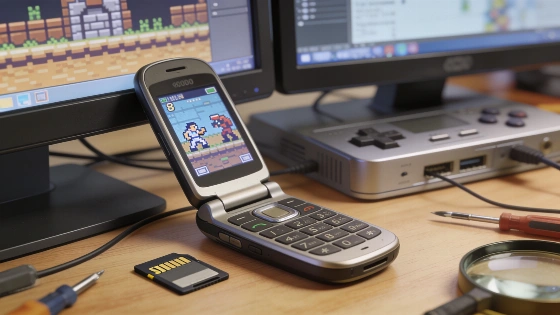
Dirge of Cerberus - Lost Episode, a little-known mobile spin-off from the Final Fantasy 7 universe, has finally been preserved after more than twenty years of inaccessibility. The game, originally released for feature phones, had become effectively lost to players due to the obsolescence of its platform and the encryption of its data. Its recovery marks a rare success in the ongoing challenge of video game preservation, particularly for mobile titles that were never widely distributed or ported to modern systems.
The Preservation Effort
The breakthrough came when video game preservationist Yuvi, working with the feature phone preservation group Keitai Wiki, managed to obtain the game's encrypted data from an old SD card. The process was far from straightforward: the SD card's encryption required a unique key, which was not directly accessible to the team. To overcome this, Yuvi developed a brute-force programme and utilised a GPU farm, ultimately spending over $900 USD to unlock the data and make the game playable once again.
This level of technical and financial commitment is not unusual in the world of digital preservation, where rare games can be locked behind hardware and software barriers that were never intended to be breached. The successful recovery of Dirge of Cerberus - Lost Episode demonstrates both the complexity and the cost of saving mobile games from permanent loss.
Why This Spin-Off Matters
Dirge of Cerberus - Lost Episode occupies a unique place in the Final Fantasy 7 compilation. Designed as a 'midquel' to Dirge of Cerberus: Final Fantasy VII, it adapted the series' shooter mechanics for mobile phones and focused on Vincent Valentine, a character who has since become a cult favourite. Despite its limited reach and mixed critical reception, the game represents a distinct chapter in the franchise's history, especially as Square Enix continues to revisit and expand the Final Fantasy 7 universe.
The preservation of this title is particularly timely, as Vincent Valentine is set to return as a playable character in Final Fantasy 7 Revelation, scheduled for release next year. For players interested in the broader narrative connections between spin-offs and mainline entries, the recovery of Lost Episode offers a rare opportunity to experience a previously inaccessible part of the story. For more on how these spin-offs are being woven into the current trilogy, see this analysis of Final Fantasy VII Revelation's narrative integration.
The Technical Challenge of Mobile Game Recovery
Recovering games from the feature phone era is notoriously difficult. Unlike console or PC titles, many mobile games were distributed in formats tied to specific devices, networks, or even individual SIM cards. Encryption, proprietary file systems, and the lack of official archives mean that even when data survives, it is often unreadable without significant reverse engineering. In this case, the need to brute-force the SD card's encryption highlights the technical barriers that preservationists routinely face.
The $900 USD spent on this single recovery is a stark reminder of the resources required to save games that were never designed for long-term accessibility. Without such efforts, entire segments of gaming history-especially those tied to now-defunct mobile platforms-risk being lost forever.
Game preservation is an increasingly urgent issue as digital-only releases and platform closures become more common. While high-profile console and PC games often receive remasters or ports, mobile titles like Dirge of Cerberus - Lost Episode are far more vulnerable to disappearance. The work of independent preservationists is therefore essential to ensuring that even the most obscure entries in major franchises remain accessible to future players.
Encryption is a method of securing digital data by converting it into a format that can only be read with a specific key or password. In the context of game preservation, encryption can make it extremely difficult to access or restore old titles, especially when the original hardware or keys are no longer available. Brute-forcing is a process where computers systematically try every possible key until the correct one is found, which can require significant computing power and time. As more games are distributed digitally and protected by similar methods, the challenge of preserving them for future generations is only likely to grow.