
CONTROL Resonant has a hidden dodge offset technique that lets players avoid attacks without resetting their combo strings. Moving dodge to L1 or LB makes the timing much easier to manage.
A dodge in CONTROL Resonant does more than keep the player out of danger. Used correctly, it preserves the current attack string. The next strike can then continue toward a finisher instead of restarting with the opening hit. That makes dodge offset one of the most useful techniques in the combat system, even though the game does little to explain it.
Why dodge offset matters
CONTROL Resonant is an action RPG, not a pure action game. Its combat still draws on ideas associated with Devil May Cry, Ninja Gaiden and Bayonetta. Players can cancel attacks with a dodge or combat ability. That gives encounters a more deliberate rhythm than simply attacking until an animation ends.
Dodge offset builds on that flexibility. It lets an evasion interrupt the sequence without wiping out its progress.
Kotaku describes a combat system built around a primary weapon, a secondary weapon and separate combat abilities. Combo routes depend on those inputs rather than elaborate command strings. The Aberrant's transformed weapon forms make the timing between an attack, an ability and a dodge especially important.
The payoff is simple. A player can avoid an incoming attack and return to the next hit instead of repeating the first one. That creates more chances to reach a Combo Finisher. It also makes the third attack in a Secondary Aberrant Form combo much easier to use without taking damage.
Dodging matters even more because CONTROL Resonant is not built around a parry-first defense system. VICE's review identifies evasion as the main defensive tool. Preserving offensive progress through a dodge therefore links the game's primary defense directly to its combo system.
The game does not present dodge offset as a named technique. It is not a separate ability activated from a menu. It is a timing and input method built into the link between attacking and dodging.
Hold the attack button
The essential step is to keep the attack button held throughout the dodge. Releasing it during the evasion breaks the technique. Treat the dodge as part of the attack string, not as a completely separate defensive move.
Primary Aberrant Forms make this harder. If the attack button is released and pressed again during the dodge, the character will perform a Dodge Attack if that move has been learned. That can replace the intended continuation and leave less room for error.
The reliable method is to keep pressure on the attack button from the original strike, through the dodge, until the sequence is ready to continue.
Secondary Aberrant Forms are easier to manage. Their attacks can be charged, and they do not have Dodge Attacks. Holding the attack button during an evade is therefore less likely to trigger an unintended move. The third hit in a Secondary Aberrant Form string is generally useful, so dodge offset becomes close to essential whenever the alternative is standing still and taking an enemy hit.
The better controller layout
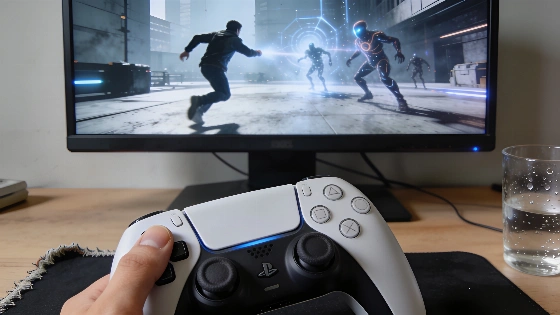
On PlayStation, the default dodge input is Circle. On Xbox, it is B. Those face-button positions make consistent dodge offset awkward because the player must hold the attack input while reaching across the controller to evade. Primary Aberrant Forms show the problem most clearly because their timing is less forgiving.
Remapping dodge to L1 on PlayStation or LB on Xbox fixes the main physical problem. The player can hold the attack button with the usual finger and use a shoulder button for the dodge. Repeating the required inputs becomes easier instead of turning each attempt into an uncomfortable grip adjustment.
The change does not remove an important combat function. L1 and LB are assigned to Radio Conversations, Shifting and Interacting, but those actions can be moved to another button without disturbing the battle controls described here. It is a practical trade, not the loss of a core combat command.
The useful numbers are clear. Circle or B is the default dodge input. L1 or LB is the recommended replacement. The main payoff is access to the third hit in a three-attack Secondary Aberrant Form string. This guide is based on a full PC playthrough on version 1.00, with screenshots captured from that same version.
PlayStation Blog's launch coverage describes CONTROL Resonant as a melee-focused action RPG built around the transformed Aberrant weapon system. The release is set for 24 September 2026. That makes the control adjustment more than a minor comfort setting. The game's identity is tied to close-range fights, where keeping momentum through an evasive animation can decide whether a weapon form reaches its strongest hit.
What players should practise
Start with Secondary Aberrant Forms. Hold the attack button before pressing dodge. The lack of a Dodge Attack makes mistakes easier to spot, while the charged input gives players more time to learn the rhythm.
Once the motion feels natural, move to Primary Aberrant Forms. Releasing the button during these attacks can change the result.
The technique also fits the game's wider risk-and-reward structure. Official and near-official previews describe healing and momentum as tied to active combat. Defeated enemies can also drop recovery items. A dodge that preserves the attack string helps the player stay aggressive without treating defense as a pause in the fight. Avoiding damage and continuing the sequence can support the same momentum-driven loop.
CONTROL Resonant's progression system gives the technique room to develop beyond the opening hours. GameRant reports 60 unique talents in the talent tree. That suggests the basic dodge-and-combo loop sits inside a much larger set of progression choices. Players do not need every talent to learn dodge offset, but the size of the tree makes a consistent input layout useful as combat options grow.
The technique rewards control rather than frantic button presses. A successful dodge offset is not simply a well-timed evade. It is an evade that carries the attack sequence forward. That is why the remapped layout matters. It reduces the physical friction between defense and offense and leaves the player in a better position to reach the attacks that make a combo worthwhile.
That difference between a supported mechanic and evidence a player can verify also appears in NGB's earlier PS5 Pro report, although that article dealt with performance rather than controls. In CONTROL Resonant, the evidence is practical. The input sequence preserves the combo, and the remap makes the sequence easier to perform.
Performance choices may affect how comfortable the timing feels on different platforms. DayOne's coverage reports 30, 40 and 60 fps modes. Players should keep in mind that the rhythm of an animation-driven dodge can feel different depending on the selected mode and display setup. The input principle stays the same, but a consistent frame-rate setting can make practice more repeatable.
Dodge offset is not an optional flourish for players chasing stylish footage. It is the cleanest way to keep attacking while respecting incoming damage, especially when a combo's later hit is its most valuable part. CONTROL Resonant gives the mechanic enough room to matter, but the default layout works against it.
Moving dodge to L1 or LB is the strongest adjustment in this guide. It turns a hidden technique into a dependable part of everyday combat.
Dodge offset is best understood as input buffering across an evasive animation. The attack command remains active while the character moves out of danger. The next part of the string can then resume instead of resetting.
That is different from simply dodging and attacking again because the combo's position is retained. Holding the original attack input throughout the maneuver is the decisive detail.