
Naoki Hamaguchi says Final Fantasy VII Revelation will offer a PS5 Pro mode targeting 4K image quality and 60 FPS through PSSR. A gamescom demo looked strong, though it occasionally fell below 60 FPS.
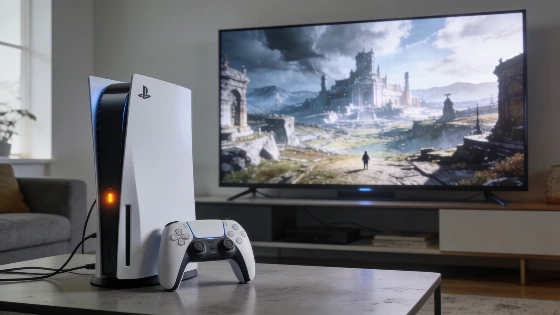
Final Fantasy VII Revelation could become one of the clearest tests of the PlayStation 5 Pro. Series director Naoki Hamaguchi says the console will offer a mode that targets 4K image quality and 60 FPS gameplay through PlayStation Spectral Super Resolution.
The PS5 Pro mode
Hamaguchi confirmed the feature on X while discussing the PlayStation 5 Pro version of Final Fantasy VII Revelation. The profile is called Versatility Mode. He described it as delivering "both 4K image quality and 60 FPS gameplay" with help from PSSR. He also listed the PlayStation 5 Pro among the recommended ways to play the project.
The game will use PSSR with improved ray tracing to reach a presentation that would normally make players choose between sharper visuals and smoother movement. Coverage published around September 21 and 22, 2026, also treated the feature as confirmed. It is now presented as part of the PS5 Pro version rather than a possible addition.
That wording matters. The claim is about a mode that delivers 4K image quality and 60 FPS gameplay. It does not promise native 4K rendering in every scene. PSSR is an image upscaler, so the final result will depend on how the game rebuilds each image and how well it holds the performance target.
The base PlayStation 5 is expected to offer three graphics modes. Graphics Mode focuses on 4K output at 30 FPS. The two 60 FPS Performance options are called Sharp and Smooth. Versatility Mode gives the PS5 Pro a separate profile built to combine priorities that remain split across the standard console's presets.
Evidence from gamescom
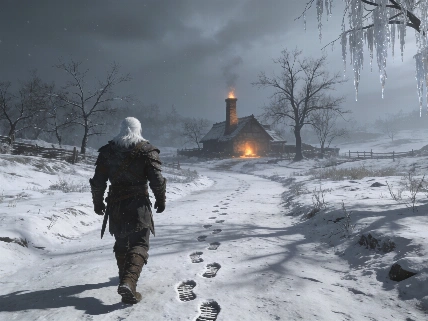
The clearest evidence so far comes from the open-world demo shown at gamescom. The build ran on a PlayStation 5 Pro and produced a clean image with high apparent resolution. Performance was generally smooth. It was not perfect. The demo dropped below 60 FPS several times.
GameRant described the image as very clean and the performance as close to 60 FPS. Its report also noted the occasional dips. The demonstration points to the direction of the technology, but it is not a final benchmark for the finished game.
The drops are not surprising for a game still months from release. They also mean the demo cannot be treated as a final performance result. A show-floor build cannot show how the complete game will run across every area, mission or traversal sequence. It still offers more useful evidence than a carefully edited trailer because players could see the performance during play.
The result looked notable even beside a heavily modified PC version of Final Fantasy VII Rebirth. That comparison was not a controlled benchmark, and it does not establish platform parity. It suggests that the Pro build already has a convincing visual base before launch.
Why the claim matters
PlayStation 5 Pro upgrades have sometimes created less distance from the base PlayStation 5 than promotional material suggested. Hamaguchi's statement therefore needs to be tested rather than accepted on its own. In this case, a playable demonstration supports the claim. It reportedly combined high image quality with a frame-rate target that stayed close to 60 FPS for most of the session.
For players choosing between the two consoles, the appeal is simple. The base PlayStation 5 remains the reference point, with its 30 FPS Graphics Mode and separate Sharp and Smooth performance options. The Pro version is aimed at players who want stronger visual quality without giving up the response of a performance mode. Improved ray tracing gives them another reason to expect a visible difference, though the source does not provide a direct comparison with the base console.
The wider platform case is also getting stronger. GTA 6 is described as targeting the best possible launch experience on PlayStation 5 Pro, giving the console another major open-world test. A powerful PC still offers more technical flexibility through mods. Sony's mid-generation refresh has a clearer case when a demanding game can bring its visual and performance goals together in one mode.
Promise versus proof
The main limitation is timing. Final Fantasy VII Revelation has not been released. The gamescom demo was unfinished, and the drops below 60 FPS show that a target is not the same as a locked result. The supplied evidence also contains no independent testing of a retail build. Claims about long-term stability or performance across the full game would be premature.
That caution matters in a platform story where marketing claims can quickly become buying advice. The earlier Sony funding report showed how quickly PlayStation news can spread beyond one project. This case is more tangible because the technical promise has been shown in a playable build.
For now, the PlayStation 5 Pro has a credible showcase, not a final technical verdict. Hamaguchi's confirmation establishes the intended Versatility Mode. The gamescom demo suggests that the target is achievable in at least part of the current build. That makes the Pro version the most appealing console option for players who want image quality and frame rate together. It does not prove that every moment will deliver perfect 4K at 60 FPS.
PSSR rebuilds an image from a lower internal resolution to create a sharper output. It does not automatically make every frame native 4K. The process can preserve detail while lowering the rendering workload, giving developers more room for effects such as ray tracing. Results can vary when scenes become especially complex. Testing the finished game will decide whether its 60 FPS target becomes a consistently delivered 60 FPS.