
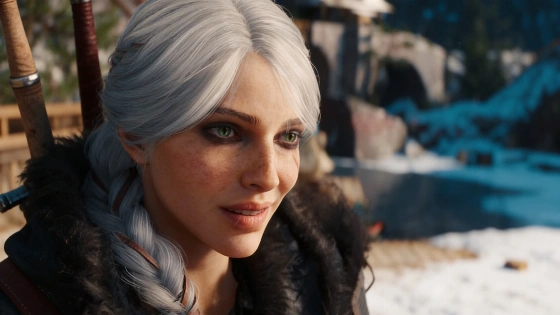
CD Projekt Red is actively recruiting for its unannounced Project Hadar, aiming to grow the team to 50 developers by year-end, while The Witcher 4 and a new Witcher 3 expansion remain the studio's main focus
CD Projekt Red is not slowing down. The studio behind The Witcher and Cyberpunk 2077 is now aggressively hiring for its next original IP, Project Hadar, even as it diverts major resources to The Witcher 4 and a fresh expansion for The Witcher 3. The company confirmed on its latest earnings call that Project Hadar's team, already over 30 strong, is set to reach 50 developers by the end of 2026.
Project Hadar's Status and Ambition
Project Hadar remains officially unannounced, with CD Projekt Red only acknowledging its existence and early-stage development. The project is still in the concept phase, with the current team focused on prototyping gameplay systems and experimenting with design approaches. No genre, setting or gameplay footage has been revealed, but given the studio's track record, an RPG of some form is the only safe assumption. The company has not committed to a release window or platforms, and no teaser or trailer has surfaced.
While Project Hadar is being built from the ground up as a new intellectual property, CD Projekt Red's leadership has made it clear that the studio's main production muscle is currently reserved for The Witcher 4. The Witcher 1 remake, previously in development, has been paused to ensure that resources are concentrated on the next mainline Witcher entry and the newly announced Songs of the Past expansion for The Witcher 3.
Resource Allocation and Development Priorities
The studio's resource shuffle is not subtle. The Witcher 4 is now the flagship project, with a targeted release year of 2028. The Witcher 1 remake is on hold until The Witcher 4 reaches a more advanced stage. Meanwhile, The Witcher 3: Songs of the Past, a decade-later expansion, has entered active development, and the remastered edition of The Witcher 3 is scheduled to launch this month. Existing owners of The Witcher 3 will receive the remaster as a free upgrade, with save compatibility confirmed.
Cyberpunk 2077's sequel remains in the pipeline, but the studio's current hiring and project focus suggest that both The Witcher 4 and Project Hadar are the immediate priorities. The company's approach mirrors its previous strategy of concentrating on one major release at a time, with supporting teams handling expansions and remasters. For those tracking the studio's evolving release plans, the shift in priorities is as significant as the games themselves.
What We Know and What Remains Unclear
Concrete details on Project Hadar are scarce. The only confirmed facts are the team size, the ongoing recruitment drive, and the project's conceptual status. No gameplay, story, or setting information has been disclosed. The studio has not indicated whether Project Hadar will follow the third-person fantasy RPG model of The Witcher or the first-person shooter-RPG hybrid of Cyberpunk 2077. The only certainty is that CD Projekt Red is investing in a new franchise while maintaining its commitment to The Witcher universe.
For players interested in physical editions, CD Projekt Red has already addressed future distribution challenges, as seen in its recent update on The Witcher 4's post-2028 physical release plans. This signals a studio aware of shifting platform realities and player expectations, even as it juggles multiple high-profile projects.
Studio Outlook and Editorial Perspective
CD Projekt Red's current roadmap is ambitious but calculated. By pausing The Witcher 1 remake and funnelling talent into The Witcher 4 and Project Hadar, the studio is betting on focused development over spreading itself thin. The decision to ramp up hiring for an unannounced IP while simultaneously managing expansions, remasters and sequels is a clear sign that CD Projekt Red wants to avoid the production bottlenecks and technical missteps that marred Cyberpunk 2077's launch. The studio's willingness to communicate project status and resource allocation, even when it means shelving anticipated remakes, is a pragmatic move that prioritises long-term quality over short-term hype. For players, the message is clear: expect fewer distractions and more concentrated effort on the next wave of flagship RPGs, but don't expect concrete details on Project Hadar until the studio is ready to show real progress.
Understanding the difference between a concept phase and full production is crucial for following modern game development. A project in the concept phase is still exploring core ideas, prototyping mechanics and testing design directions, with no guarantee that any specific feature or system will survive to release. Only once a project enters full production do most of its systems, assets and gameplay elements become locked in. For players, this means that early announcements or hiring drives signal intent, not imminent release or final design.