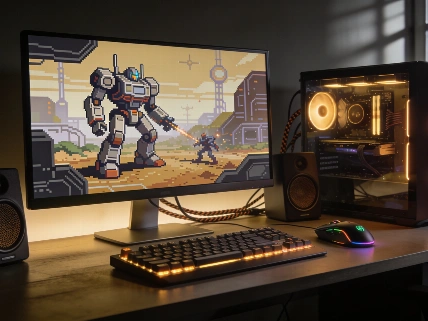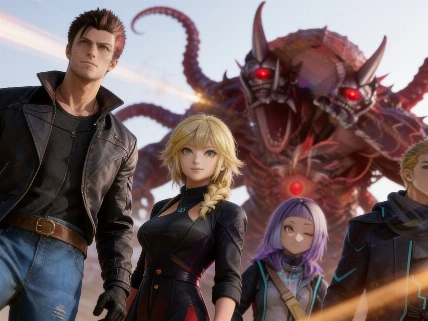

Xenogears Atlas is rebuilding Square Enix's 1998 JRPG for modern PCs with locally generated HD textures, reconstructed FMVs and a recreated battle engine that is already taking shape.
The recreated battle engine is now running. Xenogears Atlas is pairing it with HD textures and restored FMVs. That makes the unofficial PC project more than a compatibility layer for Square Enix's 1998 JRPG. It is rebuilding the game's presentation and combat systems while keeping the character of the original.
Combat takes shape
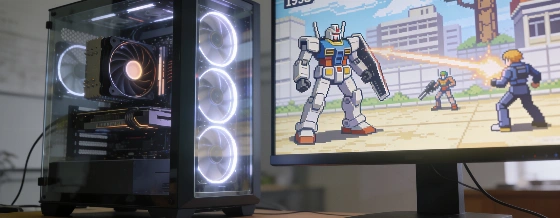
The latest weekly progress report shows battles for the first time. The developer says the system is incomplete. Its core mechanics have been studied and rebuilt, though. The footage follows the original closely enough to give the remaining work a solid base.
That distinction matters. Xenogears has on-foot encounters and Gear battles. The two types use somewhat different mechanics. Reproducing one does not mean the full combat system is finished. The project still has a large technical task ahead.
Even at this stage, the footage answers the main question around a fan-made port: will the new systems still feel like Xenogears? The early evidence suggests the visual work is supporting the original design rather than replacing it.
Upscaling without the cloud
The project handles its texture and video work locally on one graphics card: an NVIDIA GeForce RTX 5080 with 16 GB of memory. The developer says no cloud service is involved. The project's own hardware does the processing instead.
For the FMVs, the source material is ripped losslessly from the disc at 320×224 and 15 frames per second. It is then processed with SeedVR2. The model works across full sequences of frames to reduce flicker. Earlier tests with Real-ESRGAN and Real-CUGAN were rejected because they produced unstable colours, flickering and invented lettering.
Small text was especially hard to process. The phrase "You shall be as gods" was repeatedly misread. The opening word sometimes became "Toe". The current method renders the footage at 1080p, giving the model enough detail to rebuild the letters. Shots that still contain errors can have their original lettering blended back in.
Texture pages take roughly 6-14 seconds to upscale. The process keeps the transparency of the original files. Colours are locked to the game's own palette so neighbouring pages do not show visible seams. Sprites and portraits use the same process at x2, x4 and x8 scales.
More than a resolution boost
Those details show why Xenogears Atlas is not simply applying a broad filter to an old game. The team handles FMVs, texture pages, sprites, portraits and lettering separately. Each type of source asset has its own problems. This should help preserve the visual relationships that made the original work, even after its low-resolution assets are enlarged.
The project's wider appeal comes from rebuilding the game rather than only revisiting it through emulation. Xenogears is a Square JRPG released for the PlayStation in 1998. It remains known for dense character writing, extensive worldbuilding and its use of religious, philosophical and psychological ideas. Its second Disc is also notably heavy on dialogue and lighter on gameplay because of budget limits. Any unofficial port will inherit that compromise rather than erase it.
That makes the combat work especially important. HD assets can improve clarity right away. A battle engine must reproduce rules, timings and transitions across the full adventure. The current footage shows progress, not completion. The supplied update gives no release date for Xenogears Atlas.
Why the project matters
Square Enix has not announced an official modern PC remake or contemporary port of Xenogears in the publicly available material discussed here. Wccftech also describes the current PC revival as a fan-made, unofficial initiative and notes that the game has not received a modern re-release on the scale of a remaster or remake. That leaves this fan project as an unofficial route toward a current version. Supporters can contribute through Ko-Fi. Financial support does not make the project official or guarantee a finished product.
The lack of an announcement has a wider company-side context. Japanese media have repeated a position attributed to Square Enix and Kazushige Nojima that a full Xenogears remake would be extremely difficult. There is no announced timetable for such a project. Xenogears also does not appear in the current official promotional material highlighted by the Square Enix Japan portal, which continues to focus on the publisher's active franchises and campaigns.
The work fits a wider pattern of players filling gaps in older PC libraries themselves. Our earlier modding report covered a player-created fix that improved a modern Square Enix release before launch. Xenogears Atlas is taking on a much larger problem by recreating platform technology as well as the game's presentation.
For now, the evidence supports cautious optimism. The battle engine has a visible base. The upscale pipeline has been tested against specific failure points. The visual output is being developed with the original palette and assets in mind. This is not yet a finished PC port. It is already a serious preservation effort rather than a shallow texture experiment. The available reporting points to Xenogears Atlas and the technical challenges of rebuilding its battle system and FMV presentation, not to an officially sanctioned Square Enix revival.
Upscaling does not create native high-resolution artwork from nothing. It uses patterns in the original image to estimate missing detail. That is why lettering can become distorted, and why palette control and manual correction matter here. For Xenogears Atlas, that difference is central. The project's strongest achievement so far is not simply making Xenogears look sharper. It is building a careful process that respects the limits of the source material and gives this unofficial revival a credible path forward.