
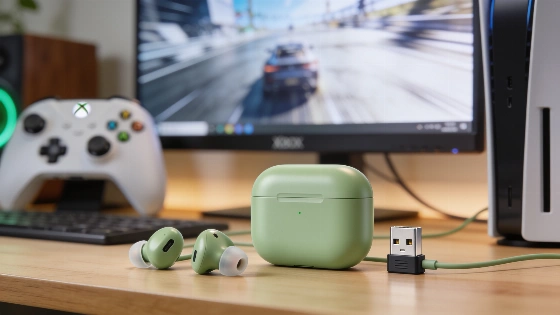
SteelSeries has added a Matcha finish to its $199.99 Arctis GameBuds for Xbox. The earbuds combine low-latency wireless audio, ANC, spatial sound and support for major gaming platforms.
SteelSeries is making the Arctis GameBuds harder to mistake for ordinary lifestyle earbuds. The new Matcha finish gives the premium wireless gaming model a softer look. The Xbox version still keeps the feature set that makes it the most flexible option in the range.
One pair, many platforms
The Xbox model is the practical choice for players who move between consoles. It supports Xbox mode and also works with PlayStation, PC, Nintendo Switch, compatible handheld systems and mobile devices. The PlayStation version cannot connect wirelessly to Xbox. That makes platform flexibility more important here than the console printed on the box.
The broad compatibility comes from the included USB-C 2.4GHz wireless adapter and Bluetooth 5.3. The adapter is built for low-latency gaming audio. Bluetooth is better suited to mobile use and everyday listening. Users can switch between the two connections through the earbuds.
SteelSeries' promotional materials for the Matcha and Yuzu refresh specifically position the GameBuds for "XBOX/PS5/Nintendo Switch/PC" users. They also emphasize ultra-low-latency 2.4GHz wireless for gaming. That matches the Xbox model's main advantage. One pair can move between several gaming platforms without requiring a separate headset for each system.
The main limitation is that the GameBuds cannot mix Bluetooth and 2.4GHz audio at the same time. Bluetooth also uses the SBC codec only. These are not deal-breakers, but they are meaningful compromises in a product aimed at the premium end of the market.
Small design, serious features
Matcha is the most visible change in this edition. The light green colour covers both earbuds and their charging case. The restrained styling avoids the usual visual cues associated with gaming hardware. Apart from the SteelSeries logos, the GameBuds could pass as conventional wireless earbuds.
SteelSeries introduced the Matcha and Yuzu colourways in September 2026 as part of a broader Cozy seasonal refresh. This is a colour update, not a hardware redesign. The new finish changes the look and positioning of the product, while the underlying GameBuds feature set remains the same.
The stemless earbuds weigh 5.3 grams each and sit inside a compact, pill-shaped case. SteelSeries includes small, medium and large silicone tips. Picking the right fit matters for more than comfort. A secure seal affects comfort, passive isolation, bass response, active noise cancellation and transparency mode.
Physical controls replace capacitive touch surfaces. They give each input a more predictable response and help reduce accidental presses. The IP55 rating protects against dust and water. That makes the earbuds suitable for exercise, commuting and light rain, but not for demanding waterproof use.
Active noise cancellation cuts continuous background sound. Transparency mode brings outside audio back in. Neither feature can make up for a poor seal, so fit remains central to what the GameBuds can deliver.
Sound and software
The 6mm neodymium magnetic drivers create a wider, more spacious presentation than their compact size suggests. Bass stays controlled. The mid-range remains clear, while the treble brings out positional details without becoming too sharp. The tuning works for games and general listening instead of focusing only on effects and voice chat.
SteelSeries' 360° Spatial Audio adds another layer in supported games. It expands the sense of direction and space. It cannot replace a well-made mix, but it gives the GameBuds a more convincing gaming presentation when the software and source material support it.
The Arctis Companion app is one of the stronger reasons to consider this model. It includes more than 100 game-specific audio presets and lets users switch profiles from a smartphone. Console players benefit most because they can adjust the sound without setting up full desktop software. The app also handles control customisation and other settings.
Each earbud contains two microphones for voice capture and noise management. They are adequate for party chat and casual communication. They do not match the clarity or consistency of a dedicated boom microphone. That is the trade-off for a compact design that can be used away from a gaming desk.
Battery and value
Battery life is rated at up to 10 hours per charge. The case adds another 30 hours, for a total of up to 40 hours. The case charges through USB-C or a Qi wireless charging pad. That gives the GameBuds more flexibility than models limited to a cable.
The full specification explains the $199.99 price. The package includes 2.4GHz wireless, Bluetooth 5.3, ANC, transparency mode, 360° Spatial Audio, an IP55 rating, mobile software and support for several gaming platforms. None of these features is unusual on its own. Together, they make the package appealing in a 5.3-gram earbud.
The Matcha and Yuzu finishes belong to SteelSeries' Cozy seasonal refresh, but the colour change does not alter the hardware or performance described here. The Matcha model has also moved beyond the announcement stage. A September 2026 Japanese retail listing showed it in stock at 28,310 yen. The listing confirms that the new colourway has reached retail channels outside its initial presentation. That local price should not be treated as a direct conversion of the $199.99 U.S. price.
The GameBuds remain a premium accessory rather than a budget alternative to a headset. Microphone quality and the lack of simultaneous wireless mixing should be considered before buying.
For players who value portability and regularly switch between Xbox, PlayStation, PC and mobile devices, the Xbox Arctis GameBuds are a convincing headset alternative. They offer strong audio, useful noise control and unusually broad compatibility in a discreet design. Traditional headsets still have the edge in microphone quality and comfort during long sessions. The trade-off is sensible enough for the Matcha GameBuds to earn a firm recommendation at their premium price.
Low-latency 2.4GHz audio matters because Bluetooth can create a delay between an action and the sound that follows it. ANC removes steady background noise, not every sound around the listener. Transparency mode does the opposite by feeding external audio back in. Along with the right ear-tip seal, these features make the GameBuds more adaptable than ordinary Bluetooth earbuds. Their strongest case is still the mix of portable design and console flexibility, not any single audio feature.
Wccftech's review coverage also identifies the Xbox-oriented GameBuds as the more flexible model. It reports the core hardware specifications: 5.3 grams per earbud, 6mm neodymium magnetic drivers, IP55 resistance, ANC, transparency mode and up to 10 hours of battery life per charge or 40 hours with the case. Those figures support the view that Matcha is mainly a colour and seasonal presentation update, not a new generation of the earbuds.