
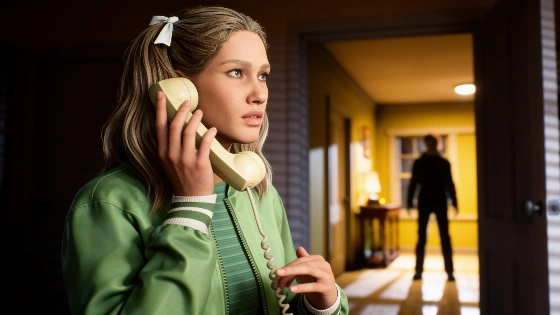
IllFonic has removed a sex-themed minigame from Halloween The Game following a viral gameplay video and mounting criticism. The developer confirmed the change in a statement and addressed the oversight ahead of the game's full release
Halloween The Game has undergone a rapid content change just days before its official launch, as developer IllFonic has removed a sex minigame that triggered widespread concern after a gameplay clip spread across social media. The decision comes in response to mounting criticism over the feature's implementation and the characters involved, with the studio now confirming the removal was prompted by what it calls a major oversight.
Patch removes minigame after viral incident
The controversy erupted when footage surfaced showing the character Samuel Loomis, based on the late Donald Pleasence and depicted as a man in his fifties, engaging in the minigame with Lynda van der Klok, a 17-year-old character from the original Halloween film. The video, which quickly gained traction online, highlighted the ability for any two civilian characters to participate in the closet-based "Two-Person Power-Up" sequence, regardless of age or narrative context. This mechanic, intended as a cooperative buff, instead drew sharp criticism for its lack of restrictions and the uncomfortable implications of pairing adult and teenage characters.
IllFonic responded by deploying a hotfix that quietly removed the minigame from early access builds. The studio later issued a statement acknowledging the unintended issue, stating that reinforcement characters were never meant to access the feature and describing its inclusion as a significant lapse in oversight. The developer has not detailed whether the minigame will return in a revised form, only confirming that new content and additional minigames are planned for future updates.
Early access and player reaction
Halloween The Game is scheduled for full release on 8 September, but players who purchased the Deluxe Edition gained early access over the preceding weekend. It was during this period that the problematic minigame was discovered and widely shared. The game features a roster of characters from the Halloween franchise, including Bob Simms, Annie Brackett, Lynda van der Klok, Laurie Strode, and Samuel Loomis, each playable in both single-player and multiplayer modes.
While the minigame itself did not depict explicit content-players were required to complete a button-mashing sequence to earn a "Stronger Together" buff, with no visual depiction of sexual activity-the context and character pairings led to immediate backlash. Some players have since called for the feature's return, suggesting that restricting certain characters could resolve the issue, but IllFonic has not indicated any plans to reinstate it in the near term.
Official response and future updates
In its official communication, IllFonic emphasised that its current focus is on addressing immediate game needs and stability issues, with more content to follow in future patches. The removal of the minigame was not explicitly mentioned in the initial patch notes, which instead highlighted crash fixes and other technical improvements. The studio has encouraged players to monitor its social channels for further updates as development continues.
For context, rapid content changes in response to player feedback are not unprecedented in the industry. As reported earlier, developers often face pressure to adjust or remove features that generate controversy or unintended consequences, especially during early access periods when community scrutiny is at its peak.
What this means for Halloween The Game
The removal of the minigame just ahead of launch signals a developer willing to act quickly when player trust is at stake, but it also exposes the risks of insufficient content review-particularly when adapting iconic film properties with sensitive character dynamics. IllFonic's decision to patch out the feature rather than attempt a rushed fix suggests a preference for damage control over half-measures, but the lack of transparency in the initial patch notes leaves room for improvement in communication. With the game's full release imminent, the studio's next steps will be closely watched by both players and rights holders. The lesson is clear: in the era of instant viral feedback, even minor features can become flashpoints if not properly vetted for context and consequence.
Early access periods allow developers to gather real-world player feedback and address issues before a game's official launch. However, features that are not fully reviewed or tested can quickly become liabilities if they clash with community standards or licensing expectations. The Halloween The Game incident demonstrates how a single mechanic, even one intended as a light-hearted buff, can trigger a rapid and public course correction when it collides with the realities of franchise adaptation and player scrutiny.