

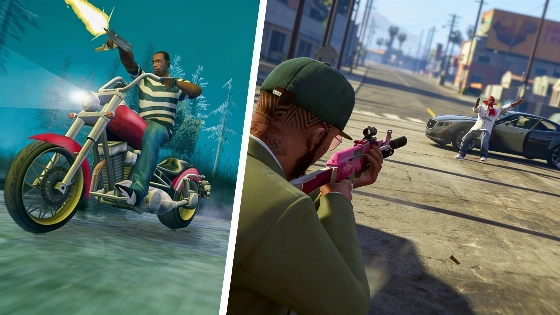
From high-stakes heists to iconic story moments, Grand Theft Auto's mainline entries have delivered hundreds of missions. Here's a breakdown of the standout missions that shaped the series and why they matter to players
Since Grand Theft Auto 3 redefined open-world action in 2001, Rockstar's flagship series has offered players a vast array of missions-346 across the five mainline titles from GTA 3 onwards. These missions have ranged from simple introductions to complex, multi-stage heists, each contributing to the franchise's reputation for cinematic storytelling and emergent chaos. Analysing the most impactful missions reveals how Rockstar's design philosophy has evolved, and why certain moments remain etched in gaming memory.
Defining Moments in GTA Mission Design
Early missions such as "Give Me Liberty" in GTA 3 set the tone for the series' shift from top-down objectives to fully realised, story-driven experiences. This opening mission, while mechanically simple, established Liberty City's atmosphere and introduced players to a new era of 3D sandbox gameplay. Later entries, like "Museum Piece" in GTA 4, demonstrated Rockstar's growing ambition, weaving together intersecting storylines and multiple protagonists-a structure that would become central in GTA 5.
San Andreas pushed the boundaries of mission variety, with "Black Project" standing out for its blend of stealth, action, and absurdity. Players infiltrated a military base, navigated security systems, and escaped with a jetpack-an example of the series' willingness to embrace both parody and spectacle. Vice City's "Rub Out" paid homage to classic crime cinema, rewarding players with a tangible sense of progression as they seized control of a mansion reminiscent of Scarface.
Heists and High Stakes
Heist missions have become a defining feature of the franchise, with "Breaking the Bank at Caligula's" in San Andreas and "Three Leaf Clover" in GTA 4 marking significant milestones. The former introduced multi-stage preparation and execution, echoing the structure of modern heist films, while the latter delivered a gritty, Heat-inspired shootout that tested players' combat and escape skills. GTA 5 expanded on this formula, systematising heists with planning phases, crew selection, and branching approaches.
"The Paleto Score" in GTA 5 exemplifies the series' evolution, combining heavy firepower, destructible environments, and a relentless police response. Unlike earlier heists, this mission forced players into a direct confrontation, showcasing the technical advancements in AI and environmental interaction. These missions not only provided narrative climaxes but also highlighted the series' increasing focus on player agency and replayability.
Storytelling, Choice and Consequence
While Grand Theft Auto is not typically known for branching narratives, certain missions have introduced meaningful choices and emotional stakes. "A Dish Served Cold" in GTA 4 stands out for its impact on the game's ending, forcing players to choose between revenge and a new life, each with lasting consequences for key characters. Missions like "Hood Safari" in GTA 5 blend action with character development, revisiting iconic locations and deepening the relationships between protagonists.
Final missions such as "End of the Line" in San Andreas demonstrate Rockstar's ability to deliver satisfying conclusions. This climactic sequence, set against a city in chaos, required players to navigate burning buildings, confront major antagonists, and ultimately secure closure for the protagonist. The mission's scale and intensity set a benchmark for open-world finales, reinforcing the importance of narrative payoff in player-driven games.
Technical Ambition and Series Legacy
Across its mainline entries, Grand Theft Auto has continually raised the bar for mission complexity, technical execution, and player immersion. Missions like "Minor Turbulence" in GTA 5, which features a mid-air plane hijack, demonstrate the series' commitment to blockbuster set pieces and seamless transitions between gameplay styles. The integration of multiple protagonists, dynamic environments, and branching mission structures has influenced countless open-world games since.
With each new release, Rockstar has refined its approach to mission design, balancing cinematic ambition with player freedom. The most memorable missions are those that combine strong narrative context, mechanical variety, and technical innovation-qualities that have helped Grand Theft Auto remain a reference point for open-world action. As the series continues to evolve, these standout missions offer a blueprint for what players can expect from future entries.
Understanding the structure of Grand Theft Auto missions is key to appreciating their impact. Missions typically blend scripted events with open-ended objectives, allowing for both narrative progression and emergent gameplay. Heist missions, in particular, have introduced multi-phase planning and execution, often requiring players to make strategic choices that affect outcomes. This approach has set a standard for mission design in open-world games, emphasising both player agency and replay value.