
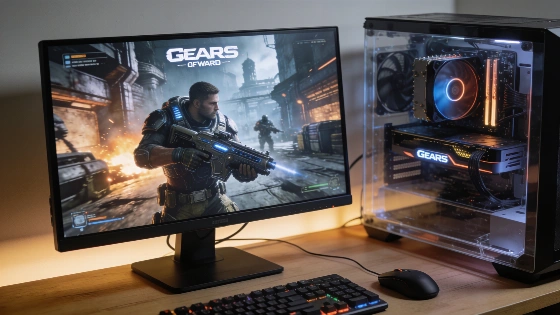
Gears of War: E-Day's final PC requirements reveal 4K 60fps is achievable with a mid-range GPU and upscaling, challenging assumptions about Unreal Engine 5's hardware demands ahead of its October release
Gears of War: E-Day has upended expectations for Unreal Engine 5 performance on PC, with The Coalition confirming that 4K resolution at 60 frames per second is within reach for players using a mid-range graphics card rather than a top-tier flagship. This marks a significant shift for a franchise often associated with demanding technical requirements, and it comes as the series prepares to return to both PC and Xbox Series X|S on 6 октября 2026. According to Xbox Wire, the game has officially gone gold, with pre-installation available starting 29 сентября 2026 at 8:00 AM Pacific, and will launch simultaneously on Xbox Series X|S, PC, Steam, and Xbox Cloud Gaming. The title will also support Xbox Play Anywhere and will be available day one on Game Pass.
PC Requirements and Performance Targets
The Coalition has published the final PC system requirements for Gears of War: E-Day, and the numbers are unusually accessible for a major Unreal Engine 5 release. For 4K gameplay at 60fps with upscaling enabled, the studio lists an AMD Ryzen 7 7800X3D or Intel i7-14700K processor and an NVIDIA GeForce RTX 5070 Ti or AMD Radeon RX 7900 XT graphics card, with 12GB VRAM, 16GB RAM, and 115GB SSD storage. This is a notable departure from the typical expectation that only flagship GPUs can handle such targets in new Unreal Engine 5 titles. Xbox Wire specifically notes that all supported GPUs must have dedicated hardware ray tracing support; cards without this feature are not supported, making this a stricter requirement than is typical for "recommended" specs in PC gaming.
At the recommended tier, the requirements are even more striking. The Coalition specifies an RTX 3060 Ti, RTX 5060, RX 6700 XT, or RX 7700 XT for 1440p 60fps gameplay, paired with 8GB VRAM and 16GB RAM. The minimum specification targets 1080p 60fps with upscaling, requiring only an RTX 2060, Radeon RX 6600, or RX 7600, alongside 6GB VRAM, 12GB RAM, and 115GB SSD storage. All tiers require an SSD, and these requirements reflect the studio's focus on balancing visual fidelity with broad hardware accessibility. According to GameSpot, The Coalition has continued iterating on PC stability and performance across a wide range of hardware since July, with the final specifications tuned after extended optimization work.
Technical Features and Visual Ambition
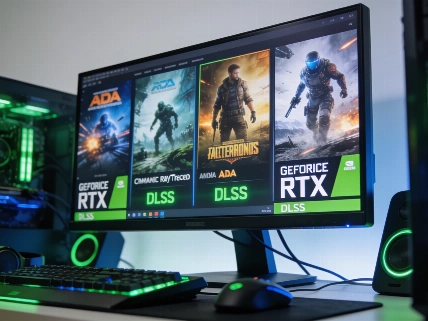
Gears of War: E-Day is set to leverage a full suite of modern PC graphics technologies. The game supports NVIDIA DLSS 4.5, AMD FSR 4, and Intel XeSS 3.0t for upscaling, alongside hardware-accelerated ray-traced reflections, shadows, and global illumination. Players can expect a built-in benchmarking mode with advanced settings, as well as HDR and ultrawide monitor support. These features are designed to maximise both image quality and performance across a range of hardware. Xbox Wire reports that the requirement for hardware ray tracing is universal across all supported GPUs, underscoring the game's visual ambitions and technical direction.
On consoles, The Coalition is targeting 60fps on Xbox Series X|S, with hundreds of shadow-casting lights active in real time. Technical Director Kate Rayner has indicated that achieving this level of visual fidelity required significant iteration, but that hardware ray-traced Lumen accelerated the process. The result is a game that aims to deliver high-end visuals without sacrificing frame rate, even on fixed console hardware.
Optimisation and Studio Track Record
The Coalition's approach to optimisation stands out in a landscape where Unreal Engine 5 games are often associated with steep hardware demands. The studio's technical proficiency has been evident in previous entries, and the new requirements suggest a continued focus on delivering scalable performance. The inclusion of upscaling technologies at every tier is a practical response to the realities of modern PC hardware, allowing more players to experience high resolutions and frame rates without the need for the latest flagship GPU. According to GameSpot, the studio has been iterating on stability and performance since July, ensuring the final requirements reflect extensive optimization efforts.
This strategy echoes trends seen in other major franchises making the leap to Unreal Engine 5, as discussed in recent coverage of engine transitions. However, Gears of War: E-Day's requirements are unusually player-friendly for a technical showpiece, and the decision to support a broad range of GPUs at launch is likely to be welcomed by PC players wary of escalating system demands. Xbox Wire highlights that the game will be available on multiple platforms, including Steam and Xbox Cloud Gaming, further broadening accessibility.
Release Timing and Platform Details
Gears of War: E-Day is scheduled for release on 6 октября 2026 for PC and Xbox Series X|S, with pre-install beginning 29 сентября 2026 at 8:00 AM Pacific. The final system requirements confirm that an SSD is mandatory, with a 115GB storage requirement across all settings. The game's PC version will offer advanced graphics options and benchmarking tools, while the console editions are set to deliver 60fps performance with extensive ray-traced lighting effects. Xbox Wire confirms that the game launches day one in Game Pass and supports Xbox Play Anywhere. No details have been provided regarding early access, edition structure, or regional release differences at this stage.
With the technical groundwork now public, attention will turn to how these requirements translate into real-world performance at launch. The Coalition's track record suggests a strong likelihood of meeting its stated targets, but as with any major release, independent testing will be essential to verify the experience across a range of hardware.
Upscaling technologies such as DLSS, FSR, and XeSS have become central to modern PC gaming, especially as games target higher resolutions and more advanced visual effects. These systems work by rendering the game at a lower internal resolution and then reconstructing the image to the target output, often with the help of machine learning or advanced algorithms. The result is a significant boost in frame rate and reduced hardware requirements, though image quality can vary depending on the implementation and the specific hardware in use. For players, understanding how upscaling interacts with native rendering is key to making informed decisions about graphics settings and hardware upgrades.