
Alinea Analytics estimates 230K sales against 1.7 million Game Pass players. The figures show how a $30 early-access upgrade can expand reach while cutting into full-price revenue.
Premium Edition buyers began playing on October 1, five days before the official launch. Xbox Wire lists the full release date as October 6, 2026, for Xbox Series X|S and Xbox on PC. The game also launched through Game Pass and Steam.
Alinea Analytics estimates that Gears of War: E-Day sold only 230K units across Xbox console and PC app platforms. Steam is included in that estimate. Another 1.7 million players accessed the game through Game Pass.
The split is difficult to miss.
Steam accounted for 168K sales. Xbox contributed 62K. Alinea still estimates $37 million in total revenue, with Xbox generating $26 million.
That gap comes from the way Game Pass access was monetised. Of the 1.7 million subscribers who played through the service, 722K paid $30 for the Premium Edition Game Pass upgrade. Those customers gained access on October 1 instead of October 6.
The upgrades produced an estimated $21.7 million. Alinea analyst Rhys Elliott argues that the same customers could have generated nearly $40 million if they had been required to buy the full game. Microsoft's U.S. list prices explain the $30 difference: the standard edition costs $69.99, while Premium Edition costs $99.99.
In practice, Game Pass separated audience reach from conversion. Millions of players saw the release, yet most did not become conventional buyers. That made the launch look busy while reducing the number of customers paying the price attached to a full AAA product.
The subscription label also hides a tariff split. The Xbox Store says cloud play is included for Game Pass Ultimate subscribers. Essential and Premium subscribers must purchase the game separately.
Buying the game does not remove every extra requirement.
Xbox Wire states that online campaign co-op requires a Game Pass plan with online multiplayer support. Horde Siege and Versus require the same support, as do other online features. Owning the game alone does not waive that condition.
Game Pass is the clearest commercial factor in the data, but blaming the subscription alone would be too convenient. Even if all 722K Premium Edition upgrades had instead been full purchases, the game would still have remained below one million units sold. The gap between audience access and the scale needed to support a costly production would remain substantial.
Steam also shows a mixed PC response. At the time of the available update, the platform listed 4,186 user reviews, with 72% marked positive. That matches the supplied analysis, which describes a response that is mixed rather than universally enthusiastic.
The figure points to a game with recognised strengths. It does not show the broad breakout that can rapidly carry a large budget.
The comparison with other 2026 releases is uncomfortable for The Coalition. The Blood of Dawnwalker reportedly became a million seller faster. The analysis makes the same claim about Onimusha: Way of the Sword and PRAGMATA. ACE COMBAT 8: WINGS OF THEVE and WARDOGS reportedly reached the mark faster as well.
The analysis argues that those games probably had less demanding budgets. This is not a like-for-like profitability calculation. It does show how high the commercial bar is for a major Gears release.
The sales figures arrive at a difficult moment for Vancouver-based developer The Coalition.
The studio was already reported to be concerned about further cuts after the second chapter of Xbox's Big Reset moved Halo under Activision. World's Edge was moved as well. Rare was also placed under Activision, while employees across the division lost their jobs.
Alinea's numbers give that concern a commercial context. Tom Henderson previously claimed that Gears of War: E-Day had a budget of more than $400 million. That figure remains unconfirmed.
Even a budget half that size would make the reported sales difficult to reconcile with a profitable outcome. Development and marketing costs would add to the burden. Platform economics would shape the result further.
The pressure extends beyond this release. The source material says several hundred employees could still be cut from the 3,200 milestone set by Asha Sharma. That would leave The Coalition's position uncertain.
It also points to Call of Duty. Modern Warfare 4 is reportedly not launching on Game Pass, suggesting that Xbox's largest first-party releases may spend their first year outside the subscription service.
Microsoft has not abandoned the Gears of War brand. The series could survive changes at The Coalition, just as 343 Industries became Halo Studios. A Gears of War film directed by David Leitch is in development.
Xbox has also established the XP division for transmedia efforts. That gives the franchise another route to remain visible beyond game sales.
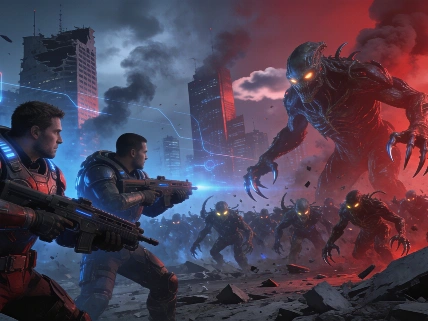
E-Day's positioning matters to that strategy. Microsoft presented it as a prequel about the first day of the Locust invasion and a return to the series' origins. It was framed as a core Gears story rather than a detached spinoff.
That makes the commercial result relevant to the future of the central Gears identity, although the available sales estimate cannot determine the franchise's long-term value on its own.
The wider strategy does not solve the immediate problem. A film adaptation may preserve awareness, but it cannot turn 230K reported sales into the full-price base required by an expensive game.
A large Game Pass player count cannot demonstrate that the release met its commercial target. The result can be compared with Xbox's broader achievement plans and its testing of new achievement features.
Early access remains the key distinction. It is a paid privilege that changes when a subscriber can play. It is not the same as selling the complete game at its standard price.
Game Pass gave Gears of War: E-Day reach and produced meaningful upgrade revenue, while the reported conversion rate exposed the trade-off. The $400 million budget claim remains unconfirmed.