

Square Enix has officially scheduled Final Fantasy VII Revelation for 8 April 2027, promising the largest open world in the series and a major focus on player-driven decisions across PlayStation 5
Square Enix has locked in 8 April 2027 as the global release date for Final Fantasy VII Revelation, the concluding chapter of its Remake trilogy. The announcement arrives with confirmation that the game will deliver the most expansive open world in franchise history, alongside a reworked approach to player agency and exploration that directly addresses feedback from previous entries.
Open World and Player Choice
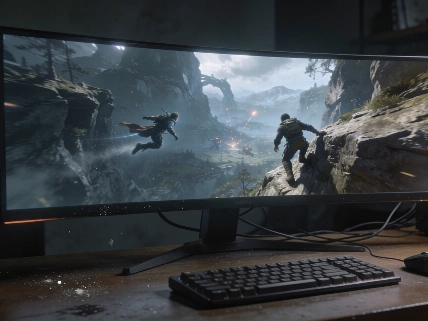
Unlike the more rigid structure of Final Fantasy VII Rebirth, Revelation is designed to let players chart their own course across Gaia. The Highwind airship now serves as a seamless vehicle for traversing vast regions, with parachute descents and landing options that allow for immediate engagement with the environment. Square Enix has reduced intrusive map markers, aiming for a more organic sense of discovery reminiscent of titles such as The Legend of Zelda: Breath of the Wild and Elden Ring. Players can explore new and returning regions, encounter dynamic wildlife, and uncover secrets without being funnelled through menus or forced to unlock towers.
Key to this overhaul is the introduction of traversal tools and Cetran Shrines, which reward exploration with hidden content and unique challenges. The world itself reflects the ongoing threat of Meteor and the Weapons, with altered landscapes and new enemy placements. Side quests, high-level monsters, and region-specific completion tasks-such as photographing wildlife-are now integrated into the open world, giving players more meaningful reasons to deviate from the main story path.
Combat and Character Systems
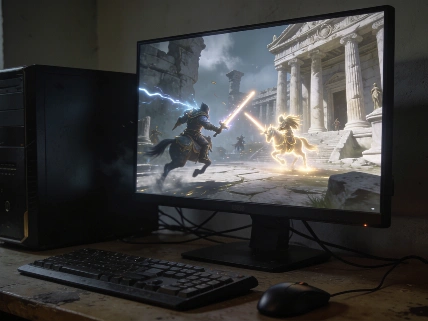
Combat in Final Fantasy VII Revelation builds on the foundation of Rebirth but introduces significant new depth, particularly with the arrival of Cid and Vincent as playable characters. Cid is positioned as a crowd-control specialist, wielding a spear with extended reach and aerial combos, while Vincent offers a hybrid of ranged and transformation-based attacks, including the ability to shift into the Galian Beast mid-battle. These additions are designed to differentiate the new arrivals from the established cast, pushing the combat system further into action territory.
The game also debuts a Job system-referred to as FITS-allowing players to assign roles such as Warrior, Knight, Black Mage, and Summoner to any party member. Each Job unlocks unique abilities and skill trees, enabling customisation that can fundamentally alter a character's combat style. For example, the Warrior Job lets characters use ATB moves without spending ATB, while the Knight enhances tanking and support capabilities. The Summoner Job finally gives Summons a more active role, allowing for synchronised attacks with the Summoner. Returning characters retain their core movesets, but the FITS system is set to expand their tactical options.
Quality-of-Life and Materia Changes
Square Enix has implemented a series of quality-of-life improvements aimed at streamlining both exploration and combat. The battle interface now provides clear notifications when Summons or Synergy Abilities are available, reducing the risk of missing key opportunities during hectic encounters. The Materia system has also been expanded, with new options such as Diffusion Materia-enabling all party members to use linked magic-and Evasion Focus Materia, which introduces a more forgiving dodge window. These changes are intended to give players greater flexibility and reduce friction in both traversal and battle.
Smaller refinements include the ability to land directly on a Chocobo (Piko) after parachuting, minimising downtime and making region entry smoother. The removal of forced map-checking and tower unlocking further supports a more fluid, player-driven experience. These adjustments reflect a clear response to player criticism of Rebirth's pacing and structure, with Square Enix openly targeting a more cohesive and less checklist-driven world.
Release Timing and Series Context
Final Fantasy VII Revelation is scheduled for release on PlayStation 5 on 8 April 2027. This date positions the game as one of Square Enix's most significant launches of the year, following a series of high-profile RPG releases across the industry. The Remake trilogy's final entry is expected to close out the narrative arc begun in 2020, with the studio promising that player choice will have a tangible impact on the journey's conclusion. For context, Square Enix's recent RPG output has included major launches such as Dragon Quest Monsters The Withered World, as reported earlier.
While the publisher has not yet detailed every aspect of Revelation's platform availability, the current announcement focuses on PlayStation 5, with no confirmation of PC or Xbox versions at this stage. Further information on editions, pricing, and pre-order bonuses is expected closer to launch. The game's technical performance, including frame-rate targets and resolution modes, remains unconfirmed, and no independent review access has been reported.
Open-world design in modern RPGs often hinges on how much freedom players are given to explore without artificial barriers or excessive guidance. By reducing map clutter and integrating traversal tools, Final Fantasy VII Revelation aims to deliver a world that feels both expansive and cohesive. The shift away from checklist-driven objectives towards organic discovery is a direct response to player feedback, and its success will depend on how these systems perform in the final release. As with any major RPG, the balance between player agency and narrative structure will be critical to the game's reception.