
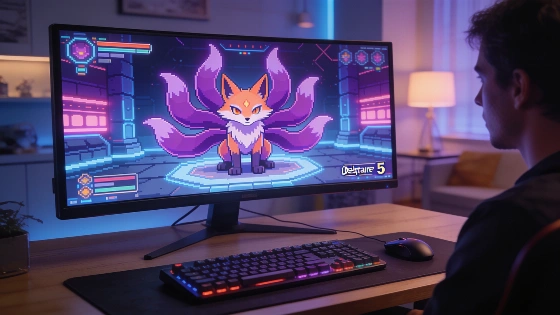
Toby Fox has revealed that Deltarune Chapter 5 includes a character designed by Pokémon artist Hitoshi Ariga, with Fox making notable adjustments before its inclusion
Deltarune's latest chapter has introduced a new character with a direct link to the Pokémon franchise, as developer Toby Fox confirmed that Hitoshi Ariga, a well-known Pokémon artist, contributed a guest design for Chapter 5. Fox detailed the collaboration in a recent developer blog, explaining how Ariga's original concept was adapted to fit Deltarune's distinctive world and tone.
Collaboration with Hitoshi Ariga
Hitoshi Ariga is recognised for his work on the Pokémon series, having designed creatures such as Ogerpon, Sneasler, and Flutter Mane, as well as contributing to the Pokémon Trading Card Game since 2011. For Deltarune Chapter 5, Ariga provided a concept for a fox-like character, which Fox then modified before integrating it into the game. The final in-game version, known as a Netskie, differs significantly from Ariga's initial sketch, reflecting Fox's vision for the chapter's atmosphere.
Ariga's original design leaned heavily into a Grass-type aesthetic, featuring a simple wooden body with leaf-like ears and tail, evoking the style of Pokémon such as Leafeon and Deerling. However, Fox's adaptation resulted in a more grounded, orange fox form with nine violet tails, aligning with Deltarune's established visual language. Ariga is credited as a guest character designer in the game's credits, and Fox's blog post clarifies the extent of his involvement.
Design Process and Gameplay Integration
Fox's blog post also discusses the broader design process for Chapter 5, including the introduction of new mechanics such as a bouncy platforming system and the behaviour of the Netskie enemies. The Netskies are notable for their ability to mimic the shape and grin of a fox, adding a layer of trickery to encounters. Fox's modifications to Ariga's design were intended to ensure the character would fit within Deltarune's "dull neon hauntings" rather than the brighter, more whimsical universe suggested by the original sketch.
While the collaboration with Ariga is a highlight, Fox's update also covers other new characters and gameplay features, reflecting a continued focus on evolving Deltarune's mechanics and visual identity. The developer's willingness to adapt external designs demonstrates a flexible approach to creative partnerships, ensuring consistency with the game's established tone.
Context Within the RPG Genre
Deltarune's approach to guest character design is not unique within the RPG genre, but the involvement of a prominent Pokémon artist adds a layer of interest for fans of both series. The integration of Ariga's work follows a trend of cross-franchise collaboration, as seen in other tactical RPGs such as Beaten Path, which was recently announced for multiple platforms and draws inspiration from established series like Fire Emblem and Final Fantasy Tactics. For more on how tactical RPGs are evolving, see the announcement of Beaten Path here.
Chapter 5's release continues Deltarune's tradition of introducing new mechanics and character concepts with each update. While the game remains in active development, Fox's openness about the design process provides players with insight into how external influences are balanced with the series' core identity.
When a game incorporates guest character designs, especially from artists associated with other major franchises, the process often involves significant adaptation to ensure visual and thematic consistency. In Deltarune's case, the transformation of Ariga's original concept into a form that fits the game's world highlights the importance of creative direction and the challenges of integrating external ideas. This approach allows developers to benefit from outside talent while maintaining a cohesive player experience.