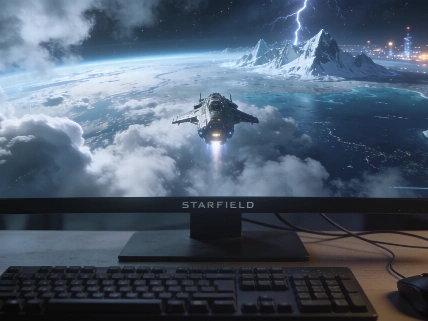

Former Bethesda developer Nate Purkeypile has questioned Starfield's use of 1,000 explorable planets, suggesting the RPG would have benefited from fewer, more distinctive worlds rather than repeated procedural content
Starfield's ambitious promise of 1,000 explorable planets has drawn criticism from one of Bethesda's own former senior artists. Nate Purkeypile, who contributed to Fallout 3, Skyrim, Fallout 4 and the early development of Starfield, has publicly questioned the game's approach to world design. In a recent interview, Purkeypile argued that the sheer number of planets, combined with repeated procedural layouts, undermines the sense of discovery that has defined previous Bethesda RPGs.
Concerns over procedural generation
According to Purkeypile, Starfield's reliance on procedural generation results in environments that often feel repetitive, especially during the main quest. He compared the experience to Mass Effect 1, where procedural planets and dungeons led to similar criticisms. Purkeypile suggested that if a game is going to offer thousands of planets, it should generate genuinely unique content rather than rearranging familiar elements in slightly different ways. He argued that this approach falls short of the procedural generation seen in titles like No Man's Sky, where each world can feel distinct.
Impact on exploration and world-building
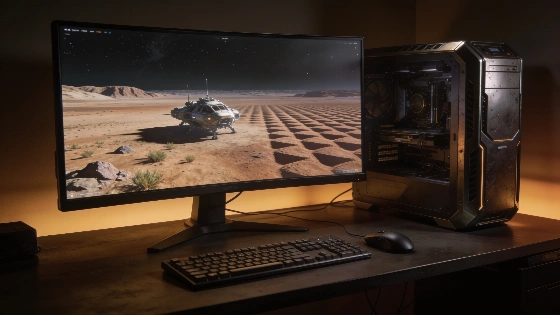
Purkeypile highlighted that Bethesda's previous successes have relied on carefully crafted environments, where exploration is rewarded with unexpected encounters and memorable side stories. He believes that Starfield's repeated content and lack of intentional placement for points of interest diminish the sense of surprise and immersion. The contrast between densely populated cities and empty planetary surfaces was cited as a particular weakness, with Purkeypile questioning the believability of such world-building.
Development context and player expectations
Starfield was released with the promise of vast exploration, but the technical and creative challenges of populating 1,000 planets have become a point of debate. While the game's procedural systems allow for a massive universe, the trade-off appears to be a reduction in the bespoke content that many players associate with Bethesda's best work. Purkeypile, now leading his own indie studio Just Purkey Games, clarified that he does not consider Starfield a failure, but would have prioritised a smaller number of hand-crafted planets to preserve the studio's signature style.
Procedural generation is a technique where game environments, levels or content are created algorithmically rather than manually designed by developers. While this allows for large-scale worlds and replayability, it can also lead to repetition if not carefully balanced with bespoke content. In open-world RPGs, the challenge is to ensure that procedural systems enhance rather than dilute the sense of discovery and narrative depth that players expect from the genre.