
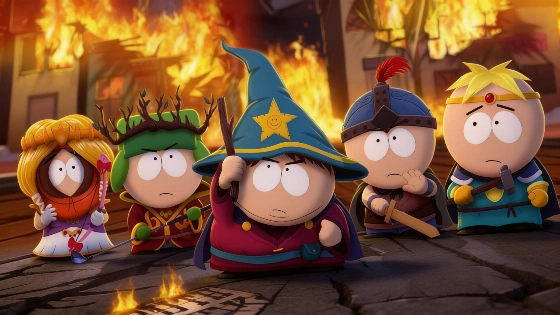
South Park: The Stick of Truth continues to impress with its faithful visual style and sharp humour, blending the series' signature satire with accessible RPG mechanics. Here's why it still stands out years after release
South Park: The Stick of Truth has established itself as a rare example of a licensed game that not only captures the spirit of its source material but also delivers a genuinely entertaining RPG experience. Released in 2014, the game was developed by Obsidian Entertainment in close collaboration with South Park creators Trey Parker and Matt Stone, ensuring that the writing, humour and visual presentation remain true to the long-running animated series. The result is a game that feels like an interactive season of South Park, with every scene and character rendered in the show's unmistakable style.
Development and Industry Challenges
The journey to release was far from straightforward. Originally funded and set to be published by THQ, The Stick of Truth faced significant uncertainty when THQ filed for bankruptcy during development. The project's future was thrown into doubt as publishing rights were put up for auction, and South Park Studios voiced their dissatisfaction with the situation. Fortunately, Ubisoft acquired the rights, allowing the game to be completed and released without major compromise to its creative vision.
Despite the turbulence, the final product did not suffer from the kind of rushed or incomplete feel that often plagues games caught in publisher turmoil. Instead, the partnership between Obsidian and the South Park team resulted in a tightly constructed RPG that balances accessible turn-based combat with a script that rarely misses a comedic beat. The game's development history stands as a reminder of how business realities can threaten even the most promising projects, but also how a strong creative partnership can see them through.
Gameplay, Humour and Lasting Appeal
The Stick of Truth is structured as a 12-hour RPG, a length that allows for a focused narrative without overstaying its welcome. Players take on the role of the New Kid, navigating a series of absurd quests and battles that draw directly from the show's most memorable moments. The turn-based combat system is intentionally straightforward, making it accessible to both RPG newcomers and fans of the series who may not typically play the genre.
What truly sets the game apart is its commitment to South Park's brand of satire. From the infamous Underpants Gnome boss fight to the surreal Canada section, the game is packed with moments that are both shocking and sharply observed. The humour is woven into every aspect of the experience, from dialogue to environmental details, and the involvement of Parker and Stone is evident throughout. The visual fidelity to the show means the graphics have aged remarkably well, with the game still looking current even years after launch.
Critical Reception and Franchise Context
Upon release, The Stick of Truth was widely praised for its writing, comedic timing and faithfulness to the source material. It received high review scores, with many critics highlighting it as one of the funniest games ever made. The game's concise length and focused design were seen as strengths, ensuring that the pacing never lags and the jokes land consistently.
While other comedy games have made their mark-such as the LucasArts adventures of the 1990s, Portal 2, and Saints Row: The Third-The Stick of Truth remains a standout for its ability to translate television satire into interactive form. Its sequel, South Park: The Fractured But Whole, retained much of the original's creative team but did not achieve quite the same critical consensus. The Stick of Truth's survival through THQ's collapse and its eventual release is a testament to the resilience of strong creative vision in the face of industry upheaval. For those interested in how humour and satire can be integrated into gameplay, Rockstar's approach to Grand Theft Auto VI's character-driven comedy offers another perspective, as discussed in our analysis of Rockstar's evolving satirical style.
What Players Can Expect Today
For new players, The Stick of Truth remains highly accessible. Its visual style ensures it does not suffer from the dated look that affects many older games, and its mechanics are easy to pick up. The game is available on multiple platforms, including Xbox, PlayStation and PC, making it widely accessible regardless of preferred hardware. There are no significant technical barriers to entry, and the game's modest length makes it an appealing option for those seeking a complete experience without a major time commitment.
With its blend of sharp writing, accessible gameplay and authentic South Park presentation, The Stick of Truth continues to be recommended as a benchmark for comedy in games. Its development history also serves as a case study in how creative projects can survive industry setbacks when the right partnerships are in place.
Turn-based combat, as seen in The Stick of Truth, refers to a system where players and enemies take actions in a set order rather than simultaneously. This approach allows for strategic planning and often makes games more approachable for those less familiar with fast-paced action mechanics. In the context of South Park: The Stick of Truth, the simplicity of the turn-based system ensures that the focus remains on the narrative and humour, rather than complex mechanics, making it an ideal entry point for both RPG fans and newcomers alike.