
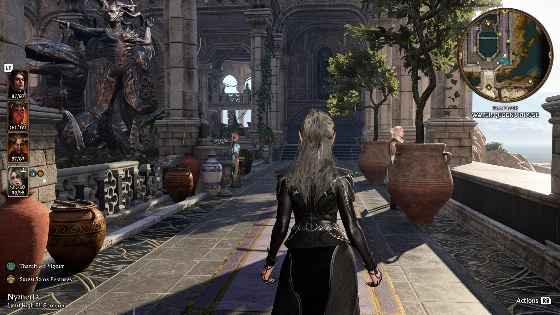
A new third-person camera mod for Baldur's Gate 3 has gone viral, dividing the community over whether such features enhance or undermine the classic cRPG experience. The discussion raises questions about player choice and the future of Larian's design philosophy
Baldur's Gate 3, now three years post-launch, remains a focal point for modders and players alike. The latest mod to capture widespread attention is Relysia's True Third-Person Camera, which fundamentally alters how players experience the game's world. Its rapid popularity has reignited a longstanding debate about the boundaries of genre and the role of player-driven customisation in established titles.
The Mod and Its Features
Released on Nexus Mods in July, the True Third-Person Camera mod introduces an over-the-shoulder perspective reminiscent of modern action RPGs. The camera remains closely tethered to the player character, offering dynamic field-of-view adjustments while running and smooth transitions when crouching. During specific actions such as spell targeting or jumping, the camera temporarily reverts to the original isometric view before returning to third-person.
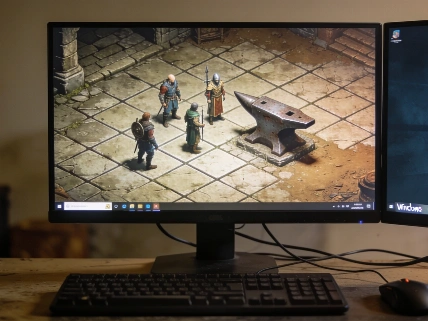
This approach stands in stark contrast to Baldur's Gate 3's default top-down, isometric camera, a hallmark of the cRPG genre. By enabling WASD movement and a more immersive viewpoint, the mod draws comparisons to series like Dragon Age and The Witcher, allowing players to traverse Faerûn in a style more familiar to fans of those franchises.
The mod's visibility soared after a video demonstration posted by Brator News on X (formerly Twitter) amassed nearly 4 million views. This surge in attention has brought the mod's design philosophy-and its implications for the genre-into sharp focus.
Community Reaction and Genre Tensions
The mod's viral spread has polarised the Baldur's Gate 3 community. Some players argue that introducing a third-person camera undermines the core design principles of a cRPG, particularly in exploration and combat. Critics suggest that camera perspective is not a superficial option but a foundational element that shapes level design, user interface, and gameplay systems. They warn that treating camera controls as a simple toggle risks diluting the genre's distinct identity.
Others, however, see the mod as a welcome evolution. Supporters highlight the demand for WASD movement and alternative camera options, pointing to the popularity of similar mods and the influx of players who might not otherwise engage with traditional cRPGs. They argue that optional features do not erase the original experience but instead broaden the game's appeal and accessibility.
This debate echoes wider industry discussions about player choice and artistic intent. Some players express concern that the push for universal third-person perspectives could erode the diversity of game design, while others believe that offering more options respects both the developer's vision and the player's preferences.
Larian's Stance and Future Implications
Despite the mod's popularity, Larian Studios has indicated that it does not plan to implement official third-person or WASD controls in Baldur's Gate 3 or its upcoming projects. In a recent developer Q&A, the studio confirmed that the camera system for the next Divinity title will remain similar to Baldur's Gate 3's isometric approach. This decision aligns with Larian's commitment to the cRPG tradition, even as modders continue to experiment with alternative perspectives.
For players hoping for official support, the reality is that future Larian games are unlikely to adopt these features natively. However, the modding community's enthusiasm suggests that unofficial solutions will persist, keeping the conversation about genre boundaries and player agency alive.
It is worth noting that debates over game identity and player options are not unique to Baldur's Gate 3. Recent controversies over platform decisions, such as Sony's move away from physical PlayStation 5 discs, have similarly highlighted the tension between tradition and adaptation. For more on how platform holders are navigating these shifts, see our coverage of Sony's preparations for the end of PlayStation 5 disc releases.
Numerical Context and Genre Comparisons
The True Third-Person Camera mod's showcase video has reached nearly 4 million views since its release in late July, reflecting significant interest beyond the core modding community. While exact download figures for the mod have not been disclosed, its rapid spread has prompted renewed discussion about the legacy of games like Dragon Age: Origins, which blended isometric and third-person perspectives. The mod's reception also highlights the enduring appeal of classic cRPG mechanics, even as player expectations evolve.
With Larian's next major release expected to retain the isometric viewpoint, the debate over camera perspective and genre purity is likely to continue. For now, the mod remains an unofficial but influential experiment in how players can reshape their experience of a modern cRPG.
Camera perspective is a fundamental aspect of game design, influencing not only how players see the world but also how they interact with it. In cRPGs, the isometric view supports tactical combat, broad situational awareness, and complex party management. Shifting to a third-person perspective can enhance immersion but may require substantial changes to level layout, interface, and gameplay systems. Understanding these trade-offs is essential when evaluating the impact of mods or feature requests on a game's identity and playability.