
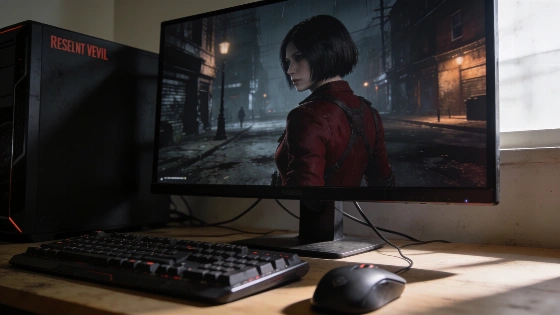
BABYMONSTER's Asa has drawn attention from both K-pop and gaming communities after sharing selfies that closely resemble Resident Evil's Ada Wong, igniting discussion about character likeness and fan culture across platforms
Asa, the main rapper of K-pop group BABYMONSTER, has become the centre of a cross-community discussion after posting a series of selfies that bear a striking resemblance to Resident Evil's Ada Wong. The images, shared on the official BABYMONSTER Weverse community, show Asa with a short bob haircut and deep red attire-visual hallmarks long associated with the iconic Capcom character. The similarity has not gone unnoticed, with fans from both the K-pop and gaming worlds quickly drawing parallels and coining the nickname "Asa Wong".
Fan Response and Social Media Impact
The reaction to Asa's photos has been swift and widespread, with comments referencing Ada Wong's signature look and even encouraging Asa to try the Resident Evil 4 Remake. The resemblance has led to a surge in side-by-side comparisons, with fans creating graphics that place Asa's recent images alongside screenshots of Ada Wong from Resident Evil 2 Remake. This is not the first time Asa's style has prompted such comparisons; earlier in the year, similar discussions emerged when photos of her in a black choker and bob hairstyle circulated online.
Despite the mounting attention, Asa has yet to publicly address the comparisons or comment on the possibility of cosplaying Ada Wong. Nonetheless, the conversation has fuelled speculation about whether she might embrace the likeness in future appearances or even consider a role in a live-action adaptation, should the opportunity arise.
Resident Evil's Cinematic Direction
While Ada Wong remains a fan-favourite within the Resident Evil franchise, her presence in upcoming adaptations is far from guaranteed. The next Resident Evil film, directed by Zach Cregger and set for release in September 2026, is confirmed to take a different narrative approach. According to Cregger, the film will not attempt a direct adaptation of the games and will instead focus on an original protagonist navigating the chaos of Raccoon City. As a result, major characters such as Ada Wong, Leon S. Kennedy, and Claire Redfield are not expected to appear in significant roles, if at all.
This creative decision marks a departure from previous adaptations, which often relied on established characters to anchor their stories. Cregger has stated that his intention is to avoid retelling game narratives that are already well-executed in their original medium, instead opting for a fresh perspective within the Resident Evil universe.
Franchise Context and Ongoing Interest
The enduring popularity of Ada Wong as a character is evident not only in fan art and cosplay but also in the way her image continues to influence pop culture beyond gaming. The recent wave of comparisons between Asa and Ada Wong highlights the character's recognisable design and the impact of visual storytelling across media. This phenomenon is not unique to Resident Evil; gaming icons frequently inspire trends and discussions that bridge the gap between games, music, and broader entertainment.
Capcom's ongoing celebration of Resident Evil's legacy, including recent events such as the unveiling of a life-sized Leon S. Kennedy statue for the franchise's 30th anniversary, demonstrates the series' sustained relevance. For more on Capcom's commemorative activities, see the coverage of the Leon S. Kennedy statue at the Shibuya exhibition in our recent report.
What Remains Uncertain
At present, there is no indication that Asa will officially collaborate with Capcom or participate in any Resident Evil projects. The current discussion remains rooted in fan observation and social media engagement, with no formal plans announced by either party. Whether Asa chooses to acknowledge the comparisons or explore a cosplay remains to be seen, but the conversation itself underscores the permeability of gaming culture in the wider entertainment landscape.
As the Resident Evil franchise continues to evolve through new games, remakes, and cinematic projects, the influence of its characters on popular culture is likely to persist. For now, Asa's viral selfies serve as a reminder of how iconic game designs can resonate far beyond their original context.
Cosplay and character likeness are recurring themes in gaming culture, often blurring the lines between digital and real-world identities. When a public figure's appearance closely matches that of a well-known game character, it can spark renewed interest in both the individual and the franchise. This dynamic is amplified by social media platforms, where visual trends and fan creations can quickly gain traction, reinforcing the cultural significance of gaming icons like Ada Wong.