
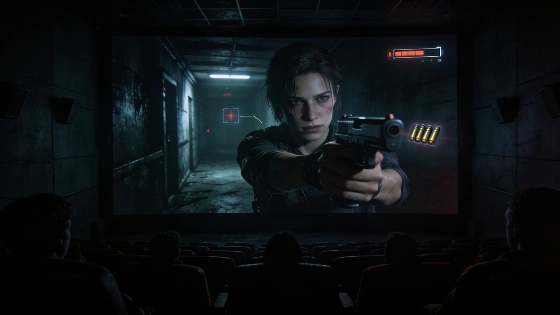
Director Zach Cregger has confirmed that his Resident Evil film will let viewers track the protagonist's bullets and health in real time, echoing the franchise's signature survival mechanics and raising the stakes for every encounter
Viewers expecting a routine video game adaptation from the upcoming Resident Evil film are in for a jolt: director Zach Cregger has revealed that the movie will make audiences acutely aware of every bullet fired and every wound suffered, mirroring the resource management that defines the games. This approach is set to transform the film's tension, making each missed shot and every scrape a tangible risk rather than background detail.
Gameplay Systems on the Big Screen
Cregger's decision to foreground resource management is not a superficial nod to fans but a deliberate structural choice. The director, a self-identified Resident Evil superfan, has stated that viewers will know exactly how many bullets protagonist Bryan-played by Austin Abrams-has left at any moment. The intention is to make the audience feel the pressure of dwindling supplies, a sensation familiar to anyone who has navigated the series' most punishing scenarios. Health tracking is also expected to play a visible role, with the film aiming to keep viewers "keenly aware" of Bryan's physical state as he attempts to survive Raccoon City's chaos.
This is a marked departure from most game-to-film adaptations, which typically relegate such mechanics to background lore or visual easter eggs. Instead, Cregger's film appears to be integrating these systems into the narrative fabric, raising the possibility that the movie will feel as stressful and consequential as a high-stakes playthrough.
Story and Setting Details
Unlike previous Resident Evil films, this adaptation does not retread the familiar path of special agent Leon Kennedy or directly adapt a single game. Instead, the story follows Bryan, a medical courier, as he attempts to deliver a package to Raccoon City General Hospital during the outbreak. The timeline is set during the events of Resident Evil 2, but Cregger has confirmed that inspiration is also drawn from Resident Evil 4 and Resident Evil 7, suggesting a blend of influences rather than a strict retelling.
While the film's narrative is original, the setting and atmosphere are designed to evoke the series' most iconic moments-dark corridors, limited ammunition, and the ever-present threat of the Infected. The focus on a courier rather than a heavily armed operative is a calculated move, amplifying the vulnerability and scarcity that define survival horror.
Release Timing and Audience Impact
Resident Evil is scheduled to arrive in cinemas on 18 September, positioning itself as a high-profile autumn release. The film's approach to resource management is likely to be a talking point among both long-time fans and newcomers, especially as it challenges the conventions of video game adaptations. Cregger's strategy is to make the audience care about every bullet and every wound, a gamble that could either immerse viewers or risk alienating those unaccustomed to such granular tension.
For context, the integration of gameplay systems into narrative media is not unprecedented-Naughty Dog's work on performance capture for Intergalactic: The Heretic Prophet, as reported earlier, demonstrates how studios are increasingly blurring the lines between interactive and cinematic storytelling. However, Cregger's explicit focus on resource tracking in a film format is a rare experiment, and its success will depend on execution rather than concept alone.
What Remains Unclear
Despite the detailed vision, several questions remain. It is not yet confirmed how the film will visually communicate Bryan's bullet count or health status-whether through on-screen graphics, narrative cues, or purely visual storytelling. There is also no word on whether this approach will extend to other characters or remain focused solely on the protagonist. Additionally, while the film draws from multiple Resident Evil titles, the extent to which it will reference specific mechanics or story beats from Resident Evil 4 and Resident Evil 7 is still unknown.
With the release date set and the director's intentions clear, the main uncertainty now lies in how these mechanics will translate to a cinematic experience and whether they will enhance or distract from the core narrative.
Resource management in survival horror games refers to the careful tracking and rationing of limited supplies-such as ammunition, health items, and key tools-under constant threat. In the Resident Evil series, this system is central to the tension, forcing players to make difficult choices and live with the consequences of every action. Translating this mechanic to film is a significant challenge, as it requires the audience to feel the same pressure without direct control. If executed well, it could redefine how game adaptations engage viewers, but the risk of breaking immersion or slowing pacing is real. The effectiveness of Cregger's approach will only become clear once Resident Evil reaches cinemas this September.