
A new real-time neural remastering engine called UNCANNY is now available in early alpha, using NVIDIA DLSS 5 to enhance visuals in both classic emulated and modern PC games with promising early results
Early screenshots from the UNCANNY neural remastering engine have revealed a striking leap in visual quality for both classic emulated titles and recent PC releases. Powered by NVIDIA DLSS 5, this new tool is already producing results that set it apart from traditional upscaling-even in its unfinished alpha state. According to NVIDIA's official documentation, DLSS 5 is described as a 3D-Guided Neural Rendering technology, not just a simple upscaler, and is designed to add realistic lighting and developer-tunable materials to supported games.
How UNCANNY Works
UNCANNY is designed as a real-time neural remastering engine that can be integrated directly into PC games and emulators. Its creator, known as imissanyway, has built a system that operates as a single runtime, removing the need for individual remaster mods for each game. The engine currently supports the PCSX2 PlayStation 2 emulator and a range of modern PC games, with a focus on delivering improved visuals without manual intervention. Independent publications emphasize that UNCANNY is a closed-source, unsigned graphics-injection tool and is not an official NVIDIA product, remaining fully independent and unaffiliated with NVIDIA, as noted by WindowsForum.
The core of UNCANNY's approach is a multipass reconstruction pipeline, offering modes from one to three passes. Unlike other projects that repeatedly stack the same upscaling pass, UNCANNY lets the initial pass handle the bulk of the work, with subsequent passes refining the image. This method is intended to avoid the diminishing returns and artefacts that can occur with repeated processing. Documentation reviewed by WindowsForum lists features such as DLSS 5 integration, multipass reconstruction, Motion Guard, Ghosting Guard, and a diagnostic layer, though some of these remain experimental in the current alpha.
DLSS 5 Integration and Technical Features
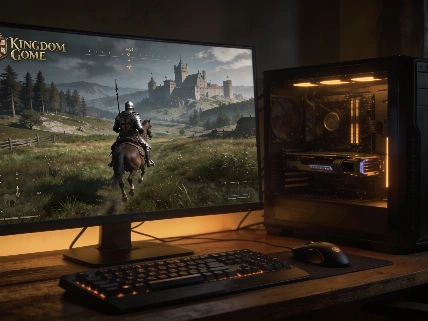
NVIDIA DLSS 5 neural rendering is at the heart of UNCANNY's upscaling process. The engine also includes motion and ghosting protection, as well as an experimental asset reconstruction system called REVENANT. While some developers have expressed reservations about DLSS 5's consistency across different games, others-such as Kingdom Come: Deliverance series director Daniel Vávra-have praised its results. The fact that AMD is reportedly developing its own neural rendering technology suggests this approach is gaining traction across the industry. However, according to Engadget and Tech Insider, the first public applications of DLSS 5 have been tied to NBA 2K27, rather than classic games or emulators, which contrasts with the broader narrative of universal neural remastering.
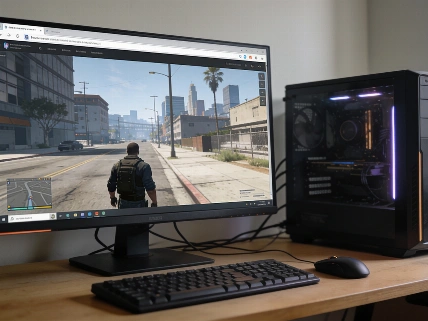
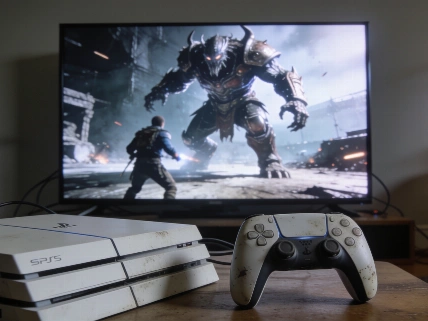
UNCANNY's early alpha build is not without issues. Compatibility with older DirectX games remains a challenge, and the consistency of neural rendering across a wide variety of titles is still being refined. However, the evidence so far points to significant improvements in games with realistic visual styles, such as Marvel's Spider-Man, and even in older titles like 007 From Russia With Love and BLACK, where face detail and lighting effects have seen notable upgrades. It is important to note that, as DigiRPT reports, official DLSS 5 support is currently limited to the GeForce RTX 50-series and GeForce NOW, with RTX 40 support discussed as a future possibility but without a confirmed launch date.
Evidence from Early Testing
Comparison screenshots shared by the project's creator show that UNCANNY, when paired with DLSS 5, can deliver a level of detail and clarity that rivals bespoke remaster mods. Marvel's Spider-Man, in particular, benefits from the combination, with more lifelike textures and improved depth. In classic games, the engine enhances facial features and environmental lighting, breathing new life into assets that were never designed for modern displays. According to NeoTeo, early experiments with DLSS 5 on older RTX cards such as the 4070 Ti have revealed a significant power cost: 43 W at native resolution, 145 W with one neural pass, 220 W with two, and 272 W with three passes, highlighting the computational demands of advanced neural rendering in its current form.
Despite being in early alpha, the public build of UNCANNY is already available for download via the project's GitHub page. The developer has encouraged testing and feedback, making it possible for players to experience the technology first-hand. For those interested in broader hardware developments, the reported earlier coverage of new racing peripherals demonstrates the pace of technical innovation across the PC gaming landscape.
Industry Implications and Next Steps
The arrival of UNCANNY signals a shift in how remastering can be approached on PC. Rather than relying on individual modders or official remaster releases, a single neural engine could potentially upgrade entire libraries of games in real time. The fact that the project is already functional on both emulators and modern titles, despite its alpha status, is a testament to the underlying potential of neural rendering and DLSS 5 integration. However, as noted by WindowsForum and DigiRPT, the technology is not yet mature, with compatibility gaps, rendering inconsistencies, and the need for further refinement meaning that UNCANNY is not a universal solution-at least not yet. But the rapid progress and visible results suggest that neural remastering could soon become a standard tool for PC players seeking to revisit older games or enhance new releases beyond their original presentation.
Upscaling technologies like DLSS 5 and neural remastering engines such as UNCANNY work by reconstructing higher-resolution images from lower-resolution inputs, using machine learning models trained on vast datasets of game imagery. Unlike traditional upscaling, which relies on simple pixel interpolation, neural upscaling can infer missing detail and texture, producing images that appear sharper and more natural. The effectiveness of these systems depends on the quality of the underlying model, the compatibility with the game's rendering pipeline and the ability to avoid artefacts such as ghosting or motion blur. As these technologies mature, they offer a practical way to extend the visual lifespan of both classic and modern games without the need for full-scale remasters or hardware upgrades. According to NVIDIA's official messaging, DLSS 5 is positioned as a next-generation solution for RTX 50-series and GeForce NOW, with its advanced 3D-Guided Neural Rendering capabilities setting a new standard for real-time graphics enhancement.