
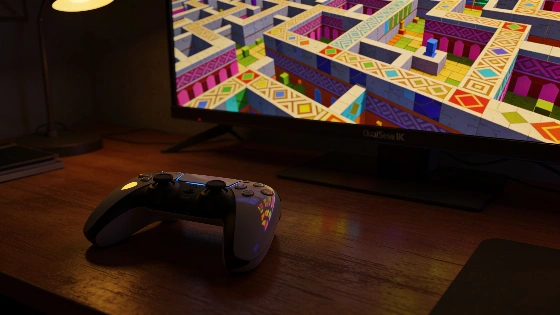
Jonathan Blow's The Witness set a new standard for puzzle difficulty in 2016, with its infamous final challenge still regarded as one of PlayStation's toughest platinum trophies a decade later
When The Witness launched in 2016, it quickly established itself as a landmark in the puzzle genre, thanks to its intricate design and the uncompromising nature of its most secretive content. While many players completed the main story and left satisfied, a small percentage pressed on to tackle the game's notorious final challenge-an optional gauntlet that continues to define the meaning of a hard-earned platinum trophy on PlayStation.
The Final Challenge Explained
The Witness, developed by Jonathan Blow, is built around a deceptively simple premise: trace lines through digital mazes scattered across a mysterious island. Each area introduces new rules, often hidden in environmental cues or subtle audio hints. However, the game's ultimate test is found off the main path-a randomly generated sequence of 14 puzzles, all to be solved within a strict time limit of just under 400 seconds. The challenge is made even more demanding by the absence of shortcuts, the inability to look up solutions, and the requirement to physically locate each puzzle within a dimly lit cavern before even attempting to solve them.
Unlike the main game, where patient observation and experimentation are rewarded, the final challenge introduces real pressure. The only soundtrack is a pair of classical compositions played on a gramophone, marking the countdown. Pausing the game or attempting to take notes resets the entire sequence, forcing players to rely on memory and rapid problem-solving. The complexity of the puzzles, which combine the most advanced mechanics from across the island, means that even experienced players can find themselves stumped.
Rarity and Player Achievement
According to PlayStation Network statistics, fewer than 10% of players have managed to unlock The Witness's platinum trophy, a figure that underscores the challenge's reputation. The sense of accomplishment for those who succeed is significant, with many describing it as a highlight of their gaming history. The game's design ensures that each attempt at the final challenge is unique, preventing rote memorisation and demanding genuine mastery of the underlying logic.
Since its release, The Witness has inspired a wave of puzzle games aiming for similar depth, including The Talos Principle, Manifold Garden, and Lorelei and the Laser Eyes. Yet, few have matched the combination of accessibility and brutal difficulty found in Blow's creation. The recently released Big Walk, for example, has drawn comparisons for its mysterious island setting and collaborative puzzle-solving, but early impressions suggest it is less punishing than The Witness's infamous finale.
Legacy and Ongoing Influence
The impact of The Witness's final challenge extends beyond its own player base. It has become a benchmark for difficulty in the puzzle genre, with speedrunners now completing the challenge in as little as 80 seconds-an achievement that highlights both the skill ceiling and the enduring appeal of the game's design. The sense of euphoria reported by those who finally overcome the challenge is rarely matched elsewhere, even as new games continue to push the boundaries of puzzle complexity.
For many, the pursuit of similarly demanding achievements has become a personal quest. Other games, such as Death Stranding 2, have introduced their own high-pressure tests, but The Witness's blend of logic, observation, and time pressure remains distinctive. The game's influence can also be seen in the way modern puzzle titles structure their optional content, offering escalating layers of difficulty for those willing to dig deeper.
Context Within the PlayStation Ecosystem
The Witness's platinum trophy stands out in a PlayStation landscape filled with challenging achievements, but it is far from the only title to test player resolve. Recent releases like Marvel's Wolverine have generated discussion around difficulty and player progression, as seen in our coverage of its combat and narrative structure at our in-depth look at Marvel's Wolverine's gameplay and release plans. However, The Witness's approach-eschewing combat in favour of pure mental challenge-remains unique among major PlayStation releases.
As the PlayStation trophy ecosystem continues to evolve, with new games introducing their own takes on difficulty and reward, The Witness's final challenge endures as a touchstone for what a truly demanding platinum can represent. Its legacy is not just in the number of players who have succeeded, but in the ongoing conversation about what makes an achievement meaningful in modern gaming.
Understanding the significance of The Witness's platinum trophy requires some context on how PlayStation's trophy system works. Platinum trophies are awarded for completing every other trophy in a game, often requiring mastery of its most difficult content. While some games offer relatively straightforward paths to platinum, others, like The Witness, reserve their highest honour for only the most dedicated and skilled players. This system has become a key part of PlayStation's player culture, driving competition and shaping the way games are designed and experienced.