
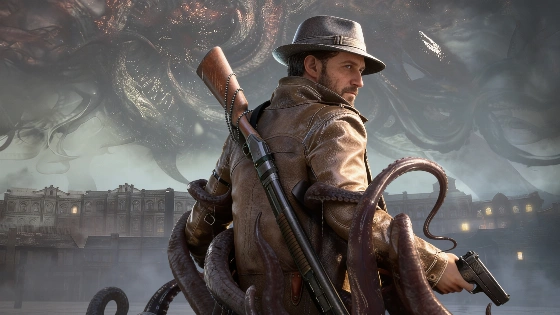
Frogwares' The Sinking City 2 draws clear inspiration from Resident Evil, blending classic survival horror mechanics with a detailed 1920s New England setting and Cthulhu mythos influences
The Sinking City 2 arrives as a survival horror sequel from Frogwares, openly drawing on the modern Resident Evil formula while embedding itself in the Cthulhu mythos. Set in a meticulously realised 1929 Arkham, Massachusetts, the game places players in the role of Calvin Rafferty, an occultist caught in the midst of an apocalyptic flood. The title's approach is unashamedly referential, but its atmospheric world-building and period detail distinguish it from its inspirations.
Atmosphere and Setting
Arkham itself is the centrepiece, rendered with a level of environmental detail that supports both exploration and tension. Each chapter introduces a new locale, from waterlogged city streets to a decaying hospital and a fish market steeped in Lovecraftian unease. The density of environmental storytelling, supported by strong sound design, creates a sense of place that is both oppressive and immersive. While cutscene and facial animation quality can be inconsistent, the voice acting generally maintains the narrative's momentum.
The story follows Calvin's search for answers after a disastrous expedition to the Dreamlands leaves his partner Faye comatose. The plot weaves in familiar cosmic horror themes, with nods to established Cthulhu lore and a cast of characters whose motivations are not always clear. Despite the high-concept subject matter, the narrative remains accessible, avoiding the need for external explanation while still engaging with the metaphysical elements that define Lovecraft's work.
Gameplay and Mechanics
The Sinking City 2's gameplay is a direct homage to recent Resident Evil entries, particularly the 2019 Resident Evil 2 remake. Players manage limited ammunition, scavenge for resources, and solve environmental puzzles reminiscent of the genre's staples. Melee combat is present but risky, reinforcing the tension between survival and resource management. The inventory system, enemy design, and even the structure of boss encounters echo Capcom's formula, though Frogwares introduces its own twist with a rune-based perk system that incentivises replayability.
One notable addition is the clue-board mechanic, allowing players to collect and connect written clues across each area. This system rewards careful investigation with progression points and optional treasures, though the puzzles themselves rarely present significant challenge. Difficulty settings for puzzles and combat can be adjusted independently, but the harder puzzle mode primarily removes visual hints rather than increasing complexity.
Technical and Design Choices
While the game's core mechanics are familiar, Frogwares has made design decisions that set The Sinking City 2 apart. The perk system, based on equippable runes, offers meaningful gameplay modifiers and encourages multiple playthroughs to unlock higher-tier abilities. However, the absence of a sanity mechanic-often a staple in Lovecraftian games-means the psychological horror is delivered through narrative and environmental cues rather than direct gameplay effects.
Boss fights and larger combat arenas occasionally undermine the game's tension by providing infinite ammunition pick-ups, a choice justified in-game but one that can reduce the sense of threat. These segments are less effective than the more atmospheric exploration and survival elements. For players interested in the evolution of survival horror, it is worth noting that other recent titles, such as those discussed in NGB's analysis of genre influences at how Silver Pines channels classic survival horror, have also revisited and reinterpreted these mechanics.
Release and Series Context
The Sinking City 2 builds on the foundation of its predecessor, which was praised for its Lovecraftian vision and narrative ambition. The sequel's approach is more mechanically conservative, but its commitment to atmosphere and period authenticity remains strong. While the game does not radically innovate within the genre, it delivers a competent and engaging survival horror experience for fans of both Resident Evil and Lovecraftian fiction.
At the time of writing, The Sinking City 2 is available on major platforms, with no exclusive content or platform-specific features confirmed. The game's structure encourages replay through its perk system and New Game+ mode, but players seeking a more challenging detective experience may find the puzzle design relatively forgiving. The absence of a sanity system is a notable omission for those expecting a more psychologically driven horror experience.
Survival horror games often rely on a balance between resource scarcity, environmental tension, and player vulnerability. The Sinking City 2's design choices-such as limited ammunition, inventory management, and atmospheric world-building-are rooted in the genre's traditions. However, the inclusion of infinite resources in certain encounters and the lack of a sanity mechanic highlight the trade-offs developers face when adapting established formulas to new settings and narratives.