
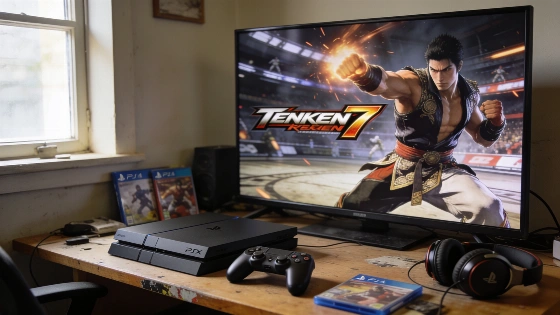
Katsuhiro Harada, previously at the helm of Tekken, has described a cultural misunderstanding with international fans following the introduction of Leroy Smith in Tekken 7, highlighting how language and context can shape community response
Katsuhiro Harada, who led the Tekken series for decades, has recounted a memorable cultural misunderstanding that followed the reveal of Leroy Smith for Tekken 7. The incident, which unfolded after the character's 2019 announcement, highlights the complexities of cross-cultural communication in global gaming communities.
Leroy Smith's Impact on Tekken 7
Leroy Smith, a Wing Chun master introduced in Tekken 7, quickly became a standout addition to the roster. His design and fighting style resonated with players worldwide, and the character's popularity was amplified by high-profile cosplays, including one from musician T-Pain. The positive reception was especially strong among Black American fans, who began using the phrase "inviting Harada to the cookout" as a mark of appreciation for the character's authentic representation and style.
Harada, however, was initially perplexed by the phrase. Despite his extensive experience with English and frequent travel to North America-over 50 visits by his own count-he misinterpreted the invitation as something negative, associating it with online slang like "cooked" that he had seen used in critical contexts. This led to genuine concern that he had inadvertently caused offence with Leroy's introduction.
Understanding the Cookout Reference
The confusion was eventually resolved when members of the American fan community explained that being "invited to the cookout" is a significant compliment, symbolising trust and inclusion within a close-knit group. For Harada, this explanation was a relief, transforming what he feared was backlash into a moment of genuine cross-cultural connection. He was surprised by the scale of American barbecue culture, noting the size of grills and ingredients compared to those in Japan, and expressed some regret at not accepting an invitation to attend such a gathering in person.
Harada's story underscores the challenges that can arise when idiomatic expressions cross linguistic and cultural boundaries, even for industry veterans with substantial international experience. The episode also reflects the growing importance of authentic representation in fighting games, where character design can foster meaningful engagement across diverse player communities.
Harada's Broader Influences and New Studio
In reflecting on the experience, Harada acknowledged the influence of prominent Black figures on his creative work, mentioning Michael Jackson, Wesley Snipes as Blade, Kareem Abdul-Jabbar in Game of Death, and Jim Kelly in Enter the Dragon. He was clear that while he cannot claim full understanding of Black culture, these influences have shaped his approach to character creation and community engagement.
Earlier this year, Harada departed Bandai Namco and the Tekken franchise to establish his own development house, VS Studio. He has stated his intention to return to his roots in fighting game development, with plans for a new project that has yet to be formally announced. The move follows a 31-year career that has seen Harada travel extensively and interact directly with fan communities worldwide.
Cross-Cultural Communication in Gaming
Harada's anecdote is a reminder of the nuances involved in global gaming culture, where language, context and community traditions can lead to both confusion and connection. As the industry continues to expand its reach, such moments highlight the value of open dialogue and cultural literacy among developers and players alike. For those interested in how platform decisions can also shape community response, recent developments such as Sony's plan to end physical PlayStation game discs have prompted notable reactions from creators, as seen when Nier's Yoko Taro shared his perspective on the shift towards digital distribution in this detailed report on PlayStation's physical media strategy.
Understanding idiomatic expressions like "invited to the cookout" requires more than language proficiency; it demands awareness of the cultural context in which such phrases are used. In gaming, where communities are increasingly international, developers and players alike benefit from recognising how meaning can shift across borders. This awareness not only prevents misunderstandings but also enriches the shared experience of games as a global medium.