
NVIDIA's DLSS 5 Neural Rendering has reached Melee Unlocked on Windows PC. The result is surprisingly convincing, though darker colours and visible noise show where the technology still struggles.
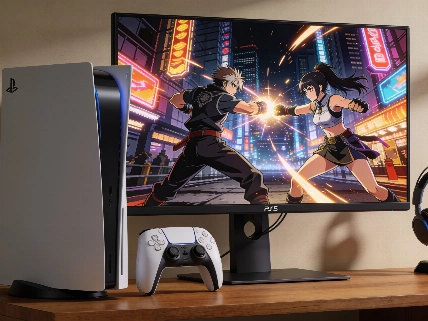
NVIDIA DLSS 5 Neural Rendering was expected to struggle with Super Smash Bros. Melee's bright, stylised look. Instead, the experimental version in Melee Unlocked produces convincing character models and stages. It also exposes the technology's current problems with colour and image stability.
A native PC experiment
The feature arrived in version 0.6.61 of Melee Unlocked, a free native Windows port of Super Smash Bros. Melee. The project statically recompiles the original PowerPC code into C++ and runs it through a native D3D12 renderer. That gives the neural-rendering experiment a modern technical base instead of the usual emulator setup. Independent technical coverage from TweakTown describes Melee Unlocked as a native port rather than an emulator.
This is not a finished NVIDIA feature added through an official release of Nintendo's game. It is an experimental addition to an unofficial PC port. Developer Hero88go demonstrated the result in a YouTube video.
The reported DLSS 5 3D-Guided Neural Rendering integration is meant for RTX 50 Series hardware. The model file nvngx_dlssnr.dll does not come with the port and must be obtained separately. The footage therefore shows what the feature can do in this particular build. It does not establish a universal result for stylised games.
The technical details are compact. DLSS 5 support is part of Melee Unlocked version 0.6.61, while the game still runs on its original 60 Hz logic. The port can show unlocked frame rates by building in-between frames from animation and physics data instead of using image interpolation.
NVIDIA's own Technical Blog, published on 22 September 2026, presents DLSS 5 as part of the RTX developer toolkit. It identifies 3D-Guided Neural Rendering as a feature for developers.
NVIDIA says the technology is already available in NBA 2K27 for GeForce RTX 50 Series desktop and laptop GPUs. It is also available in GeForce NOW Ultimate on RTX 5080-class cloud machines. Summaries of the first official launch identify 3 September 2026 as the technology's debut in NBA 2K27. That places Melee Unlocked's version in the very early phase of DLSS 5 adoption.
Where the image holds up
At its best, the neural pass gives the fighters and arenas a cleaner look without wiping away the shapes that define Melee. Surfaces gain extra detail. The stages generally keep their structure. That is a meaningful result for a game whose art direction does not rely on realistic materials or naturalistic lighting.
The weaknesses are easy to see. The image becomes much darker and less vibrant. Noise appears in parts of the picture. Those changes take away from the original game's sharp, colourful character. For now, the demonstration works better as a technical test than as a recommended way to play.
That uneven result fits the wider behaviour reported for NVIDIA DLSS 5 Neural Rendering. The technology has worked particularly well in realistic games. It has even produced remake-level visuals in older titles such as FromSoftware's Dark Souls III. Melee shows that stylised material is not an automatic barrier. It needs more careful control of the output.
Controls matter more than hype
Melee Unlocked gives users several ways to tune the experiment instead of forcing one visual profile. The build includes controls for intensity, surface detail, lighting and tone. Users can adjust the effect around the problems seen in the demonstration.
The result is not a clean before-and-after upgrade. Lower intensity or a different lighting balance could preserve more of Melee's original colour. Adjusting surface detail may reduce the distracting noise. Those are reasonable possibilities within the available controls, not measured improvements confirmed by the source material.
NVIDIA's 22 September 2026 Developer Forum post says DLSS 5 introduces DLSS 3D-Guided Neural Rendering and granular controls. The company says these controls are intended to preserve an artist's style while adding more realistic lighting and materials.
That does not mean every game will work automatically. NVIDIA is describing a new development feature that needs integration and tuning. Melee Unlocked's experimental status fits that description.
The wider port goes beyond this graphics test. It supports online multiplayer with rollback and compatibility with Slippi netplay. It also supports HD texture packs, DLSS and DLAA, Frame Generation and Reflex. Native GameCube controllers work alongside DualSense, Switch Pro and box controllers.
What players actually get
The unlocked frame-rate feature is designed to avoid the added latency associated with ordinary image interpolation. Game logic stays at the original 60 Hz. The port builds intermediate frames from the game's own animation and physics data. That makes the feature different from simply inserting generated images between rendered frames.
Melee Unlocked is available through GitHub, but the port contains no game content. Players need their own Super Smash Bros. Melee NTSC 1.02 ISO to use it. That is a real access requirement, not a minor footnote. The project offers a modern Windows route to Melee while keeping the original game data out of the distribution.
DLSS 5 has not perfected stylised rendering. The darker image and visible noise make that clear. Melee's value here is different. It challenges the idea that neural rendering only works when a game looks realistic. Melee Unlocked turns that challenge into a configurable experiment with serious technical features beyond the visual novelty.
Upscaling and neural rendering also need to be judged separately from frame generation. Upscaling reconstructs an image from a lower-resolution input. Frame generation creates additional displayed frames. Neither one guarantees accurate colour, clean detail or lower latency.
In Melee Unlocked, the visual controls make the reconstruction easier to inspect. The port's frame presentation deals with a separate performance issue. Together, they make this an impressive experiment rather than a replacement for the game's original look.