
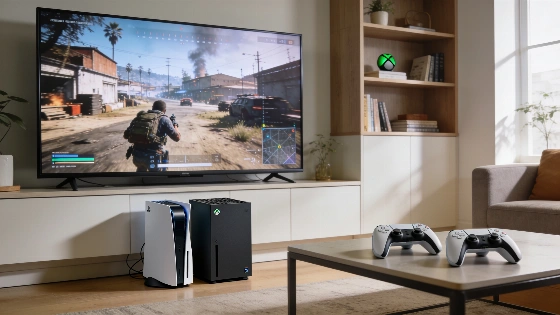
Take-Two's Strauss Zelnick has suggested that commercial-grade video game streaming could rival console performance within three years, but only if it can deliver titles like GTA 6 with the same fidelity and responsiveness
Take-Two CEO Strauss Zelnick has indicated that the video game industry could see commercial-grade streaming become a practical alternative to traditional consoles within the next three years. However, he cautioned that for streaming to be genuinely relevant to players and publishers, it must be able to run demanding titles such as GTA 6 with performance and visual quality on par with dedicated hardware.
Streaming as a Solution to Hardware Costs
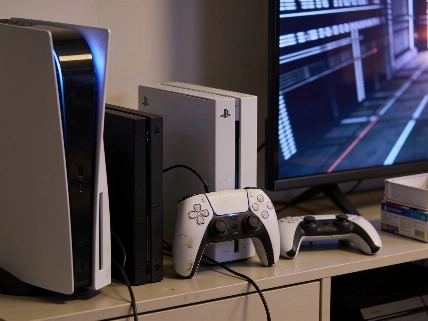
During a recent investor Q&A following Take-Two's latest financial report, Zelnick addressed the growing challenge of rising console hardware costs. With component prices continuing to climb, both Sony and Microsoft have increased the retail price of their current-generation consoles, and the launches of PlayStation 6 and the next Xbox-codenamed Project Helix-may be delayed as a result. Zelnick argued that lower hardware costs are preferable for software publishers, as they expand the potential player base. He suggested that high-quality streaming could help offset these barriers by allowing more devices to function as capable gaming platforms, regardless of their original purpose.
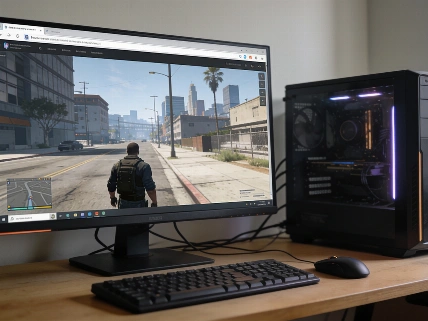
Video game streaming is already available from most major platform holders, but current solutions are often criticised for high latency, reduced image quality, and inconsistent responsiveness compared to local play. Zelnick believes that these technical hurdles are close to being overcome, and predicted that low-latency, consumer-ready streaming could be commercially viable within three years. He estimated that such a shift could multiply the effective install base for major titles, though he stopped short of forecasting a direct tenfold increase in revenue.
Technical Hurdles and Platform Implications
In a follow-up interview, Zelnick clarified that for streaming to matter to Take-Two and its flagship franchises, it must be able to deliver games like GTA 6 with the same fidelity and responsiveness as consoles. He acknowledged that this prediction is speculative, as the necessary technology is not yet available, but maintained that streaming will only become relevant if it can support the most demanding titles without compromise. Both Sony and Microsoft are expected to lean more heavily on streaming in the coming years, especially as hardware costs continue to rise and supply chain pressures persist.
Microsoft has already begun testing ad-supported Xbox game streaming, promising that advertisements will not disrupt gameplay. The company has positioned cloud streaming as a way for Xbox One owners to access newer titles designed for Xbox Series X|S without needing to upgrade their hardware immediately. This approach could be particularly significant in regions where consoles are less affordable or harder to obtain. In June, Microsoft announced further price increases for its consoles, citing a "components crisis" that has driven up storage and memory costs by more than 2.5 times, with further increases expected by 2027.
Industry Response to Escalating Hardware Prices
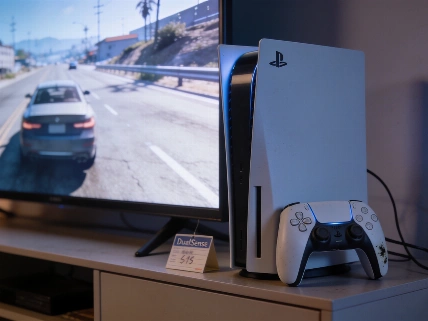
The current generation of consoles has seen price rises across the board. Sony raised the price of PlayStation 5 consoles in March, attributing the move to ongoing global economic pressures. Nintendo has also confirmed that its upcoming Switch 2 will launch at a higher price point, and Valve has struggled to keep the Steam Machine within its original pricing target, ultimately releasing it at $1,049. New Xbox CEO Asha Sharma has stated that the industry may need to adopt radically different business models, as the cost of new hardware could soon exceed what mass audiences are willing to pay.
For context, the PlayStation 5 and Xbox Series X|S have both experienced price increases rather than reductions since launch, with some hardware now approaching the $1,000 mark. These trends have prompted publishers and platform holders to explore alternative access models, including streaming and cloud-based solutions, to maintain player engagement and reach new audiences. For a broader look at how platform strategies are evolving in response to these pressures, see this analysis of Xbox's long-term player growth targets.
What Remains Uncertain
While Zelnick's prediction is grounded in current industry trends, there is no guarantee that streaming will achieve console-level performance within the suggested timeframe. The technical requirements for low-latency, high-fidelity streaming remain significant, especially for open-world games with complex systems and large player bases. It is also unclear how quickly internet infrastructure will improve in regions where high-speed, low-latency connections are not yet standard. Until streaming can reliably deliver the same experience as local hardware, it is likely to remain a supplementary option rather than a full replacement for consoles and gaming PCs.
Input latency is a critical factor in the viability of game streaming. Latency refers to the delay between a player's input and the corresponding action on screen. High latency can make fast-paced or precision-based games feel sluggish or unresponsive, undermining the experience. Achieving console-quality streaming requires not only powerful server infrastructure but also robust, low-latency internet connections for end users. As a result, the success of streaming as a mainstream alternative will depend as much on network improvements as on advances in server technology and software optimisation.