
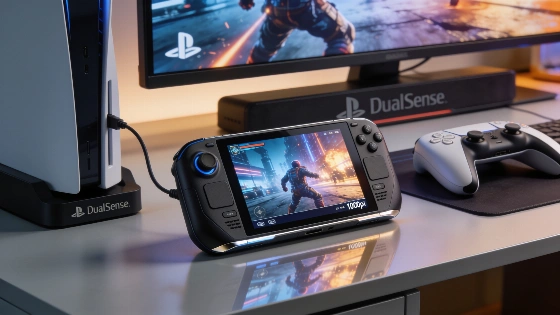
A major leak has outlined the technical ambitions of Sony's Project Canis handheld, with PSSR 3.0 upscaling and docked performance reportedly bringing it within reach of the PS5 Pro's power targets
Sony's next-generation handheld ambitions have come into sharper focus after a substantial leak detailed Project Canis, also referred to as PSP 3, and its technical strategy for competing with current home consoles. However, it is important to note that, according to multiple independent reports including La Razón and iTHardware, Sony has not officially announced Project Canis, PSP 3, or any PS6-related portable device. All information currently available is based on unconfirmed leaks and should be treated as such, as emphasized by several sources.
Technical ambitions and hardware design
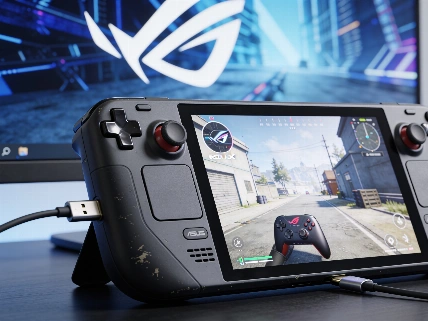
According to the leak published by GameGPU and echoed by outlets such as iTHardware and MobiFlip, Project Canis is described as being built around a custom 3-nanometre AMD processor featuring six Zen 6 cores-four standard Zen 6c and two low-power Zen 6 LP-paired with 24GB of LPDDR5X memory on a 192-bit bus. The graphics unit is said to use 16 Compute Units based on the RDNA 5 architecture, supporting Dual-Issue FP32 instructions, all within a strict 15W to 25W power envelope. This configuration is designed to balance portable efficiency with docked performance, a challenge that has defined recent handheld hardware. However, as La Razón and MobiFlip both highlight, Sony has not confirmed any of these specifications, and they remain subject to change.
In portable mode, the processor reportedly runs at 1.2GHz, delivering 4.91 teraflops of compute power. When docked, the clock speed increases to 1.65GHz, with a peak of 6.75 teraflops. These figures are significant for a handheld, but the real differentiator is the inclusion of PSSR 3.0-Sony's latest upscaling and frame generation technology, which is expected to debut on PlayStation consoles and has been previously teased by system architect Mark Cerny. Again, it is important to stress that these details are based on leaks and have not been officially acknowledged by Sony, as reported by La Razón.
PSSR 3.0 and performance targets
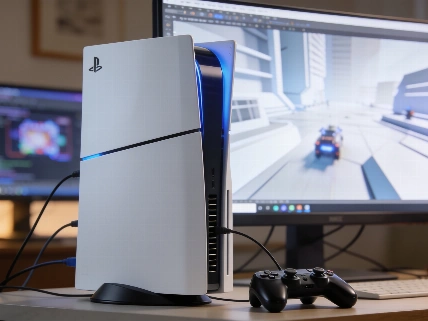
The leak claims that Project Canis will internally render games at 540p in portable mode, upscaling to a native 1080p display using PSSR 3.0. This approach is intended to maximise battery life and thermal efficiency while still delivering a sharp image. GameGPU suggests that, thanks to PSSR 3.0's frame generation and upscaling, the effective performance could reach 10-11 teraflops in handheld mode and up to 14 teraflops when docked. For context, the PlayStation 5 Pro is listed at 16.7 teraflops, while the base PlayStation 5 sits below these figures. However, as noted by iTHardware and MobiFlip, these performance targets are not confirmed by Sony and should be considered speculative until official details are released.
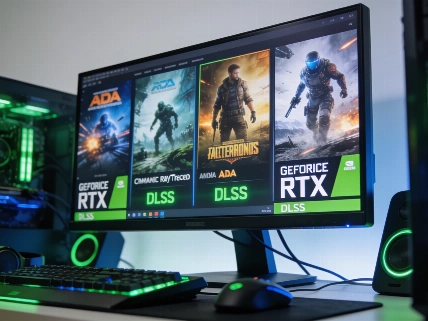
Specification comparisons highlight the scale of Sony's ambition. The PS5 Pro uses a custom AMD APU with Zen 2 cores, 60 Compute Units on a hybrid RDNA 2/3 architecture, and 16GB of GDDR6 memory, drawing up to 240W under load. By contrast, Project Canis aims to deliver a comparable experience at a fraction of the power, relying on advanced upscaling and frame generation to bridge the gap. The leak also claims that PSSR 3.0 could surpass NVIDIA's DLSS 4.5 in image quality, though this remains unverified and, as La Razón points out, Sony has not commented on these comparisons.
Competitive context and release window
Earlier leaks from insider Kepler_L2, referenced by GameGPU, have suggested that Project Canis will outperform the Xbox Series S in rasterisation and offer significantly stronger ray tracing and path tracing capabilities. The Xbox Series S is rated at 4 teraflops, making the new PlayStation handheld's reported targets especially aggressive for a portable device. However, as reported by MobiFlip, KeplerL2 also noted that Sony currently lacks a clear price target for such a device, with the high cost of memory being a significant factor-this is an insider assessment and not an official company statement.
GameGPU and Areajugones report that Sony is targeting a late 2027 launch for Project Canis, with some sources specifically mentioning the end of 2027 as a possible release window. Nevertheless, La Razón and iTHardware both emphasize that Sony has not confirmed any release date, price, or edition structure for the device. The scenario of a "second device" launching alongside the PS6 and possible compatibility with PS4/PS5 has also been mentioned in earlier industry leaks, but these remain unverified rumors and not established facts, as highlighted by whatledto.com and Mixvale.
What remains uncertain
While the technical outline is detailed, several key questions remain. There is no official confirmation from Sony regarding Project Canis, its specifications, or its release window. The reported performance figures are based on internal targets and upscaling claims rather than independent testing. It is also not clear how PSSR 3.0 will perform in practice, especially compared to established solutions like DLSS or FSR. As with any major hardware leak, the final product could differ from these early reports. According to La Razón, all figures and technical details should be treated as unconfirmed until Sony makes an official announcement.
For readers interested in how upscaling and frame generation are shaping the next wave of hardware, Square Enix's approach to PC performance in Final Fantasy VII Revelation was reported earlier and offers a useful point of comparison for how platform holders are prioritising image quality and efficiency.
Upscaling technologies like PSSR 3.0 are designed to reconstruct a higher-resolution image from a lower-resolution internal render, reducing the workload on the GPU while maintaining visual sharpness. Frame generation, meanwhile, creates additional frames between rendered ones to improve perceived smoothness, often at the cost of some input latency or artefacts. These techniques have become central to modern gaming hardware, especially as manufacturers seek to deliver high-resolution, high-frame-rate experiences within tight power and thermal limits. The effectiveness of these solutions depends on both the underlying hardware and the sophistication of the upscaling algorithm, making independent testing essential before drawing final conclusions about real-world performance.