
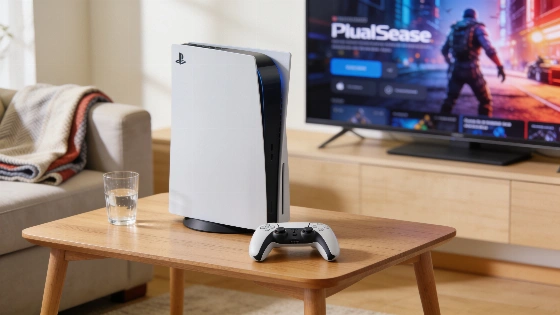
Sony reportedly asked game developers whether its physical sales strategy is causing problems after announcing plans to stop making new PlayStation game discs in January 2028.
Sony's plan to stop making new PlayStation game discs in January 2028 may not be final. A report from MLID says the company surveyed game developers about its physical sales strategy. Sony reportedly asked whether its way of selling boxed games creates problems.
The reported survey
The survey does not confirm a policy reversal. It does show that Sony is seeking feedback on a decision that has already led to petitions and boycott campaigns. Some consumers oppose a disc-free future for PlayStation.
A September 24, 2026 report from iXBT Games also says Sony asked developers about the effects of ending physical PlayStation releases. The report does not say that Sony has canceled the 2028 plan.
According to MLID's livestream account, the questionnaire was lengthy. It focused on how Sony sells games in physical form. The wording appears to leave room for criticism of the current plan. It was not simply a request for developers to prepare for a change that could not be stopped.
Sony could still adjust its approach if the feedback shows problems for publishers or studios. There is no evidence in the supplied material that the company has canceled its 2028 plan or restored disc manufacturing as a confirmed long-term policy.
Recent reports continue to describe January 2028 as the cutoff for new PlayStation game discs. Games released before then are still expected to remain eligible for physical release.
Factories and fan pressure
The timing matters. Sony has reportedly been moving factory capacity away from PlayStation disc manufacturing. Consumers have responded with petitions and boycott campaigns.
Changing course after that work would involve more than a new message from the company. Still, the survey suggests that Sony has not shut out feedback.
Sony has said the shift is driven by changing consumer behavior. Sony Interactive Entertainment communications director Sid Shuman previously said that, "in response to shifting trends in consumer preference, new games will be released on PlayStation Store and at retailers in digital formats only."
Under the reported timetable, the change would apply to new releases after January 2028. It would not automatically remove physical editions of games released before then.
Independent coverage in September 2026 put Sony's digital share of full game sales at roughly 78% to 85%. That range is being used to explain why the company is relying less on physical distribution.
The figure helps explain the business case for the plan. It does not show that every game or every market has abandoned boxed releases.
Other events have been pulled into the same dispute. Former PlayStation employees Shuhei Yoshida and Adam Boyes reenacted a famous scene without exchanging a physical copy. Fans took that as a criticism of Sony's direction.
That interpretation is not proof of an internal policy change. It has added to the public argument over whether physical games still have a place in PlayStation's future.
Why physical sales still matter
The clearest evidence in the report is commercial. Marvel's Wolverine generated 23% of its revenue from retail sales during its first three days. Sony's proposed manufacturing change is scheduled for January 2028.
The figure does not show that every game needs a disc release. It does show why developers may resist the idea that boxed games are already irrelevant.
Retail revenue can differ across major releases and regions. The supplied material does not provide a full split between physical and digital sales.
Even so, a 23% retail share is large enough to make the distribution question practical rather than nostalgic. Removing discs could affect how some games reach customers and how retailers take part in launches. The source does not give the exact effects on either group.
That may explain why the developer survey matters more than fan speculation. Developers can point to operational or commercial problems in Sony's physical sales process. Social-media reactions can only show how people interpret individual signals.
No reversal yet
The cautious reading is less dramatic than a confirmed U-turn. Sony has a stated plan to stop making new PlayStation game discs in January 2028. It has reportedly started moving factory capacity away from disc production. The company is now said to be collecting feedback from developers.
Those facts can exist alongside an internal review. They do not show that Sony has abandoned the plan.
IGN's reporting connects the digital-only direction to Sony's view that consumer preferences are changing. The iXBT Games report describes the developer questionnaire as a new development, not as proof of a completed policy change.
The full wording of the survey is not available. Neither are the number of developers contacted or Sony's response to their feedback. The questionnaire shows that the company is consulting developers. It does not show that Sony has made a decision.
MLID's report should also be treated as unverified reporting, not as an official Sony statement. Sony's public explanation and the reported January 2028 timetable provide the clearest available picture.
New games are expected to move to digital formats through the PlayStation Store and retail channels. Games released earlier are still eligible for physical release.
Sony may need to treat physical distribution as a product choice rather than something it can switch off without friction. The reported survey and Marvel's Wolverine's retail performance both point to measurable demand for physical games.
Digital sales still account for an estimated 78% to 85% of Sony's full-game sales. For now, the 2028 plan looks less like a final endpoint and more like a policy Sony may still have to refine.
A retail share is not the same as total physical-unit data. Revenue can include different prices and sales channels.
It is still a direct sign that boxed games contributed materially during the period cited. For players and developers, the distinction is simple. A reported consultation shows flexibility, not a reversal. Sony has not yet said what will actually change.