
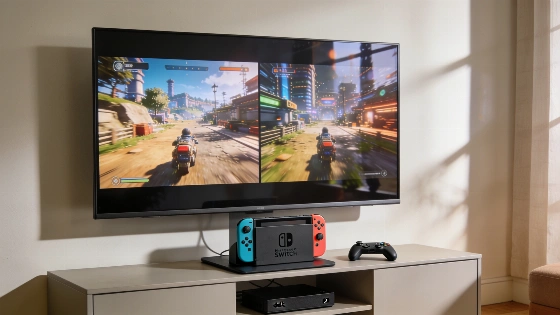
Nintendo Switch 2 has received a firmware update that finally activates VRR support in TV mode, a feature previously dropped at launch and now delivered after months of uncertainty and speculation
Nintendo has at last delivered variable refresh rate (VRR) support for Nintendo Switch 2 in TV mode, ending a sixteen-month wait that left many players questioning whether the feature would ever materialise. The latest firmware update, version 23.0.0, enables VRR output when the console is docked, provided both the connected television and the running software support the technology. This move reverses Nintendo's earlier position, which saw VRR quietly dropped from the launch specification and then confirmed as handheld-only, despite clear demand from the player base.
VRR Arrives in Docked Mode
The addition of VRR in TV mode is the headline change in a firmware update that also introduces a raft of smaller improvements, including expanded chat features, new accessibility options, and enhanced data transfer tools. VRR, or variable refresh rate, allows the console to synchronise its output with the display's refresh cycle, reducing screen tearing and stutter during gameplay. Until now, Switch 2 owners could only access VRR in handheld mode, leaving docked play limited to fixed refresh rates and forcing developers to cap frame rates at 30 or 60 frames per second to avoid visible artefacts.
To activate VRR in TV mode, users must update both the console and the Nintendo Switch 2 Dock. The feature only functions when the connected television supports VRR and the game itself is coded to take advantage of it. This means not every title will benefit immediately, but the groundwork is now in place for smoother performance in future releases and potential updates to existing games.
Feature List and Technical Details
Firmware version 23.0.0 brings several other notable changes. Players can now transfer all data-including save files and screenshots-between two Switch 2 consoles, a significant improvement for those upgrading or replacing hardware. Accessibility settings have been expanded, with text-to-speech and voice-to-text conversion now supporting Portuguese (Brazil), and TV audio settings are now saved per connected display. The update also introduces a new "VRR Settings" menu under display options, allowing users to manage the feature directly.
Other additions include the ability to generate and share Mii QR codes, instant sound checks when adjusting TV volume, and a new option to temporarily play software using an online licence if a virtual game card cannot be transferred. These changes reflect Nintendo's ongoing efforts to modernise the Switch 2's system software, though VRR support in docked mode is by far the most technically significant improvement in this release.
Development Timeline and Player Impact
VRR support for docked play was originally promoted ahead of the Switch 2's launch, only to be removed from official materials and later confirmed as unavailable. Independent testing suggested the hardware was capable, but Nintendo remained silent for over a year, fuelling speculation about technical or certification hurdles. A job listing in July hinted that work was ongoing, but no timeline was given. The arrival of VRR in TV mode now brings Switch 2 in line with competing consoles that have offered the feature for years, addressing a key gap in the platform's technical offering.
For players, the practical benefit is the potential for smoother gameplay in titles that support uncapped or variable frame rates, especially in action-heavy or visually complex games. However, the impact will depend on developer adoption and the prevalence of compatible televisions. The update does not retroactively enable VRR for all games, and some titles may require patches to take full advantage. In the context of recent Nintendo news, the Switch 2 continues to see high-profile announcements, with Metroid Ravenous and a remake of The Legend of Zelda: Ocarina of Time both revealed in the past week. For a sense of how incremental platform updates can affect player experience, see our previous analysis of NHL 27's technical stagnation.
What Remains Uncertain
While the firmware update marks a clear technical advance, several questions remain. Nintendo has not published a list of games that will support VRR in docked mode from day one, nor has it committed to retrofitting older titles. The requirement for both a compatible TV and a software update means the feature's real-world impact will be uneven in the short term. There is also no word on whether VRR will be extended to cloud-streamed games or third-party applications on the platform. As with many Nintendo platform features, the pace of adoption will likely depend on first-party support and the willingness of external developers to invest in updates.
Variable refresh rate (VRR) is a display technology that allows a console or PC to match its video output to the refresh rate of a compatible television or monitor. This synchronisation reduces screen tearing and stutter, especially in games with fluctuating frame rates. Unlike a fixed refresh rate, which can expose visual artefacts when the game's frame rate drops or spikes, VRR dynamically adjusts the display's timing to each rendered frame. The result is smoother motion and more consistent visual quality, but only when both the hardware and software are designed to support it. On consoles, VRR has become a standard feature in recent years, but its effectiveness depends on developer implementation and the capabilities of the connected display.