
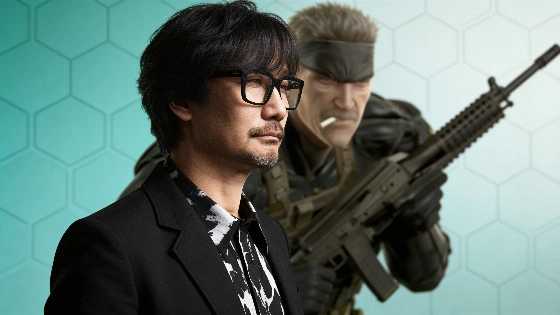
Metal Gear Solid 4: Guns of the Patriots is now available beyond PlayStation 3, included in Master Collection Vol. 2. We examine its legacy, design choices and why its reputation has shifted since its original release
Metal Gear Solid 4: Guns of the Patriots has finally broken free from its PlayStation 3 exclusivity, arriving on modern platforms as part of METAL GEAR SOLID: MASTER COLLECTION Vol.2. This long-awaited re-release gives both returning fans and newcomers the chance to experience a title that has often been described as divisive, ambitious and, for years, largely inaccessible. Its arrival prompts a fresh look at what the game achieved, how it fits within the series, and why its legacy remains so complex.
Development Reluctance and Narrative Closure
Hideo Kojima's reluctance to continue the Metal Gear saga after Metal Gear Solid 3: Snake Eater is well documented. Despite his public statements about wanting to move on, Kojima returned to direct Metal Gear Solid 4, delivering a game that feels like a deliberate farewell. The narrative centres on an ageing, physically deteriorating Old Snake, with the story structured as a conclusive send-off rather than a setup for future sequels. Unlike many modern franchises that leave the door open for ongoing instalments, Metal Gear Solid 4 closes the book on its main characters, offering a rare sense of finality in a major series.
The game's tone is markedly sombre, with themes of mortality, legacy and the end of an era woven throughout. Rather than introducing a new protagonist to carry the torch, the story focuses on closure, with most characters either retired, deceased or otherwise removed from the stage by the end. This approach stands in contrast to the industry's tendency to keep franchises perpetually marketable, and it remains one of the game's most distinctive qualities.
Gameplay Structure and Technical Ambition
Metal Gear Solid 4 is structured as a linear, cinematic action-adventure, divided into five acts that each experiment with different gameplay styles and settings. Players move from war-torn battlefields to stealth-driven cityscapes, with each act introducing new mechanics and ideas-some of which are quickly discarded. The game features a vast arsenal of over 70 weapons, a faction loyalty system, and mechanics like the Psyche meter, though not all of these systems are fully integrated into the core experience.
Kojima's cinematic ambitions are on full display, with lengthy cutscenes and elaborate set pieces that blur the line between gameplay and narrative. While some players found the extended cinematics excessive, others appreciated the boldness of the storytelling and the sense of immersion created by the game's linear structure. The focus on embodying Old Snake throughout his ordeal gives the experience a unique emotional weight, one that later entries in the series-such as Metal Gear Solid: Peace Walker and Metal Gear Solid V: The Phantom Pain-would move away from in favour of more modular, mission-based structures.
At launch in 2008, Metal Gear Solid 4 was a technical showcase for the PlayStation 3, pushing the hardware with its detailed environments, real-time cutscenes and ambitious scope. However, the PS3's Cell processor architecture made the game notoriously difficult to port, contributing to its long absence from other platforms. The new release in Master Collection Vol. 2 finally addresses this, making the game accessible to a wider audience for the first time in nearly two decades.
Legacy, Accessibility and Player Reception
For years, Metal Gear Solid 4's reputation was shaped as much by its inaccessibility as by its content. The game was effectively locked to the PlayStation 3, with technical and licensing hurdles preventing ports or remasters. This left a generation of players unable to experience the game directly, and its legacy became dominated by second-hand accounts and the perception of it being an extended cutscene rather than a fully interactive experience.
Now, with the game's re-release, players can judge its merits for themselves. Metal Gear Solid 4 is not designed for newcomers-it assumes deep familiarity with the series' lore and characters, and its storytelling is dense with references and callbacks. The cutscenes remain lengthy, and the gameplay structure is unapologetically linear compared to modern open-world or live-service titles. Yet, for those willing to engage with its idiosyncrasies, the game offers a sincerity and sense of closure rarely seen in major franchises.
Konami's renewed focus on its classic catalogue has brought Metal Gear Solid 4 back into the conversation, much as other publishers have revisited their own legacies. This mirrors trends seen elsewhere in the industry, such as the ongoing support for franchises despite technical challenges, as discussed in our coverage of Take-Two's approach to Borderlands 4's PC performance issues. The willingness to invest in difficult ports and re-releases signals a broader recognition of the value in making classic games accessible to new audiences.
What Remains Uncertain
While Metal Gear Solid 4's return is a significant moment for the series, some questions remain. The Master Collection Vol. 2 release brings the game to modern hardware, but details on technical enhancements, resolution, frame rate and platform-specific features are still emerging. Early reports suggest the game largely preserves its original presentation, with minimal changes beyond compatibility updates. Players hoping for substantial visual upgrades or new content may find the release conservative in scope.
There is also ongoing debate about how the game's design choices-particularly its reliance on cutscenes and linearity-will be received by a new generation of players accustomed to different genre conventions. The game's reputation as a "flawed masterpiece" is likely to persist, but its renewed availability ensures that discussion will be grounded in direct experience rather than distant memory.
Backwards compatibility refers to a system's ability to play games from previous hardware generations on newer devices. For years, Metal Gear Solid 4 was unavailable outside the PlayStation 3 due to technical and licensing barriers, making it a prime example of how backwards compatibility-or the lack thereof-can shape a game's legacy. The Master Collection Vol. 2 release demonstrates the challenges and importance of preserving access to classic titles as hardware evolves, ensuring that influential games remain playable for future audiences.