
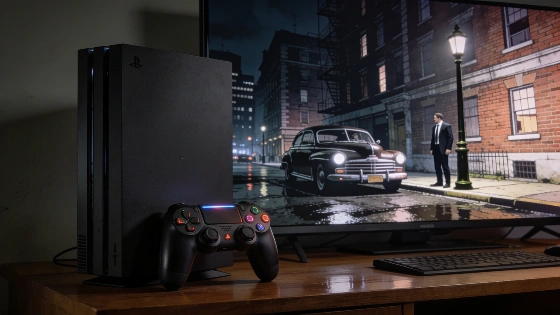
Hangar 13, the developer behind Mafia: The Old Country, has addressed ongoing comparisons to Grand Theft Auto, clarifying that GTA does not influence their creative direction and that the two franchises have diverged significantly over time
Hangar 13, the studio responsible for Mafia: The Old Country, has publicly distanced itself from persistent comparisons to Grand Theft Auto, stating that such parallels are largely driven by online discussion rather than internal strategy. As anticipation builds for both Mafia's future and the upcoming Grand Theft Auto VI, the developer has clarified its position on the matter, emphasising the unique direction of the Mafia series.
Studio Perspective on Franchise Differences
According to Hangar 13, the studio's creative process for Mafia titles is not shaped by Grand Theft Auto or its upcoming releases. The team maintains that discussions about GTA rarely, if ever, factor into their planning or design decisions. Instead, Hangar 13 focuses on delivering a tightly scoped, narrative-driven experience, which they argue sets Mafia apart from the open-world chaos and satirical tone that define GTA.
This stance was reiterated during the development of Mafia: The Old Country, when speculation mounted over a potential release window overlap with Grand Theft Auto VI. Ultimately, GTA 6 was delayed to May 2026, avoiding a direct clash. Hangar 13's leadership has since reinforced that their franchise is not in direct competition with Rockstar's blockbuster, and that the similarities are more superficial than substantive.
Gameplay Structure and Narrative Focus
The core distinction between the two series lies in their approach to gameplay and storytelling. Mafia games are structured around linear, story-driven campaigns, prioritising dramatic narrative arcs and character development. In contrast, Grand Theft Auto is built as a sandbox, offering players a broad range of activities, emergent chaos, and a satirical take on American culture.
Attempts by Mafia to expand into more traditional open-world territory have historically met with mixed results, with the franchise finding greater success when it remains focused and contained. Mafia: The Old Country, for example, was praised for its concise campaign and accessible price point, launching at $50 USD. Meanwhile, GTA 6 is positioned as a premium, long-term live-service title, with its Ultimate Edition reportedly pushing the price close to $100 USD in some regions.
Player Perception and Ongoing Comparisons
Despite the studio's efforts to clarify the differences, comparisons between Mafia and GTA continue to surface across social media and gaming forums. However, many long-term fans of Mafia are quick to point out the franchises' divergent priorities, noting that while both series explore crime and feature vehicles and firearms, their tone, structure, and scope are fundamentally distinct.
Industry coverage has also highlighted the ongoing debate, with some outlets drawing attention to the timing of major releases and the potential for overlap. For instance, a recent feature on Grand Theft Auto VI's upcoming showcase underscored the scale and anticipation surrounding Rockstar's next entry, further fuelling discussion about how other crime-focused games position themselves in the market.
Future of the Mafia Franchise
Hangar 13 has indicated that the Mafia series will continue, with publisher 2K reportedly satisfied by the commercial and critical performance of The Old Country. While no official announcement has been made regarding Mafia 5, the studio's comments suggest ongoing development. Should a new entry arrive after GTA 6's release, comparisons are likely to persist, but Hangar 13 appears committed to maintaining its own creative path.
As the industry moves towards increasingly ambitious open-world projects, Mafia's more focused, narrative-led approach offers a distinct alternative for players seeking a different style of crime drama. The studio's insistence on independence from GTA's influence may help reinforce its identity as the franchise evolves.
Understanding the difference between linear and sandbox game design is key to this discussion. Linear games like Mafia guide players through a set narrative with limited freedom to deviate, often resulting in a more controlled and cinematic experience. Sandbox titles such as Grand Theft Auto, by contrast, prioritise player agency, allowing for emergent gameplay and a wider variety of activities. This fundamental design choice shapes not only the player experience but also the expectations and comparisons that follow each franchise.