
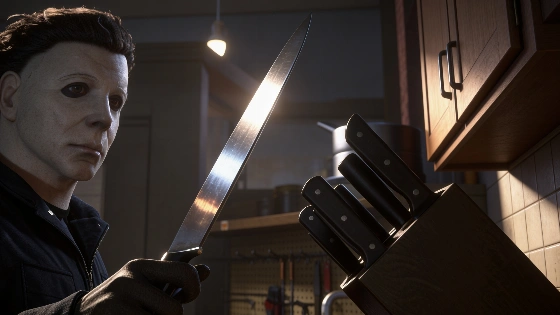
Halloween The Game has arrived on PlayStation but early play reveals severe bugs, broken animations and erratic AI. Illfonic's adaptation of the classic horror film faces criticism for its lack of polish and technical instability at launch
Halloween The Game has landed on PlayStation, but its debut is defined less by scares and more by a catalogue of technical failures. Players expecting a polished horror experience have instead encountered frequent crashes, broken animations and AI behaviour that undermines the tension Illfonic set out to create. The result is a release that feels unfinished, with core systems struggling to function as intended.
Technical performance and stability
From the outset, Halloween The Game has been plagued by instability. Reports confirm hard crashes that return players to the PlayStation 5 dashboard, often occurring at least once per hour. Animations are frequently missing or out of sync, with weapons phasing through characters and environmental interactions failing to register. Sound design, a critical element in any stealth horror title, is inconsistent-audio cues regularly play from the wrong direction, making it difficult to track threats or navigate safely.
Quick-time events, intended to add urgency, are prone to malfunction. Some players have found themselves trapped in broken animations, unable to act while the killer approaches. These issues are not isolated to multiplayer; single-player sessions are equally affected, with AI companions displaying erratic and sometimes comically poor decision-making. In one instance, all remaining AI survivors gathered in a single room, failing to react as the killer entered and eliminated them in sequence.
Gameplay structure and balance
Halloween The Game follows the asymmetrical horror formula established by titles like Dead by Daylight, with one player controlling Michael Myers and others attempting to survive as civilians. Illfonic has attempted to address balance concerns that have plagued similar games, giving Myers unique abilities such as extinguishing lights, shadow movement and player detection. These mechanics are designed to compensate for his slow movement speed, but their effectiveness is undermined by technical flaws and unreliable hit detection.
Survivors must scavenge for items, coordinate with AI and human teammates, and escape the map before Myers eliminates everyone. The 1970s-inspired environments are visually authentic, with period-accurate cars, décor and fashion. However, the immersion is repeatedly broken by bugs-characters sometimes float above the ground, doors fail to operate correctly, and item interactions are inconsistent. Players have also criticised the requirement to spectate as Myers hunts down remaining AI after all human players are dead, describing the process as tedious and poorly paced.
Developer pedigree and player expectations
Illfonic's reputation in the asymmetrical horror space set high expectations for Halloween The Game, especially with the involvement of Halloween creator John Carpenter. The studio's previous work on similar titles suggested a more refined launch, but the current state of the game falls short of those standards. Despite nearly a decade of experience in the genre, Illfonic's latest effort is hampered by issues that should have been addressed before release.
While some design choices show promise-such as the execution mechanic and the expanded role of AI survivors-the overall experience is marred by technical instability. The game's balance between killer and survivor is an improvement over some competitors, but this is overshadowed by the sheer volume of bugs and performance problems. As seen with other recent horror adaptations, including those reported earlier, the challenge remains delivering a stable, engaging experience at launch rather than relying on post-release patches to address fundamental flaws.
Launch patch and remaining uncertainty
Illfonic has indicated that a day-one patch is planned, but there is little evidence to suggest it will resolve the majority of the game's problems. Day-one updates rarely transform a fundamentally unstable build into a polished product, and the scale of the issues reported so far points to deeper development challenges. Players interested in the card perk system or the full range of civilian abilities may find some novelty, but the technical state of the game makes it difficult to recommend to anyone but the most dedicated Halloween or asymmetrical horror fans.
Halloween The Game is currently available on PlayStation 5, with no confirmed release date for other platforms. The game supports up to four human players per match, supplemented by AI-controlled survivors. No pricing or edition details have been announced for additional content or future updates. The developer has not provided a timeline for major fixes or performance improvements beyond the initial patch.
Technical performance at launch is not a minor detail-it determines whether a game is playable, enjoyable or even worth considering. Halloween The Game's current state is a warning to players: even established studios can stumble when basic systems are not ready for release. Until Illfonic delivers substantial fixes, this adaptation is best approached with caution, and only those with a deep attachment to the franchise or genre should consider investing time or money.
Understanding the difference between a review build and a final retail release is crucial for players following new launches. Review builds are often distributed to media and influencers before the official release, sometimes lacking the final day-one patch or containing unfinished features. While developers may promise improvements, the experience in these builds is often representative of what early buyers will encounter. Relying on post-launch updates to address major flaws is a risky strategy, as not all issues can be resolved quickly or completely. Players should weigh early technical reports carefully before making a purchase decision, especially in genres where stability and responsiveness are essential to the experience.