
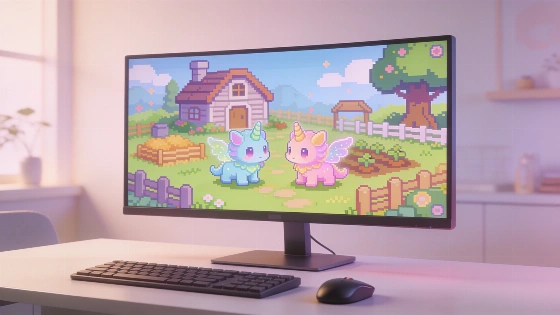
Fields of Mistria's full release brings a pastel pixel art world to life, blending classic farming mechanics with light RPG elements and a cast of villagers who interact beyond the player's presence
Fields of Mistria has now reached its 1.0 release, offering players a fantasy farming simulation set in a pastel-hued pixel art world. Developed by NPC Studio, the game draws clear inspiration from early 2000s titles such as Harvest Moon and Animal Crossing, but introduces its own blend of magical elements and character-driven storytelling. The result is a setting where mythical creatures and spells exist, yet the core gameplay remains grounded in familiar farming routines.
Gameplay Structure and Progression
At its heart, Fields of Mistria is a farming sim that tasks players with cultivating crops, tending animals, and managing resources. The game's progression is deliberately paced, with tools and abilities unlocked gradually rather than all at once. This design encourages players to explore the town, interact with its residents, and engage with side activities like fishing, insect collecting, and museum donations. Spiritual currency can be offered to the dragon statue Caldarus, unlocking power-ups that subtly alter the farming loop, such as returning seeds on harvest or restoring energy during watering.
Unlike some genre peers where villagers feel static, Fields of Mistria's NPCs interact with each other and reference shared histories, making the town feel more alive. Regular events, such as Friday gatherings at the Sleeping Dragon Inn, bring the community together and reveal new facets of each character. Even archetypal personalities-like the tsundere March-are given additional depth through dynamic dialogue and evolving relationships.
Quests, Characters and Worldbuilding
Quests in Fields of Mistria often begin as simple fetch tasks but can develop into short narrative arcs, sometimes with unexpected twists. For example, a request for lilacs might lead to an impromptu science experiment. The game's writing encourages players to engage with every villager, as even minor characters contribute to the sense of a lived-in world. Notably, villagers react to the player's actions and progress, occasionally offering hints or referencing past events, which adds a layer of immersion often missing from similar titles.
Days in Mistria are brief in real-world time-lasting just over 12 minutes-but the pace is flexible, as players can spend longer exploring menus, managing relationships, or simply chatting with townsfolk. The 1.0 update has introduced new content, including the Town Repair Storyline and marriage options, expanding the scope for long-term engagement. However, some minor technical issues remain, such as occasional slow movement bugs and limited inventory space before upgrades.
Technical Details and Player Experience
Fields of Mistria's pixel art presentation is consistent throughout, with pastel colours and detailed sprite work that reinforce its cosy atmosphere. The game is designed for single-player play and is currently available on PC, with no official confirmation of console versions at this stage. The 1.0 update marks the transition from early access to full release, bringing with it additional features and content that were not present in earlier builds.
While the game's core mechanics are familiar, the gradual unlocking of tools and abilities, combined with the evolving relationships between villagers, distinguishes it from more static farming sims. The deliberate pacing means players are encouraged to explore the world and its systems rather than rushing through objectives. For those interested in the evolution of farming sims, it is worth noting that earlier genre experiments-such as the first-person camera mode once considered for Demon's Souls, as discussed in this retrospective on early design decisions-show how player immersion and worldbuilding have become central to modern simulation games.
What Remains Uncertain
Despite the breadth of content now available, some aspects of Fields of Mistria's long-term progression remain to be fully explored. The impact of the new marriage system and the depth of the Town Repair Storyline will only become clear after extended play. Additionally, while the game's technical performance is generally stable, the presence of minor bugs suggests that further patches may be required to refine the experience. There is currently no word on whether console ports or additional content updates are planned.
In simulation games like Fields of Mistria, progression systems are often designed to encourage steady engagement rather than rapid completion. Gradual tool upgrades, relationship-building, and event-driven world changes are intended to create a sense of investment in the game's community. This approach contrasts with more linear or goal-driven genres, and understanding these mechanics can help players set expectations for pacing and replay value.