
Diplomacy: The Golden Blade reimagines the classic board game as a fast-paced card experience, promising shorter sessions and streamlined play, but the condensed format raises questions about whether the core tension and alliances survive the transition
Diplomacy: The Golden Blade is a new card game adaptation of Allan B. Calhamer's renowned board game, aiming to deliver the essence of negotiation and betrayal in a much shorter session. The original Diplomacy is famous for its drawn-out, alliance-driven gameplay, but this new version claims to offer the same strategic intrigue in a fraction of the time, with a play session lasting roughly 15 minutes per player.
Box Contents and Setup
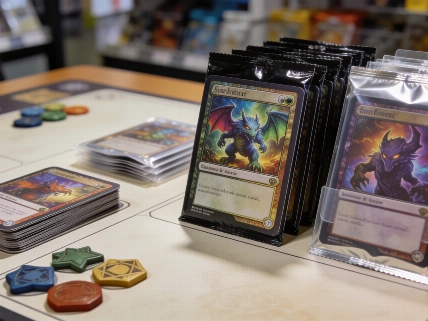
Unlike the classic board game, The Golden Blade dispenses with a physical map and unit pieces, instead relying on two sizes of cards and a set of cardboard tags. Players receive small unit cards representing armies, navies, and political forces, while larger order cards drive the main interactions. The cardboard tags are used to mark progress in each unit type, forming a grid that tracks each player's development. While these tags help visualise the game state, they can be fiddly and are not strictly necessary for play.
The overall component quality is functional rather than flashy, with clear iconography and straightforward artwork. The focus is on clarity and usability, rather than elaborate presentation. The streamlined setup means the game can be taught and started quickly, a notable contrast to the lengthy preparations often associated with the original Diplomacy.
Gameplay and Negotiation
Each player manages a grid with three rows-army, political, and navy-placing unit cards to increase their level in each category. The goal is to reach seven cards in a row, which secures victory. However, the real action comes from the order cards, which are selected in secret and played against neighbouring players. Each player has an identical set of 12 order cards, with four types: one for each unit and a "promises" category that introduces conditional alliances and betrayals.
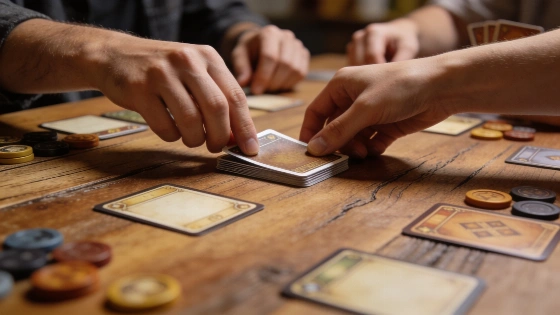
Gameplay unfolds in a loop: draw a unit card, negotiate with other players for five minutes, select and play order cards face-down, resolve their effects, and then add a new unit card to the grid. The negotiation phase is central, as deals and alliances are made-but never binding. The order cards allow for a range of actions, from interfering with opponents' units to forming temporary coalitions or blocking enemy moves. The "promises" cards, such as coalition and accord, offer mutual benefits if both players cooperate, but also open the door to sudden betrayals.
This structure preserves the spirit of Diplomacy's negotiation and backstabbing, but the condensed format means players must act quickly, often before meaningful relationships or rivalries can develop. The visible progress on each player's grid makes it clear when someone is close to victory, prompting others to intervene, but the short playtime limits the depth of these interactions.
Session Length and Player Experience
The Golden Blade's main selling point is its speed. With sessions lasting around 15 minutes per player, a full game can be completed in under two hours, compared to the all-day commitment of classic Diplomacy. However, this brevity comes at a cost. The rapid race to seven cards rarely allows enough time for alliances to mature or for betrayals to carry the same weight as in the original. Players may find themselves forced into early aggression, with little opportunity to build trust or develop long-term strategies.
As a result, the emotional highs and lows that define Diplomacy are often muted. The game's structure encourages early stabs and quick reversals, but these moves lack the impact they might have in a longer, more involved session. While the mechanics are clever and the negotiation phase remains engaging, the condensed format struggles to deliver the same sense of consequence and drama.
Where to Buy and Franchise Context
Diplomacy: The Golden Blade is available through major retailers, including Amazon and Miniature Market. Its release reflects a broader trend of classic board games being reimagined for faster, more accessible play. This approach is not unique to Diplomacy; other franchises have also experimented with streamlined editions to reach new audiences. For example, recent updates on major projects such as Tomb Raider: Catalyst and Kingdom Come have shown how established series are adapting to changing player expectations, as discussed in our coverage of upcoming franchise releases.
Ultimately, The Golden Blade offers a functional and accessible take on Diplomacy, but players seeking the full depth and tension of the original may find the experience somewhat diluted by its rapid pace and simplified structure.
Understanding the difference between a condensed adaptation and the original is key to setting expectations. Classic Diplomacy relies on extended negotiation, shifting alliances, and the slow build-up of trust and betrayal-elements that require time to develop. In contrast, The Golden Blade's short sessions prioritise accessibility and speed, but inevitably sacrifice some of the interpersonal complexity that made the original a landmark in strategic gaming.