
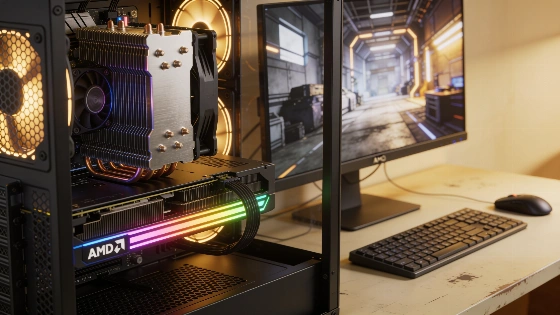
A prominent leaker claims AMD is preparing a neural rendering feature for its RDNA 5 graphics cards, aiming to rival NVIDIA's DLSS 5. The details remain unconfirmed but could signal a major shift in GPU competition
AMD's next-generation RDNA 5 graphics cards are now at the centre of speculation after a well-known leaker suggested the company is developing its own neural rendering technology to compete with NVIDIA's DLSS 5. As of September 16, 2026, there is no official confirmation from AMD regarding the development or announcement of neural rendering for RDNA 5, according to Reuters and AMD Investor Relations. The current discussion is driven by unverified reports and the absence of any public details from AMD itself. Nevertheless, the claim has already set expectations for a new front in the GPU feature race-one that could reshape how lighting and shading are handled in future PC games.
Leaked Details and Feature Proposals
The information comes from Kepler_L2, a leaker with a track record of AMD-related disclosures, who posted on the AnandTech forum that AMD is working on a neural rendering system for RDNA 5. According to independent publications, this wave of discussion is directly tied to Kepler_L2's statements, which describe a potential AMD analog to DLSS 5 under a working name similar to "Neural Lighting." However, Reuters notes that this is not a confirmed product, and there is no primary source or official documentation to verify these claims.
Kepler_L2 described neural rendering as any process that substitutes classic shaders with neural networks, and suggested AMD's approach could include a feature called "Neural Lighting." However, the leaker did not present this as a confirmed implementation, instead outlining a personal wishlist for how AMD's system should differ from NVIDIA's. The suggestions included giving the model direct access to 3D game data, separating lighting and shading enhancements into distinct models, and omitting colour grading entirely. It is important to emphasize that these are speculative ideas and not verified AMD plans.
It is important to note that these are not confirmed AMD plans but rather the leaker's preferred direction. The only concrete claim is that AMD is developing a neural rendering feature for RDNA 5, with the rest remaining speculative. According to Reuters and secondary citations from the AnandTech forum, there is no evidence of a finalized or officially announced product at this time.
Platform Limitations and Release Timing
When questioned about compatibility, Kepler_L2 indicated that AMD's neural rendering would likely be exclusive to RDNA 5 GPUs, citing the heavy computational demands of such technology. No official details have been released by AMD regarding the architecture, feature set, or supported hardware. As of mid-September 2026, neither AMD nor NVIDIA has announced an official launch date for their next-generation gaming GPUs, and any timeline for RDNA 5 remains unconfirmed, as reported by SetupLevel.
As for timing, the leaker previously pointed to a mid-2027 target for RDNA 5's arrival, a window echoed by multiple board partners at Computex 2026 and by another leaker, Moore's Law Is Dead, who cited an OEM partner. Some AIB partners have suggested that real availability could slip into early 2028, meaning a significant gap between Radeon generations is possible. However, these projections are not supported by official statements from AMD, and the actual release window remains speculative.
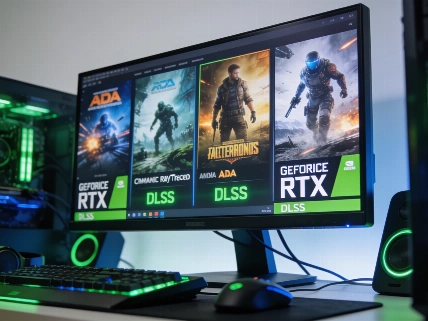
For comparison, NVIDIA's DLSS 5 neural rendering is already available in NBA 2K27, with further game support expected soon. This puts NVIDIA's technology in players' hands years ahead of AMD's potential offering, should the latter materialise as rumoured. Technical reviews, such as those from PC Games Hardware, describe DLSS 5 as a neural network-based rendering solution that can operate before upscaling, which has fueled speculation about the need for a comparable response from AMD.
Industry Context and Competitive Pressure
The suggestion that AMD is pursuing neural rendering comes after years of debate over the role of machine learning in graphics. NVIDIA's DLSS features have been both praised for their performance gains and criticised for altering the artistic intent of game visuals. Despite this, the adoption of neural rendering by a second major GPU vendor would mark a significant endorsement of the approach, reinforcing NVIDIA's controversial lead. According to PC Games Hardware, the technical evolution of DLSS 5 has set new expectations for performance and image quality, intensifying competitive pressure within the industry.
Should AMD deliver a competitive or superior neural rendering solution, it would force NVIDIA to accelerate improvements to its own model, ultimately benefiting players through increased competition. However, with AMD's plans still unconfirmed and the timeline stretching into 2027 or beyond, the practical impact remains distant. It is also notable that the community has demonstrated DLSS 5 running on non-NVIDIA GPUs, including AMD RDNA 4, but these are considered modding experiments rather than native AMD support, as reported by NoobFeed and GPU Solutions.
Recent coverage of upscaling technology, such as the reported earlier uncertainty around DLSS 5 support in Final Fantasy VII Revelation, highlights how central these features have become to both performance and image quality expectations on PC.
What Remains Unclear
At present, AMD has not officially acknowledged the existence of RDNA 5 or any neural rendering feature. The only available information comes from forum posts and second-hand reports, with no technical documentation, developer presentations, or public demonstrations to verify the claims. According to Reuters and AMD Investor Relations, there are no official statements or confirmed details regarding neural rendering for RDNA 5 as of September 16, 2026. The leaker's wishlist for how AMD should approach neural rendering is not evidence of AMD's actual plans.
Until AMD provides concrete details, players and developers are left to speculate about the eventual capabilities and limitations of the next Radeon generation. For now, NVIDIA's DLSS 5 remains the only neural rendering solution available in shipping games, and AMD's answer is, at best, a long-term prospect. Community experiments with DLSS 5 on AMD hardware remain unofficial and unsupported by AMD.
Neural rendering refers to the use of machine learning models to replace or enhance traditional graphics techniques such as lighting, shading, and upscaling. Unlike classic shaders, which follow fixed algorithms, neural networks can be trained on vast datasets to predict more realistic or efficient outcomes. In practice, this can mean higher frame rates, improved image quality, or new visual effects, but it also introduces questions about artistic control and hardware requirements. As the technology matures, the balance between performance, fidelity, and creative intent will remain a central issue for both developers and players.