
Frame Generation
1 storyThe defining concerns of Frame Generation are interpolated frames, reflex latency reduction and artifact visibility, treated as one specific part of Graphics Rendering & Upscaling. Questions about FSR frame interpolation, input latency trade-off and AMD Fluid Motion Frames keep the description tied to a real implementation rather than a marketing term.
The strongest pieces connect optical flow estimation, motion vector synthesis and base frame-rate dependency to visible consequences rather than promotional wording. Together, DLSS multi frame generation and image artifact explain why the feature can feel different across genres, platforms or communities. The defining function is synthesising intermediate frames, not reconstructing the resolution of rendered frames.
The strongest pieces connect optical flow estimation, motion vector synthesis and base frame-rate dependency to visible consequences rather than promotional wording. Together, DLSS multi frame generation and image artifact explain why the feature can feel different across genres, platforms or communities. The defining function is synthesising intermediate frames, not reconstructing the resolution of rendered frames.
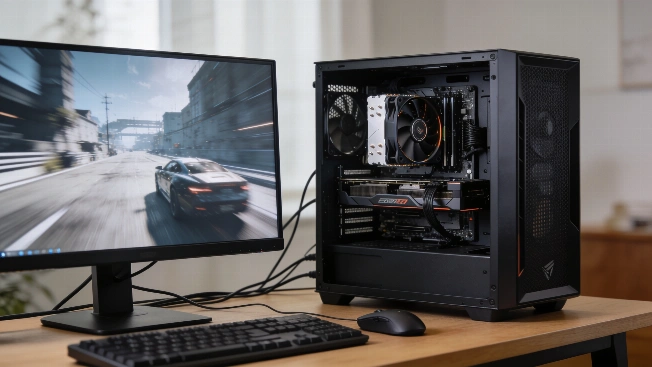
NVIDIA's Preset C Claims Up to 35% More FPS
NVIDIA says Preset C can lift frame rates by up to 35% on RTX 40 and RTX 50 GPUs by swapping in a faster frame-generation model. The experimental setting is available through the NVIDIA App beta.