
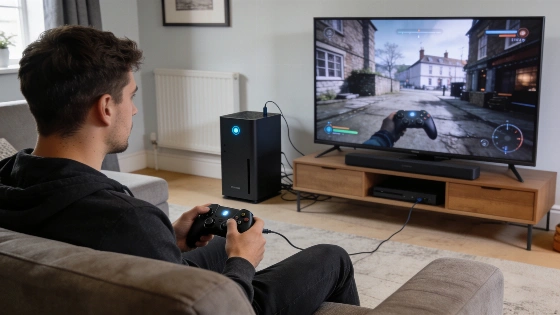
Valve has clarified why the Steam Machine is launching without exclusive titles, emphasising access to the full PC library over platform-locked games and addressing expectations around new software at launch
Valve has confirmed that the Steam Machine will not launch with exclusive games or bespoke tech demos, instead positioning the device as a way to bring the entire PC gaming library into the living room. This approach sets the Steam Machine apart from traditional consoles, which often debut with exclusive titles or bundled experiences designed to showcase new hardware features. Valve's decision follows a model similar to the Xbox Series X|S, which also launched without a major exclusive, and comes amid ongoing speculation about potential flagship releases such as Half-Life 3.
Valve's Platform Strategy
According to reporting from Bloomberg, Valve engineer Pierre-Loup Griffais explained that the company does not see value in restricting where players can access games. Instead, Valve is focusing on the breadth of the existing PC catalogue as the Steam Machine's main attraction. This means that, from day one, users will be able to access their entire Steam library on the new hardware, rather than waiting for exclusive content or platform-specific releases.
While some players had hoped for a new title to accompany the hardware-similar to how Sony bundled Astro's Playroom with PlayStation 5 or Valve released Aperture Desk Job alongside the Steam Deck-Valve has opted not to develop a dedicated launch game. In some cases, the Steam Machine is even sold without a controller, further distancing it from the traditional console playbook.
Player Expectations and Market Context
The absence of exclusive software at launch has led to mixed reactions among prospective buyers, particularly those who associate new hardware with flagship games or technical showcases. However, Valve's strategy is consistent with its broader philosophy of platform openness and player choice. The company's approach also reflects the realities of the PC gaming ecosystem, where exclusivity is less common and players expect cross-device access to their purchased titles.
Valve's decision is also influenced by the Steam Machine's pricing and market positioning. With a higher entry cost than many consoles, the device is unlikely to become a mass-market product in the short term. Valve engineer Yazan Aldehayyat has indicated that pricing constraints are not expected to ease soon, making it even less likely that the company would lock major releases such as Half-Life 3 behind Steam Machine hardware.
What Remains Uncertain
There is currently no indication that Valve plans to release Steam Machine-exclusive games in the future. Even titles designed to highlight Valve hardware, such as Aperture Desk Job for the Steam Deck, have ultimately been made available to the wider Steam user base. As a result, players should not expect bespoke content tied solely to the Steam Machine, at least based on current evidence.
For now, the Steam Machine's main selling point remains its ability to run the full PC library in a living-room setting, with no artificial restrictions on where or how games are played. This approach may disappoint those seeking a traditional console launch experience, but it aligns with Valve's established platform philosophy and the expectations of most PC gamers.
Platform exclusivity refers to the practice of releasing a game or feature only on a specific device or ecosystem, often to drive hardware sales or differentiate a platform. In the PC gaming world, exclusivity is rare, as players expect to access their purchases across multiple devices. Valve's decision to avoid exclusives with the Steam Machine highlights the company's commitment to openness and cross-device compatibility, but also means that the hardware must compete on features, performance, and convenience rather than unique content.