

Tree of Savior added the Officiant special class on Steam on October 6, 2026. The update also rebuilt Archaeology with relic appraisal and launched the Popo Boost growth event.
Tree of Savior has added a class built around battlefield control. The new Officiant uses an incense burner instead of a standard weapon. It spreads smoke across ritual zones and subdues enemies caught inside them. IMC Games released the class on Steam on October 6, 2026, alongside the Archaeology overhaul and Popo Boost Event, according to Inven Global.
Officiant enters battle
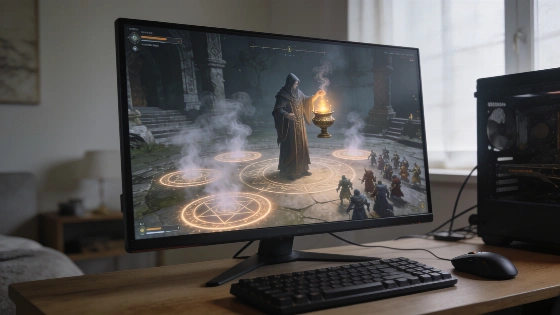
Developed by IMCGames and published on Steam, Tree of Savior now offers the Officiant as a new special class. It deals area-of-effect magic damage, but its main identity comes from how it applies that damage. The class does not rely on a conventional weapon or direct pursuit.
The Officiant creates zones from smoke rising out of its censer. The smoke forms a ritual space that subdues enemies inside it. Players control enemy positions by deciding where to place those zones.
Enemies caught in the zones can be controlled while the Officiant limits their movement. This lets players cover parts of the battlefield and push groups into smaller areas.
That gives the class a control-focused role rather than the role of a straightforward spellcaster. The supplied material confirms the smoke zones and their use against groups. It does not provide damage values, cooldowns, range limits, skill counts or detailed class requirements. GoHa.Ru also confirms the October 6, 2026 release date, but it does not provide those missing Officiant statistics.
Smoke shapes combat
The Officiant is not simply a class that attacks the biggest possible group and moves on. Its described combat loop starts with placing zones. Players then influence enemy movement and use the zones to create better positions over time.
For players who value area denial, the design offers a clear tactical hook. The class should reward careful placement and attention to how enemies move. The available announcement does not establish how its abilities perform in specific modes or whether it has defensive tools beyond its control effects.
As with any class announcement, the promotional video presents the concept. It does not provide independent evidence of balance or long-term viability. The update includes no confirmed performance tests, competitive assessments or player results.
Archaeology finds its loop
The same update reworks Archaeology into a progression loop that connects exploration, combat and character growth. The Relic system sits at its centre. Discovered relics now have a role beyond simple collection. Players must appraise them before developing their power, linking discovery to the next stage of the system.
Players can appraise relics and use three special orbs to unlock their hidden potential: Alchemy, Divine and Chaos. Fully restored relics then support further exploration and combat progression. This gives players a reason to keep searching instead of treating each discovery as a one-time reward.
Inven Global describes the system as a connected cycle of research, fighting and character development. The restored relics are intended for later use in research and battles.
The announcement does not specify relic drop rates, appraisal costs, restoration times or the exact bonuses each orb can produce. Those details matter because collection systems depend on the effort required and the rewards they provide.
The update also arrives during a busy period for Steam-facing game announcements. New features can be easy to confuse with a wider release proposition. An earlier Steam report shows how store visibility can instead focus on platform access and launch preparation.
Popo Boost speeds up growth
Tree of Savior is pairing the class and Archaeology changes with the Popo Boost Event. It began alongside the October 6 update. The event is meant to speed up character development through rewards that include a twofold increase in the chance of successful enhancement and a Special Class Unlock Voucher.
Once a character reaches full growth through Popo Boost, the player can transfer its current weapons, armour and accessories into the current-season equipment. This gives established or returning players a direct route into the latest content. They do not need a separate gear build for each equipment category.
The measurable structure supplied for the update is simple: one new special class, one reworked Archaeology system and three relic orbs named Alchemy, Divine and Chaos. No event duration, reward quantities, class statistics or additional platform details have been provided.
That combination makes the update more than a routine class drop. The Officiant changes how players occupy combat space. Archaeology adds a collection and restoration path. Popo Boost cuts the time needed to bring a character into the current season.
The update works best as a package of connected systems, although its lasting value will depend on balance and reward tuning that the announcement does not yet document. Players have enough information to understand the intended structure. They do not have enough to judge the class or relic economy with confidence.
Zone control means shaping where enemies can safely stand instead of relying only on direct damage. A zone can deny space or encourage movement. Its real effect depends on duration, placement rules, enemy resistance and the value of staying inside it.
That is why the Officiant's concept is clear while its final balance remains unmeasured. Based on the confirmed update details, Tree of Savior is making tactical positioning and long-term collection central to its latest expansion rather than simply adding another damage profile.