
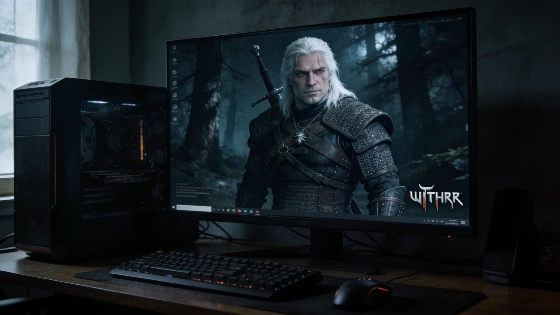
Doug Cockle, the voice of Geralt in The Witcher 3, has shared how he challenged CD Projekt Red's original direction to portray Geralt as emotionless, insisting on a more nuanced and relatable character
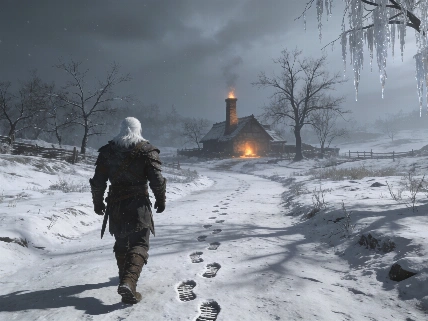
Geralt of Rivia's stoic presence in The Witcher 3: Wild Hunt is unmistakable, but the character's emotional depth was not always a given. Doug Cockle, the actor behind Geralt's distinctive voice, has revealed that CD Projekt Red initially instructed him to deliver Geralt's lines with minimal emotion. According to Cockle, the studio's early guidance was to keep the character's delivery flat, aiming for a detached, almost machine-like tone. However, Cockle believed that stripping Geralt of all emotion would undermine the character's humanity and make it difficult for players to connect with him.
Actor's Approach to Geralt
At the time of recording, Cockle had not read The Witcher novels or seen the Polish television adaptation, relying solely on the information provided by the developers. Despite this, he pushed back against the direction to "flatten" Geralt's performance, arguing that a completely emotionless protagonist would be unrelatable. Cockle maintained that Geralt, while reserved and often suppressing his feelings, is fundamentally an emotional being. He worked to subtly convey this internal conflict, ensuring that Geralt's actions-especially those involving key characters like Ciri-felt motivated by genuine care and personal stakes.
Studio's Evolving Perspective
As development progressed, CD Projekt Red's stance reportedly shifted. Cockle notes that the writing team became more comfortable allowing Geralt to display emotion, particularly as the series moved from The Witcher 3: Wild Hunt into its expansions, such as Blood and Wine. This evolution is evident in the game's narrative, where Geralt's choices and relationships are shaped by his underlying emotional life, even if he rarely expresses it overtly. The change in approach allowed for a more layered portrayal, which many players have cited as a strength of the series.
Impact on the Franchise
The decision to imbue Geralt with emotional nuance has had a lasting impact on The Witcher franchise. The character's complexity is especially apparent in his interactions with Ciri, his adoptive daughter, whose safety and future drive many of the game's most significant decisions. Without this emotional core, Geralt's motivations would risk feeling arbitrary or mechanical. The studio's willingness to adapt its vision in response to Cockle's interpretation has contributed to the enduring appeal of The Witcher 3's storytelling. This kind of creative negotiation between actor and developer is not unique to The Witcher series; for example, early development footage of Demon's Souls revealed how design choices can shift dramatically before release, as seen in a look at scrapped first-person mechanics in Demon's Souls.
Understanding the balance between emotional restraint and expressive performance is crucial in character-driven games. In voice acting, subtle inflections and controlled delivery can communicate internal conflict without resorting to overt displays of feeling. This approach allows players to project their own interpretations onto the character, while still grounding the narrative in believable human motivation. The result is a protagonist who feels both authentic and engaging, even within the constraints of a fantastical world.