
ACE Team's The Mound: Omen of Cthulhu offers a punishing co-op horror experience set in 17th-century Chile, blending sanity effects and resource management with a steep difficulty curve that may deter newcomers
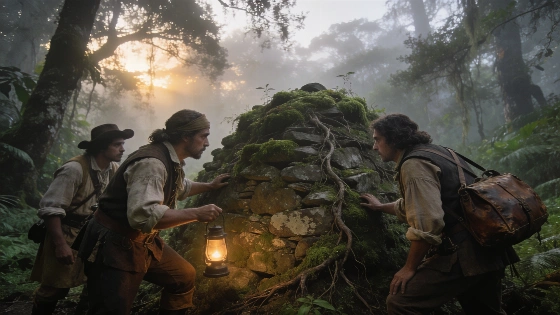
The Mound: Omen of Cthulhu, developed by ACE Team, is a co-operative survival horror game that places players in the role of Spanish conquistadors exploring a haunted Chilean wilderness in the mid-1600s. The game's setting draws heavily from Lovecraftian mythos, with players tasked to uncover the secrets of ancient tombs while contending with supernatural threats and the psychological effects of encroaching madness. The narrative is delivered through journal entries and voice acting, gradually revealing the story's mysteries as players progress through expeditions.
Gameplay Structure and Difficulty
The Mound: Omen of Cthulhu is structured around contracts that send up to four players into interconnected map sections, each with specific objectives and limited equipment. The allocation of gear is determined by party size, requiring players to coordinate roles and make strategic decisions about combat, lighting, and loot-carrying capacity. This system encourages experimentation with different loadouts and team dynamics.
However, the game's difficulty is notably unforgiving. Enemy numbers and lethality can escalate rapidly, even on the lowest settings, and certain mission types-such as portal contracts-introduce environmental hazards that can quickly overwhelm a group. The contract system also scales with the host's character level, which can make it difficult for experienced players to introduce newcomers, as lower-difficulty missions may become unavailable. While a recent patch has reportedly adjusted difficulty, early impressions suggest only modest changes to the overall challenge.
Progression, Resource Management and Solo Play
Progression in The Mound: Omen of Cthulhu is primarily cosmetic, with character levels unlocking new knife skins rather than gameplay advantages. Players can purchase or upgrade equipment, but these enhancements are lost upon death, making repeated failures on higher-difficulty contracts financially punishing. The game's resource management is central, as players must balance the value of collected treasure against the increasing hostility of the environment and the risk of losing everything on a failed run.
While the game technically supports solo play by providing an NPC companion, the experience is clearly designed for co-op. The AI partner lacks the competence of a human teammate, and solo expeditions remain significantly more challenging despite reduced enemy counts. As a result, The Mound: Omen of Cthulhu is best approached with a reliable group, as the systems and difficulty are tuned for collaborative play.
Atmosphere, Narrative and Cultural Context
ACE Team's depiction of 17th-century Chile is visually striking, with dense jungles and eerie ruins contributing to a strong sense of place. The game's sanity mechanics introduce moments of psychological horror, such as hallucinations and distorted audio, which reinforce the Lovecraftian atmosphere. The narrative references the real-world Mapuche people, distinguishing them from the cultists encountered deeper in the jungle, though their presence in the story is limited and some colonial tropes persist.
The unfolding mystery is delivered through well-acted journal entries, with late-game revelations providing satisfying narrative payoffs. The enemy variety is broad, ranging from possessed humans to more abstract horrors, requiring players to adapt their approach and sometimes avoid confrontation entirely. These elements combine to create a tense, oppressive environment that rewards careful planning and teamwork.
Player Consequences and Remaining Limitations
The Mound: Omen of Cthulhu offers a substantial challenge for dedicated co-op groups, but its steep difficulty curve and limited onboarding options may frustrate less experienced players or those hoping to introduce friends. The lack of granular difficulty settings and the punitive nature of progression can make recovery from failure slow, especially for smaller or less coordinated teams. While the game's atmosphere and enemy design are strong, the overall experience is best suited to players seeking a demanding, team-based horror adventure.
Across 18 interconnected maps, players can expect to spend dozens of hours uncovering secrets and mastering the game's systems. However, the absence of meaningful progression rewards and the high barrier to entry for new players remain notable drawbacks. The recent patch may address some balance concerns, but the core structure continues to prioritise challenge over accessibility.
Difficulty settings in co-op survival horror games like The Mound: Omen of Cthulhu play a crucial role in shaping the player experience. When difficulty is tied to progression or host level, it can unintentionally lock out content for new players and limit flexibility for established groups. Granular difficulty options and scalable contracts are increasingly common in the genre, allowing players to tailor the challenge to their group's skill and preferences. Without these systems, onboarding new players and recovering from setbacks can become unnecessarily punishing, impacting long-term engagement and replayability.