
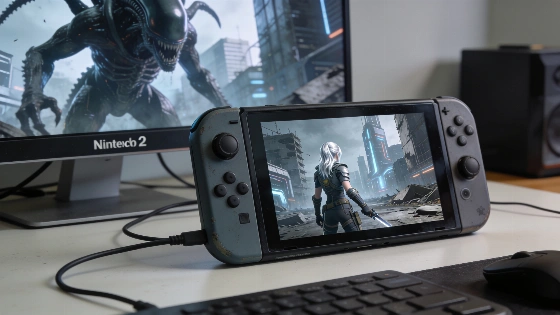
Stellar Blade director Kim Hyung-tae says Shift Up may still have plans for the 2024 action RPG. More changes could arrive with the sequel, while the Complete Edition is set for Nintendo Switch 2 on November 6, 2026.
Stellar Blade may get major changes when its sequel arrives. The game may not simply remain a finished 2024 release. Director Kim Hyung-tae said Shift Up still has work in mind for the original action RPG in an interview with 4Gamer at Tokyo Game Show 2026.
A plan connected to the sequel
Kim Hyung-tae did not announce a specific expansion or give a release date for new content. His comments suggested that Stellar Blade is not finished within the wider series plan. The original game could change when the sequel launches.
Reports from TGS 2026 also name Stellar Blade: Blood Rain as the franchise's next major project. No release date or platforms had been confirmed in the available announcements.
That distinction matters. The statement does not confirm a new campaign, a post-launch area or any specific feature. It points beyond the usual run of cosmetic additions. The wording also leaves open whether the changes would come through an update to Stellar Blade or be tied more directly to the sequel's release.
According to 4Gamer's TGS report, Shift Up has said that additional changes or updates to the original game could arrive alongside the next title.
Shift Up has offered direction, not a roadmap. Players know the studio wants to do more for the existing audience. The shape, scale and timing of that work remain undisclosed. The company's public position treats the original Stellar Blade as an active support project, rather than one whose post-launch life has definitely ended.
Why the timing matters
Stellar Blade launched in 2024 and later reached more players through a PC release. By the time the sequel arrives, the original game will be older still. Meaningful changes at that point would be unusual for a single-player title that has already moved past its launch window.
The clearest comparison in the supplied material is Crimson Desert. Pearl Abyss has built a model in which a single-player game remains active through major post-launch content updates. Shift Up now appears willing to explore a similar link between a released game and its follow-up.
That does not make Stellar Blade a live-service game. Nothing in the comments confirms recurring seasons, a battle pass, multiplayer systems or ongoing monetisation. The evidence supports a narrower reading. Shift Up may use future content or revisions to strengthen the connection between the first game and its sequel.
For people who already own Stellar Blade, the prospect matters because a substantial addition could give the original release a new role in the series. It could also make the sequel's story easier to approach. That remains an interpretation, not a confirmed design goal.
The Switch 2 factor
The game has drawn attention for another reason. At Tokyo Game Show 2026, Shift Up showed Stellar Blade Complete Edition for Nintendo Switch 2 and set its release date for November 6, 2026. The company also confirmed free Bayonetta crossover content for the same day. 4Gamer reported both the Switch 2 launch timing and the simultaneous crossover plans.
The Switch 2 version is also making headlines after it was shown using AMD FSR Frame Generation to reach 60 frames per second. The feature is reportedly optional.
Frame Generation creates extra frames between conventionally rendered frames. This can make movement look smoother. It is not the same as a console rendering every displayed frame through the game's own simulation, and it can bring trade-offs in responsiveness or image consistency. The supplied information includes no independent performance measurements for the Switch 2 version.
A claim of 60 frames per second says little on its own about frame pacing, input latency or image quality. The optional AMD FSR Frame Generation feature means players are not forced to use it. The available evidence does not show how the game performs with the feature disabled.
The Switch 2 port and the sequel are separate developments. They bring Stellar Blade back in front of players while Shift Up discusses its longer-term future. The Switch 2 release is also part of a wider platform strategy. Sedaily English reports that Shift Up is expanding its multiplatform approach while developing a model for global self-publishing in Japan and other regions.
Readers interested in how older games are being kept playable can also find an earlier breakdown of an unofficial Fable 2 PC project.
Blood Rain and the AI question
The sequel's public profile was also affected by an AI-generated video linked to Stellar Blade: Blood Rain. Kim Hyung-tae apologized for the video. According to Maeil Business Newspaper, he said it came from internal experiments and research at Shift Up's AI Labs, not from finished official content.
Kim also said that Shift Up does not rule out using AI in the future. He said the studio must remain responsible for the quality of final content and must not present experimental material as released content. That leaves the technology question open. It does not confirm any AI-generated assets or features for Blood Rain itself.
Stellar Blade is no longer simply a completed 2024 game sitting beside an upcoming sequel. Kim Hyung-tae's remarks suggest that Shift Up sees value in giving the original release another meaningful role. The Switch 2 version also widens the audience that could benefit.
Until the studio names the changes, the measured view is clear. The plan sounds more ambitious than routine costume support, but it remains a direction rather than confirmed content.
AMD FSR Frame Generation is a rendering technique, not a guarantee of flawless 60 frames per second performance. It creates intermediary images from existing frames, which can improve apparent fluidity without offering the same benefit as a higher native rendering rate.
Frame pacing and latency determine whether that extra smoothness feels consistent during play. The Switch 2 claim cannot replace independent testing. The same evidence-first standard applies to the proposed Stellar Blade changes. The studio has signalled continued support, but players still need concrete details before treating the sequel connection as delivered content.